

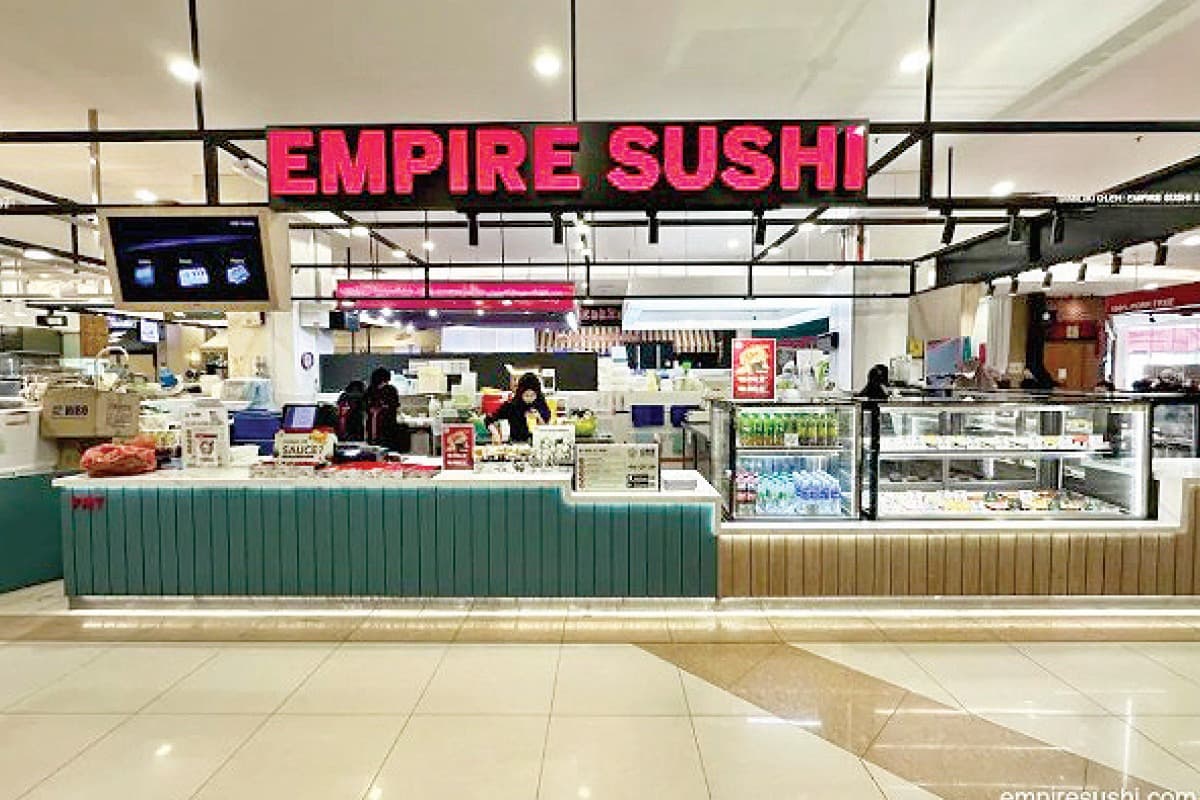
This article first appeared in The Edge Malaysia Weekly on April 13, 2026 - April 19, 2026
THE numbers are striking at first glance.
Nicole Lim Xui Jhi, 35, and her husband Jordan Tan Sin Guan — co-founders of Empire Premium Food Bhd — are poised to collectively realise about RM101.5 million from their offer-for-sale shares ahead of t he company’s planned listing on the Main Market of Bursa Malaysia on April 17.
For Lim, a college dropout who launched her first business at 21 and has never had a formal job, the windfall underscores a remarkable entrepreneurial journey. Yet, the upcoming initial public offering (IPO) has drawn scrutiny from investors, with some questioning whether the exercise signals a partial cash-out by the founders and if their drive will endure once they secure the nine-figure proceeds.
In an exclusive interview with The Edge, Lim rejects that narrative, insisting that the IPO of Empire Premium Food was never about taking money off the table. “I want to be very clear. I did not start this business to cash out,” she says at Empire Sushi’s dine-in outlet at IOI City Mall in Putrajaya.
“For the past 12 to 13 years, I have kept most of the money in the company. Even when dividends were declared, they were not significant.”
Empire Premium Food operates the Empire Sushi chain, a brand Lim describes as inseparable from her identity.

“This brand is built by me and my husband from zero. I started when I was young. I have never worked anywhere else. This is my first and only job. This business is my life. If I sold it, I wouldn’t even know what to do next,” she says.
She emphasises the founders remain deeply involved in the daily operations as the company continues to expand. “If I wanted to exit, I could have done so earlier. We received offers from larger companies before, but I chose not to sell,” she says, adding that her routine still includes early morning travel to oversee outlets nationwide.
Lim’s entrepreneurial drive was shaped early in life by a fear of failure. Having left Tunku Abdul Rahman College after a year, she had no fallback career. “Empire Sushi is my everything,” says the food entrepreneur.
She met Tan at 19, when he was working as a sushi chef, and the pair began their first venture in 2011 through consignment sales at hypermarkets. After expanding to more than 20 outlets, they reassessed the model and concluded that it lacked brand differentiation.
In 2014, they relaunched with a clearer strategy, introducing the grab-and-go concept under the Empire Sushi brand name — a move that Lim describes as a turning point. The first standalone outlet at Berjaya Times Square in Kuala Lumpur generated more than RM800 in sales on its opening day, then rising to RM2,000 within weeks and exceeding RM4,000 after several months.
In the early days, the founders and a single employee personally promoted their products to customers. “At the beginning, three of us had to stand there like sampling promoters, asking people to try our sushi. ‘Try this, try that.’ That’s how we built our customer base,” she recalls.
“Every customer we have today, we earned them through taste. If a customer buys one piece today and likes it, they will come back tomorrow. That’s how we grew.”
That philosophy continues to underpin the business. Empire Premium Food maintains in-store preparation across its outlets, prioritising freshness over centralised production, which remains core to the brand’s identity, she says.
Making sushi more accessible to the public
For Lim, affordability was a guiding principle from the outset. Growing up, she perceived sushi as luxury food that required a long journey and was typically sold only in full sets. Her ambition was to change that experience and make sushi accessible as an everyday indulgence, even if it meant buying a single piece.
“Empire Premium Food started with a childhood dream. Back then, sushi was considered luxury food. We had to drive more than an hour just to have it. I wondered why something so delicious could not be part of our everyday life. Today, our menu has about 70 items, and we refresh it every quarter,” she says.
Underperforming items are quickly replaced — a testament to the company’s iterative approach to product development. “If something doesn’t sell well, we change it. We keep innovating,” she adds.
Empire Premium Food currently operates 143 outlets across Malaysia, positioning it as the country’s largest sushi chain by both revenue and store count. More than 90% of these outlets are certified halal, reinforcing its appeal to the mass market.

Of the total network, 127 outlets offer the grab-and-go format, while 16 are quick dine-in outlets. Notably, the group maintains full ownership of all the outlets, having opted against franchising.
Lim attributes this to a deliberate growth philosophy centred on control and consistency. “Many people approached us, especially in the early days when we didn’t have much capital. Franchising would have been the fastest way to expand, but we chose not to. It is easy to grow fast, but it is very hard to grow steadily. For us, step-by-step growth is more important,” she says.
Following the IPO, Empire Premium Food intends to allocate about RM79.1 million to opening another 56 outlets. The company’s expansion strategy remains demand-driven, with a continued focus on high-traffic locations such as shopping malls, hypermarkets, airports and transit hubs.
“We have already covered most states in Malaysia, so there is no specific region we are targeting. As long as there is demand, we will expand there,” says Lim.
While the introduction of quick dine-in outlets reflects growing consumer appetite for this experience, the expansion of this segment remains measured. The company currently limits itself to one dine-in outlet per district, having recognised the operational complexity involved.
“We cannot expand too fast because everything is still handmade. Machines can help with standardisation, but the core work is still done by people. Food has temperature, food has feeling … that cannot be replaced by machines,” she says.
Looking ahead, Lim believes that the domestic market offers ample runway for further growth. With more than 2,000 shopping malls nationwide, Malaysia could support at least 300 Empire Sushi outlets in the coming years, she estimates.
“There is still a lot of room for us to grow. At some malls, we can even have two or three outlets, depending on the size. So, the market is not saturated. I cannot tell you exactly how many years it will take, but I am confident we can reach 300 stores,” she says.
Financially, the company has demonstrated consistent expansion. Revenue grew from RM137.1 million in the financial year ended March 31, 2023 (FY2023) to RM184.8 million in FY2024, and further to RM235.6 million in FY2025. Net profit rose correspondingly from RM14.6 million to RM26.2 million and RM37.9 million over the same period. Gross margins across both formats remain robust at around 40%.
Empire Premium Food is offering 363 million shares at 70 sen each in its IPO. Of these, 218 million are new shares, raising RM152.6 million in gross proceeds, while the remaining 145 million existing shares represent an offer for sale valued at about RM101.5 million.
“Post-listing, Jordan [Tan] and I will retain a 67% stake. We are still the major shareholders and are very much committed to growing the business. For us, this IPO is really to support the next stage of growth,” says Lim, underscoring the couple’s continued commitment to the business.
Upon listing, the group is expected to have a market capitalisation of RM770 million, with a historical price-earnings ratio of about 20 times. The IPO has been met with strong investor demand, with the public portion oversubscribed by 23.3 times.
As at Feb 25, Empire Premium Food employed 1,246 staff, including 214 foreign workers, and plans to hire another 450 service crew over the next three years. Its post-listing cash position is estimated at RM153.7 million.
Its capital expenditure for new outlets varies by format: RM550,000 for grab-and-go outlets and about RM1 million for dine-in ones. The average payback period for new stores is estimated at eight to nine months — a reflection of the group’s disciplined expansion model and strong unit economics.
Save by subscribing to us for your print and/or digital copy.
P/S: The Edge is also available on Apple's App Store and Android's Google Play.