

This article first appeared in Capital, The Edge Malaysia Weekly on April 13, 2026 - April 19, 2026
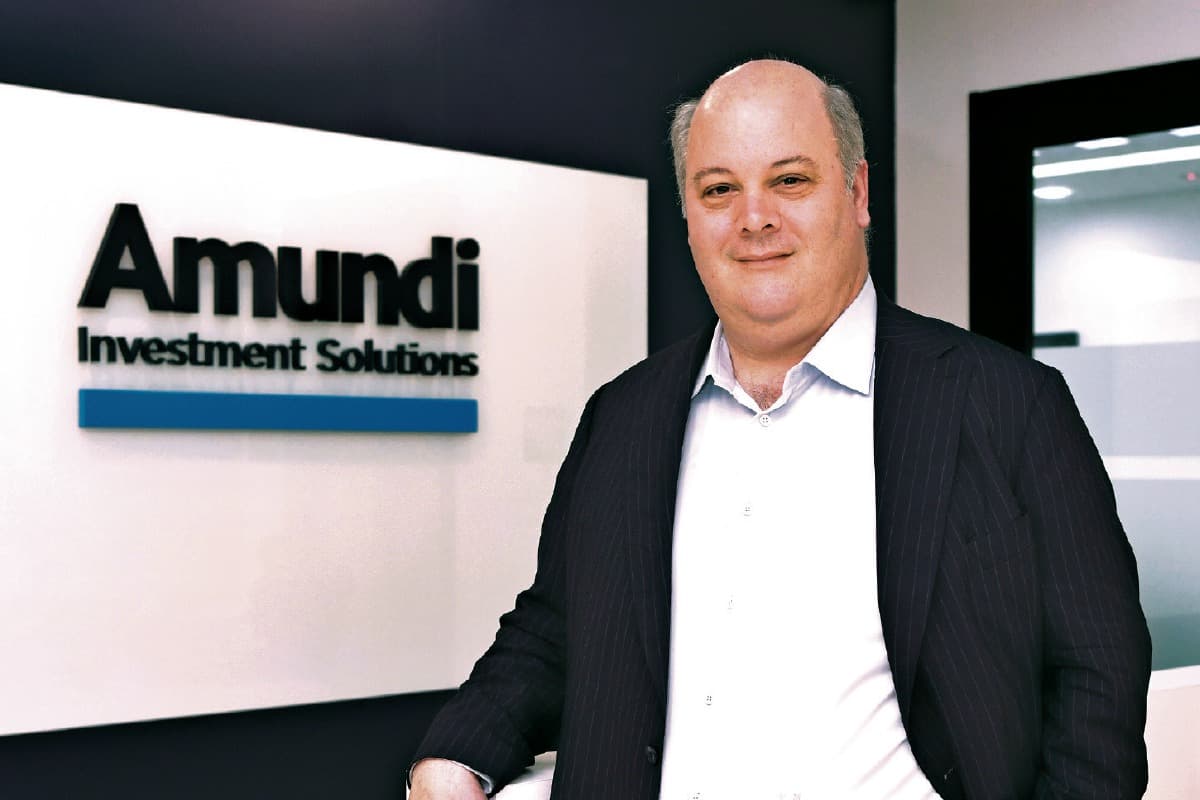
WHILE markets are fixated on the inflationary risks of the conflict in the Middle East, a more significant threat — global growth slowdown — may be emerging even if the Iran war proves short-lived. This is according to Vincent Mortier, group chief investment officer of French asset management group, Amundi.
“We are not that worried about inflation. We are more concerned about the impact on growth if [the Iran war] lasts for too long,” Mortier says, suggesting that investors may be focusing on the wrong side of the equation.
The escalation of tensions between the US, Israel and Iran has pushed oil prices above US$100 per barrel, reviving memories of past energy shocks, from the oil crises of the 1970s to the commodity spike following Russia’s invasion of Ukraine in 2022.
Mortier argues, however, that the current environment is materially different. While higher energy prices will lift headline inflation, the impact on underlying price pressures is likely to be contained.
“We don’t believe the impact will be that harsh on core inflation in Europe, Asia or the US … there are other forces at play which are in fact bringing deflation,” he says, pointing to factors such as cheaper exports from China and technological advances.
Amundi, in its Global Investment Views research note for April 2026, expects the impact on inflation to vary across regions. The eurozone is likely to be more affected than the US, particularly if higher energy prices feed through into intermediate goods, freight and insurance costs.
In the US, where housing is a major component of core inflation, higher interest rates are already cooling property markets, limiting the risk of sustained price pressures.
Against this backdrop, the bigger concern shifts to growth. Amundi has already lowered its global growth outlook, even as many research houses and asset management companies maintain a “wait-and-see” approach. Mortier contends that the economic impact from the war is already visible.
“Even if the conflict stops tomorrow, or within one or two weeks, there are already impacts on the economy. There is already some slowing down in consumption and investment,” he says.
While the slowdown is currently expected to be contained within 2026, the stakes rise the longer the geopolitical instability persists. “The longer it lasts, the more it will hurt consumer confidence and public finances as well.”
The International Monetary Fund (IMF) has warned that the conflict is likely to result in both higher inflation and slower global growth. Its managing director Kristalina Georgieva recently cautioned that “all roads now lead to higher prices and slower growth”.
Even in a scenario where the conflict is resolved quickly, the IMF is expected to lower its global growth forecasts while raising its inflation outlook in its upcoming World Economic Outlook due on April 14.
Prior to the escalation of the conflict in the Middle East, the IMF was signalling an upward tweak to its global growth projection of 3.3% in 2026 and 3.2% in 2027 — forecasts released in January — as economies continued to recover from the pandemic. At the time, the IMF had already raised its 2026 forecast by 0.2 percentage points, from its previous October estimates, as it noted that the global economy was performing better than expected.
Amundi, on the other hand, had a more conservative projection of 3% for 2026 global growth — moderating from 3.3% in 2025 — before the war erupted. It was of the view that there would be a moderation in consumption amid affordability constraints, and that the artificial intelligence hype wouldn’t translate into broad growth as quickly as some assumed.
Not a repeat of past oil shocks
Mortier observes that the sensitivity of the global economy to energy prices has evolved over time. Compared with past oil shocks, economies today are less energy-intensive, and supply chains have diversified in response to earlier crises.
Furthermore, when adjusted for inflation, current oil prices remain below peaks seen in 2007-2008 and during the post-pandemic surge in 2022, he notes.
“So while the oil prices seem high, compared to 2007, in fact oil prices are lower now … and the impact on the economy is lower than what we used to know.”
While Europe faces a higher risk of stagflation, Amundi does not expect a 1970s-style era of high inflation and stagnant growth as the most likely “base case” scenario. Instead, the group is anticipating a modest slowdown with manageable and contained inflation — a situation that should still deter central banks from aggressive tightening.
“We don’t at all believe that the European Central Bank, the Bank of England, or the US Federal Reserve will hike (rates) because inflation will be under control in the end and growth will start to decelerate.”
Current market pricing reflects the opposite, as investors shift from expecting rate cuts to anticipating hikes, says Mortier. “We think it’s too extreme,” he notes, adding that such moves risk unnecessarily tightening financial conditions.
As high energy prices begin to squeeze corporate margins and household consumption, Mortier insists that the market must look past the headlines. “We are at a moment where inflation is at target, which is not very high … so any decrease of growth will be particularly impactful, and this is what we need to monitor.”
Save by subscribing to us for your print and/or digital copy.
P/S: The Edge is also available on Apple's App Store and Android's Google Play.