

This article first appeared in Capital, The Edge Malaysia Weekly on April 13, 2026 - April 19, 2026
FRENCH asset management giant Amundi is recalibrating its global portfolios as geopolitical tensions in the Middle East ripple through financial markets, prompting a fundamental reassessment of risk, asset allocation and long-held assumptions about how different asset classes behave in times of extreme stress.
The war involving the US, Israel and Iran has pushed oil prices above US$100 per barrel, triggering volatility across equities, bonds and currencies, and forcing investors to respond to what is increasingly seen as a complex and evolving shock.
In response, Amundi, which manages €2.38 trillion (RM11.05 trillion) in assets for over 200 million clients globally, has trimmed its exposure to equities, increased allocations to short-dated bonds, and turned more selective on emerging markets as it navigates what it sees as a mispriced market environment.
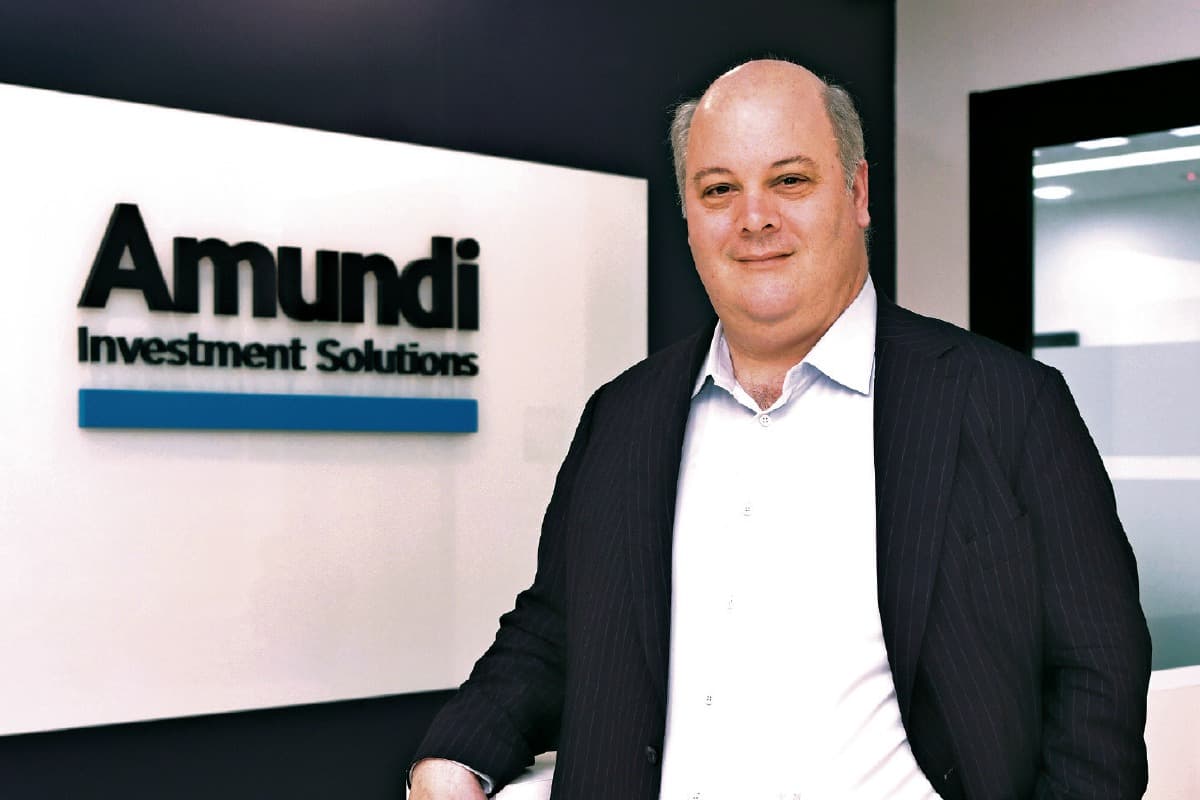
“We sold at the start of the conflict some equities, in particular US equities,” says Vincent Mortier, group chief investment officer of Amundi, noting the firm has shifted from an overweight position to a more neutral stance on equities.
At the same time, it has added exposure to short-dated bonds, particularly in developed markets where yields have spiked. “We have added a lot of one- to two-year bonds … we believe the yield will go down and so it’s a good investment,” Mortier tells The Edge during a recent visit to Kuala Lumpur.
The repositioning reflects a broader view that markets have not fully priced in the implications of the conflict, even as the shock continues to reverberate through energy markets and global supply chains.
Rethinking the ‘risk-free’ asset
Beyond tactical allocation shifts, the current environment is forcing a deeper reassessment of what constitutes a safe asset. Mortier argues that US financial assets, specifically US Treasuries, are no longer perceived as anchors during a crisis.
“The way US Treasuries are behaving during this crisis is not like a safe haven. In fact, it is quite the opposite,” he says.
Mortier cites the US government’s widening fiscal deficit, currently running at about 6% to 7% of gross domestic product, and an increasing supply of sovereign debt as key factors eroding investor confidence.
“You have a growing supply of US debt. But the issue is finding buyers,” he says, noting that this imbalance is increasingly pushing yields higher as investors demand greater compensation for holding sovereign risk.
This concern, he argues, is not merely cyclical but structural, affecting investor sentiment towards government bonds across other markets as well.
“In many countries, such as the US, the UK, France and Italy, questions around debt sustainability are becoming more pronounced by the day,” he says, pointing to rising interest costs that are beginning to crowd out public spending and constrain governments’ ability to support growth.
As these pressures build, long-standing assumptions about relative risks are shifting. “During the crisis, what was seen as a safe asset was high-quality corporate debt,” Mortier says, referring to investment-grade bonds that, in some cases, proved more resilient than sovereign securities.
This represents a notable departure from past crises, from the 2008 global financial meltdown to the pandemic shock in 2020, when investors typically sought refuge in US government bonds.
For Mortier, the war in the Middle East is less a primary cause and more an accelerant of this shift, as it exposes structural weaknesses that have been building in the global financial system for years.
Selective recovery in emerging markets
The conflict triggered a broad sell-off across emerging markets as global funds retreated to cash. Mortier views the reaction as excessive and sweeping in nature, as investors pull out indiscriminately without assessing individual economies.
“We see the short-term weakness of the market more as an opportunity than a recognition that something has structurally changed,” he says.
Amundi believes several Asian markets, including India, Indonesia and Thailand, have become oversold relative to their fundamentals, with currencies and equities trading below what the group considers their fair value. “Now we are reaching levels that are clearly oversold … so it’s a good opportunity to come back to these markets because the fundamentals are still quite good actually,” Mortier says.
Malaysia, however, presents a more nuanced picture, he says, as the ringgit is holding up relatively well — supported by stronger fundamentals — even as valuations remain less attractive to foreign investors.
“Malaysia has suffered less. The ringgit has actually strengthened relative to other currencies in the region, many of which have come under pressure,” he notes.
“Malaysia has decoupled and is on a different, more positive trajectory, I would say. The prospects for Malaysia are still good, but it is not a market that we would consider particularly cheap at this stage.”
Overall, Mortier says emerging markets today are structurally more resilient than in previous decades, having shaken off the vulnerabilities exposed during the 1997/98 Asian financial crisis with improved reserves, fiscal discipline and more diversified economies.
“Most countries [in emerging markets] have totally modified their model. We see opportunities in emerging market currencies, in particular Asian currencies except renminbi … and emerging market debt in local currencies as well,” he says, adding that Amundi is becoming more selective even as it remains positive on this asset class, favouring local currency bonds and currencies that appear undervalued.
New investment playbook
While energy-intensive industries are typically most exposed to oil price spikes, Mortier cautions that the technology sector may also face risks.
“I’m not sure the tech sector will be totally immune or safe,” he warns, pointing out how the sector is becoming increasingly capital-intensive, with massive spending on data centres, semiconductors and artificial intelligence (AI) infrastructure.
“If you have overcapacity and less demand than expected … you can have a big issue,” he flags, noting that rapid innovation cycles could erode returns before investments are fully realised.
Ultimately, the breakdown of traditional asset correlations means the old rules of diversification no longer apply, Mortier argues. “It was easier in the past because you had some long-standing patterns and correlations. Now, you need to revisit all that.”
In this new environment, even foundational concepts such as the “risk-free rate” are being called into question.
“Maybe corporate debt is safer than government bonds,” he says. “This has been an ongoing issue. We have already started to see this since last year with [President Donald Trump’s] Liberation Day … So, I think we need to totally revise the historical approach.”
Save by subscribing to us for your print and/or digital copy.
P/S: The Edge is also available on Apple's App Store and Android's Google Play.