

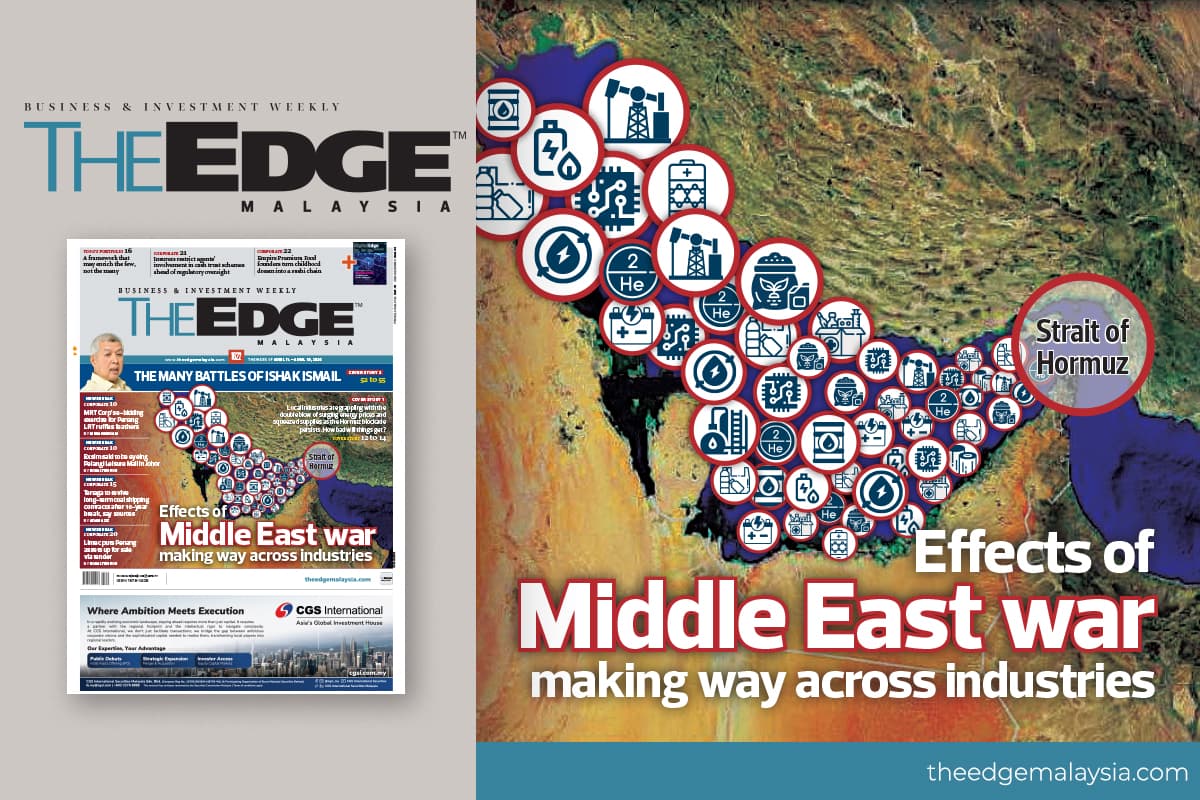
KUALA LUMPUR (April 11): The ceasefire between the US and Iran has been welcomed worldwide, but the impact of the war — especially the closure of the Strait of Hormuz — continues to be felt across industries to varying degrees.
The implications are such that several banking institutions have introduced targeted assistance to support customers facing financial constraints as a result of the war.
One major consequence of the war is the rise in the price of non-subsidised diesel to an eye-popping RM6.72 per litre. Although diesel vehicles are not as widely used as petrol-powered ones, they remain the primary mode of transport for most businesses in Malaysia.
Fleet cards provide businesses with subsidised diesel in limited quantities, but coverage does not extend to all segments of business and is often insufficient.
“The part that hits hardest is when diesel costs more because every single product that travels on a lorry or truck costs more to deliver. This affects grocery prices, fresh produce, processed food and household goods.
Farmers are also facing higher fuel costs and fertiliser shortages, which pass through the food supply chain and eventually reach the consumer,” says UOB Malaysia senior economist Julia Goh.
Other industries that rely on the by-products of petroleum or natural gas, such as plastic packaging and gloves, are also feeling the strain.
The Federation of Malaysian Manufacturing in a recent statement said based on a survey of its members, nine out of 10 respondents are already affected by the war, or will be within four weeks.
“This is not a situation that companies can manage through tighter margins or operational adjustments. Production lines are at risk of stoppage, export orders are being cancelled and the financial capacity of manufacturers to sustain operations is under direct and accelerating pressure,” it said.
Exactly how strained are industries?
In Cover Story 1 in this issue of The Edge Malaysia, we also zoom in on the logistics sector in Malaysia which is beginning to feel the strain from the war in Iran, as exporters adopt a cautious stance and delay shipments amid heightened uncertainty.
For now, logistics players are partially shielded by government diesel subsidies, which have helped contain operating costs despite a surge in global fuel prices.
Express delivery and transport firms such as Swift Haulage Bhd (KL:SWIFT), Tiong Nam Logistics Holdings Bhd (KL:TNLOGIS) and GDEX Bhd (KL:GDEX) say the immediate impact remains manageable, though pressure is building in certain areas.
Read more on the impact of the war in the weekly.

Meanwhile, Datuk Ishak Ismail, a corporate figure from the 1990s, returned to the scene in arguably the most controversial company in recent years — NexG Bhd (KL:NEXG).
After acquiring a 28% stake in NexG through the acquisitions of Skylimit Alliance Sdn Bhd and Trendtrove Tradin Sdn Bhd in March, Ishak became the latest largest shareholder of the security documents producer, which has been changing hands since late 2024.
The emergence of Ishak as the single largest shareholder of NexG seems to have put a stop to the shareholder tussle between the group’s founder Datuk Abu Hanifah Noordin — backed by businessman Victor Chin Boon Long — and a party led by Bestinet Sdn Bhd’s founder Aminul Islam Abdul Nor.
In an exclusive interview with The Edge, Ishak — who has been close to Prime Minister Datuk Seri Anwar Ibrahim since the 1980s — claims that he simply wants to ensure that NexG doesn’t fall into the wrong hands, especially foreigners.
Is Ishak a genuine investor looking to put NexG back on the right track?
Read the exclusive interview in Cover Story 2 this week.
Save by subscribing to us for your print and/or digital copy.
P/S: The Edge is also available on Apple's App Store and Android's Google Play.