

This article first appeared in City & Country, The Edge Malaysia Weekly on April 13, 2026 - April 19, 2026
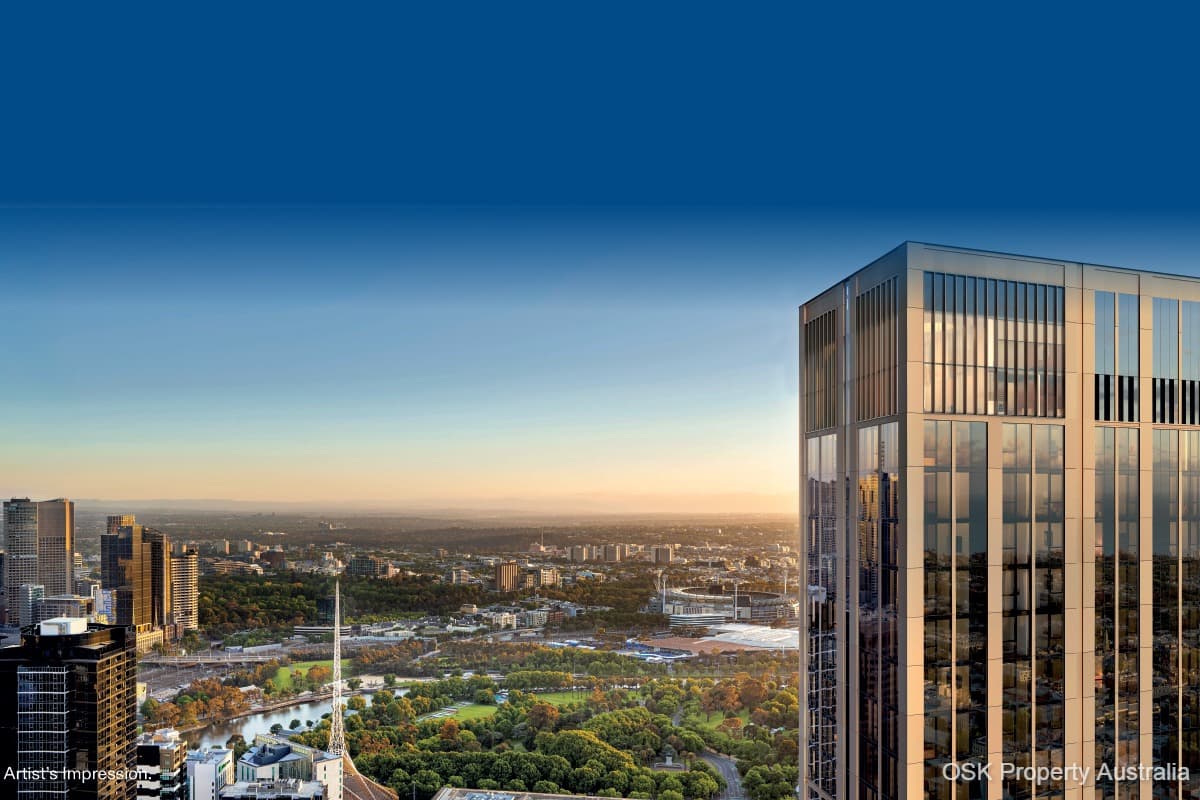
OSK Property Australia is set to unveil AURA, the third stage of its five-acre Melbourne Square master plan in Southbank, this month in Kuala Lumpur.
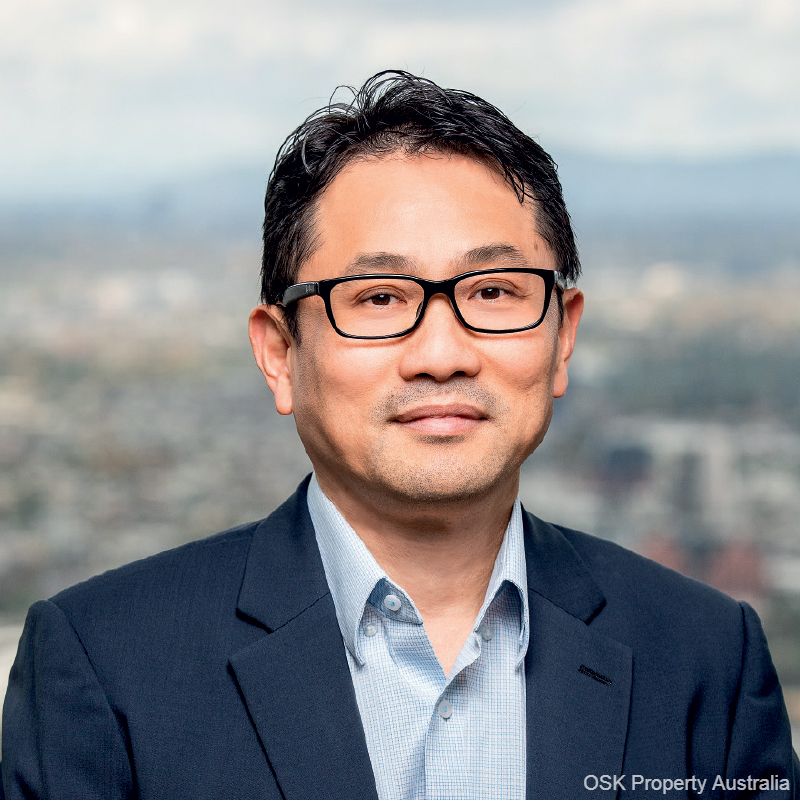
CEO Woon Chong Boon tells City & Country in a virtual interview that the project is the fourth apartment tower, of a total of six, in the freehold mixed-use development.
MSQ, the first stage, comprises two apartment towers, a retail space and a recreational park. It was completed and handed over in 1Q2021. BLVD, the second stage, is a 73-storey apartment building that was launched in 2Q2023. Already 80% sold, it is slated for completion in 2Q2028.
“BLVD is our stage two and the third tower of Melbourne Square. It offers two types of units — typical and premium. The typical units have smaller built-ups on the lower floors, targeting the investor market, while the premium units are from Level 57 to 74, aimed at homebuyers,” says Woon.
“The demand for both types has been steady and healthy. We do not have any smaller 1-bedroom and 2-bedroom units to sell — only a handful of 3-bedroom units are left, which prompted us to launch AURA now.”
With a gross development value of A$800 million (RM2.2 billion), AURA will feature 673 apartment units in a 67-storey tower on a 0.84-acre plot. The development will offer several layouts, with built-ups of 462 to 1,496 sq ft to choose from, while selling prices are from A$554,000 to A$2.87 million.
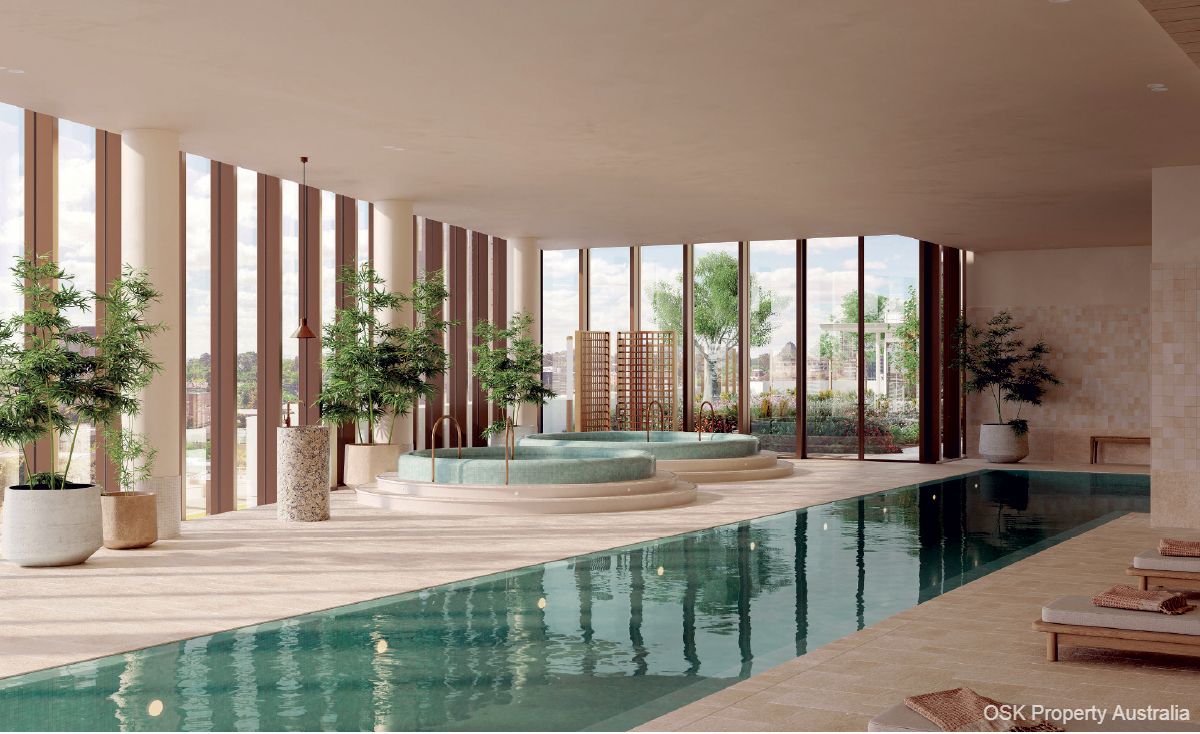
The facilities at AURA will be on levels 7, 49, 50, 66 and 67. On Level 7, there will be a 25m indoor swimming pool, cold plunge pool and spa, gymnasium, Reformer Pilates studio, golf simulator, sauna and steam room, two private dining rooms, work-from-home areas, a library, yoga room, games, media and music rooms, and an open-air terrace.
Levels 49 and 50 will feature luxurious social spaces with a sweeping lounge bar, conservatory and private dining rooms and lounges. On levels 66 and 67, there will be lounges, a private dining room, an outdoor terrace and premium wellness spaces such as salon and treatment rooms, private spa bath, sauna, and meditation and sound therapy rooms, all of which offer views of the neighbouring Arts Precinct and Melbourne CBD, says Woon.
“Melbourne Square has always been about creating a prominent precinct in Southbank. In stage one, our focus was on selling the idea of precinct living. We introduced public amenities such as Woolworths [supermarket], a childcare centre, F&B outlets [in the retail space] and the Kennedy Park, along with strong resident facilities,” he adds.
The focus shifted to more elevated living when OSK Property Australia introduced BLVD.
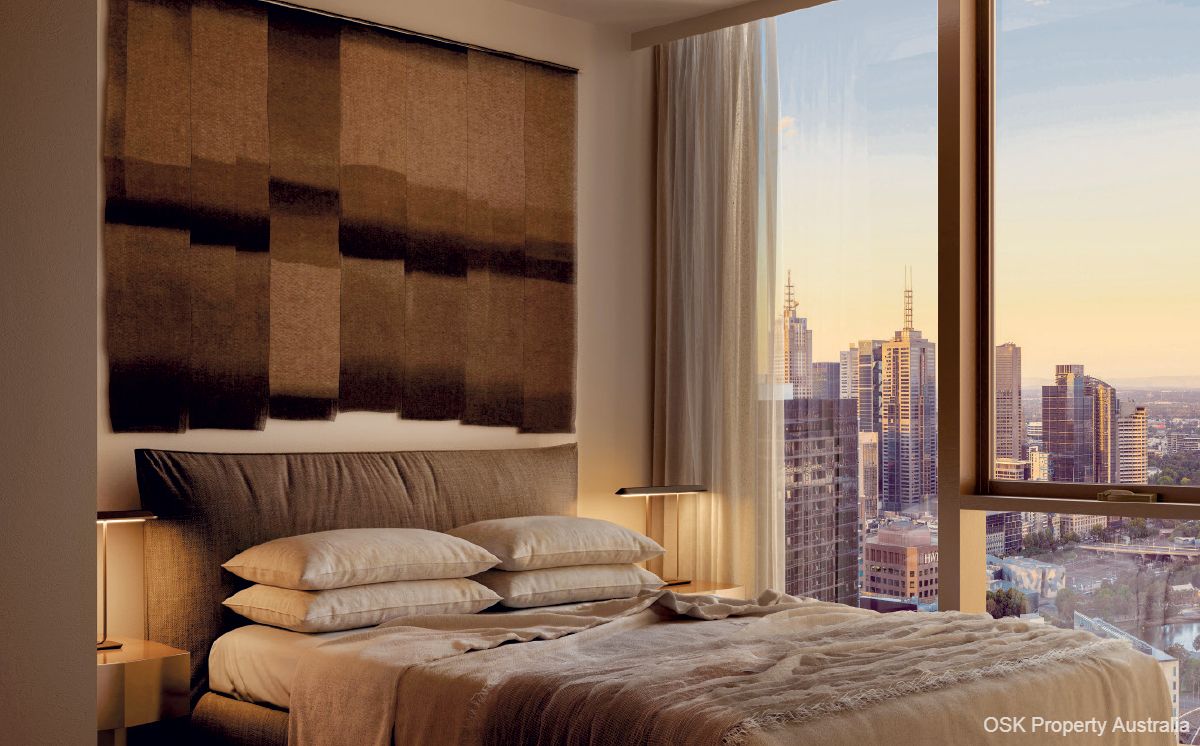
“We had already established the public amenities [in stage one], so the emphasis [for BLVD] became better design, improved finishes, more liveable apartments. AURA takes this a step further. It builds on what we did in BLVD, but introduces a Japanese-inspired influence that reflects calm, comfort and well-being,” says Woon.
“The amenities are more wellness-focused, including spa-style features for premium units. It is still fundamentally Australian in design, but with a Japanese theme, which is very current in the market.”
He highlights that AURA caters for both homebuyers and investors.
“We are only 2km from the heart of Melbourne CBD, and most buyers in the city centre apartment market are investors. I would say about two-thirds of buyers [of Melbourne Square] are investors and a third are owner-occupiers,” he adds.
“That is why we offer both typical and premium products [at AURA]. The typical product is more investor-focused, while the premium product is aimed more at owner-occupiers. That approach runs across stage one, stage two and stage three.”
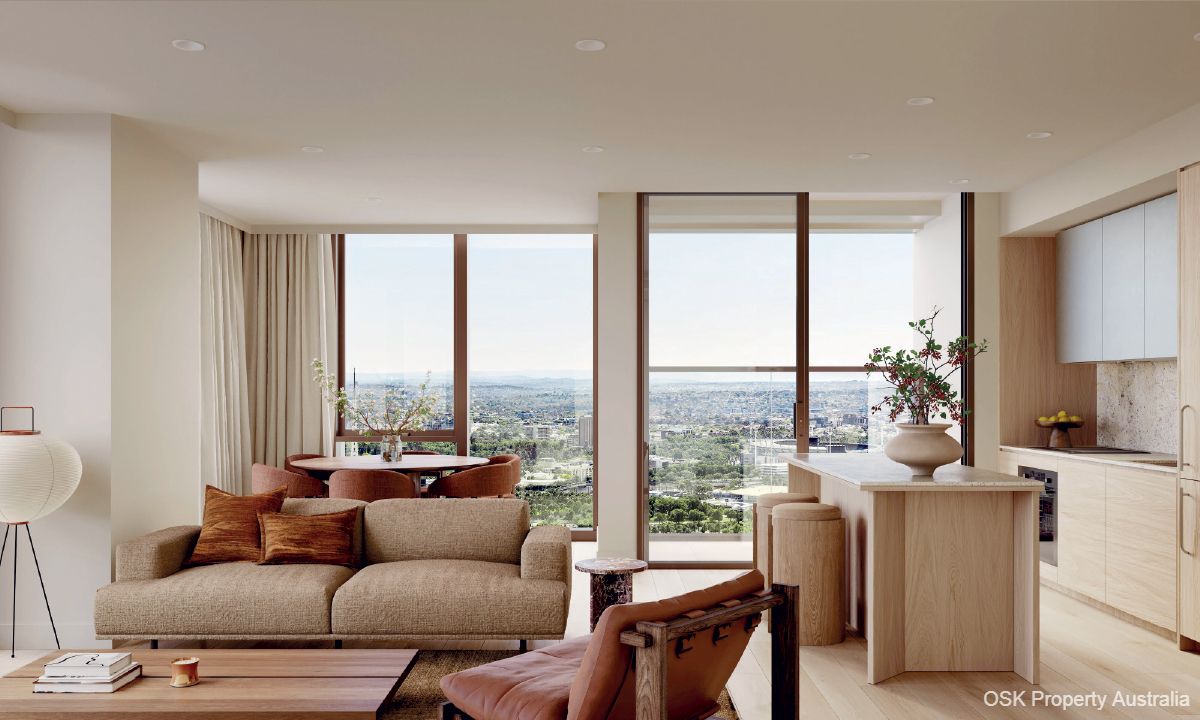
The developer is gradually moving towards more compact apartments in AURA as affordability has become a bigger issue in Melbourne because of rising construction costs. “Buyers still want two-bedroom units, but they are increasingly open to slightly smaller layouts if the price point remains manageable. The key is to make those apartments compact but well designed, well finished and supported by the right common facilities,” says Woon.
While high-rise living is still not common across Australia, the acceptance level and demand have increased since the pandemic across all age groups, from students in their twenties to retirees in their sixties and seventies, he highlights.
Woon believes that as the city grows and commuting times get longer, more people will want convenience and security. The changing lifestyle will make comprehensive, integrated high-rise living more common in Australia over the next decade.
“Another factor is affordability. The gap between apartment and landed home prices continues to widen. As detached homes become less affordable, more buyers are being pushed into apartments. Apartment demand, therefore, is likely to remain firm. We are confident about the sales for AURA,” he says.
The construction of AURA is set to commence in 4Q2026, with completion planned in stages by 2029. While the official launch date in Melbourne has not been finalised, a grand launch event will take place in the developer’s home base of Kuala Lumpur on April 18 and 19 at EQ Kuala Lumpur hotel.
Evolve to stay relevant
The original master plan of Melbourne Square would have seen six towers built over five stages, including a hotel and an office tower.
“The original master plan included a hotel and an office tower, but market conditions changed after the pandemic. AURA, for example, was originally intended to be a hotel. Post-Covid, the housing shortage shifted demand strongly towards residential, so we adapted,” says Woon.
“We did the same with stage four. It will now be a build-to-rent tower [from an apartment tower for sale]. Build-to-rent has become an important segment in Melbourne because rental demand is so strong,” he notes.
While the details of the build-to-rent tower are not ready to be disclosed, the developer is set to commence construction work.
“There is no conventional launch [for the build-to-rent project] because we will not be selling the units but renting them. We are now working towards commencing construction, hopefully by end-2Q2026 or in 3Q2026. It will be our fifth tower and will comprise mostly studio and one-bedroom apartments, which have the strongest demand in the rental market,” says Woon.
Although build-to-rent is a relatively new product in the Melbourne property market, it has become increasingly popular after the pandemic, especially in highly populated cities like Melbourne, he observes.
“In capital cities, a large number of residents rent. At the same time, construction slowed sharply during and after Covid because of rising construction costs, so supply has lagged while demand has continued to grow. That has created a real shortage of dwellings in Melbourne and across Australia,” says Woon.
“Migration is also different now. More migrants are skilled workers with stronger incomes, which means they can rent premium homes or even buy straight away. That places even more pressure on housing supply.”
According to Australia-based property consultancy Charter Keck Cramer, Melbourne’s apartment market is projected to face a shortfall of at least 28,000 units between FY2026 and FY2029 despite the city needing to deliver upwards of 15,000 apartments annually to meet demand. The firm foresees local apartment demand continuing to outweigh supply in the coming years and this will lead to upward pressure on prices and rents. Its data showed that rents are projected to grow about 4% to 4.5% per annum from 2025 to 2030.
Given the promising prospects of the Melbourne property market, Woon says the sixth tower, originally planned as an office tower, will most likely be converted into a residential tower as well.
“The office market has softened significantly and changed structurally after the work-from-home trend. At this stage, an office tower does not make sense. We have not started detailed planning for it yet. If current conditions continue, it will most likely become another residential tower … our master plan gives us flexibility. Given the strength of high-rise living in Melbourne, residential seems the obvious direction,” he adds.
Duplicating a successful model
OSK Property Australia purchased two adjoining parcels of land with a combined size of about two acres along Queens Bridge Street and City Road in Southbank, Melbourne, in 2022. The developer is in the midst of obtaining development approval for the project, whose working name is Queensbridge Place.
“The larger parcel came from our landlord, then the adjacent site came on the market, so we bought that as well to assemble the full site. Together, they are about 7,800 sq m, or roughly two acres,” says Woon.
“The first site came with a permit for apartments and some hotel use, but because we acquired the adjacent parcel as well, we decided to combine the sites and apply for a new permit. That application was submitted in November last year.”
The master plan consists of two residential towers sitting atop a shared podium with public amenities such as a supermarket, childcare centre, co-working space, F&B outlets and a small park linking Queens Bridge Street to City Road. There will also be a tower currently intended for a hotel or serviced suites.
Woon highlights that the project remains conceptual and subject to approvals. If approvals and everything else, including the launch of the remaining tower in Melbourne Square, go smoothly and stay on track, the earliest that the developer will launch Queensbridge Place will be in 2028.
“The question is whether we proceed with the last Melbourne Square tower first, or whether we shift our attention to Queensbridge Place before returning to it. My view is that if Queensbridge Place progresses well, we may begin one stage there before returning to the sixth tower. But ultimately, that will depend on market conditions,” he adds.
Woon remains confident about the mixed-use development in Melbourne, which has proven successful in Melbourne Square, as public amenities are crucial in bringing in healthy sales.
“Mixed-use integrated developments are not common here because you need scale. Most projects in Melbourne are single towers without enough land to support public amenities, but they are definitely important. They help during sales, but also later when owners lease out their apartments,” he says.
“Being able to take the lift down to a supermarket, childcare or park is a strong draw. Convenience matters more and more because people are busy and value their time highly.”
While the current focus is sizeable land in Melbourne for mixed-use developments like Melbourne Square and the upcoming Queensbridge Place, Woon and team are always on the lookout for opportunities to diversify the developer’s product offerings and expand market share in Australia.
“In Australia, we have focused on urban high-rise apartments. Before expanding to other cities, we may look to diversify within Melbourne first, including products such as townhouses, house-and-land and other residential formats, if the right opportunity arises. But whatever we do, it will be based on long-term fundamentals, especially population growth and economic activity, because we are definitely here to stay for the long term,” he says.
Save by subscribing to us for your print and/or digital copy.
P/S: The Edge is also available on Apple's App Store and Android's Google Play.