

This article first appeared in The Edge Malaysia Weekly on April 6, 2026 - April 12, 2026
IMAGINE you are almost a trillionaire with a net worth of around US$852 billion. Without the Iran war and the selloff in tech stocks, you would probably be a trillionaire by now. Imagine that you genuinely believe the one thing that is slowing down the growth of your sprawling tech empire is the global capacity to make Artificial Intelligence (AI) chips. There just aren’t as many chips being made as the world needs. You look at the largest chip manufacturer on earth, Taiwan Semiconductor Manufacturing Co (TSMC) with market capitalisation of US$1.8 trillion (RM7.26 trillion), and all you see is its mouth-watering 63% gross margins and its huge revenue and profit streams, and you begin to wonder if you could use your magic touch to create your own oceans of profits by making the most sophisticated and powerful chips yourself in America. Indeed, anyone who has launched over 10,000 satellites in just the last three years would wonder how difficult can it be to make AI chips.
If your name is Elon Musk and you are the CEO of the EV pioneer Tesla Inc, which is readying to unleash millions of robotaxis on the world’s streets over the next few years and tens of millions of Optimus humanoid robots in homes and factories, as well as the founder of SpaceX, whose StarLink subsidiary has launched nearly seven out of 10 satellites in the sky and has a plan to build thousands of data centres in space, your first inclination would be to just build all the AI-driven infrastructure in space that you believe humans might need. The world needs data centres in space because the other main obstacle to growth is the lack of energy to power all those AI chips. Let me give you an example: A single state-of-the-art AI graphic processing unit (GPU), like Nvidia’s GB200 Blackwell chip, needs 1,200 watts of power, compared with about 200 watts for traditional server central processing unit (CPU) chips.
If you confidentially filed this past week to do an initial public offering of your flagship SpaceX in late June, in the week of your 55th birthday, aiming to raise US$75 billion at a valuation of around US$1.75 trillion, you clearly have the track record and wherewithal to undertake any project on earth or indeed in the sky. Yet to get there, you need a plan to build the most powerful processor chips on earth first.
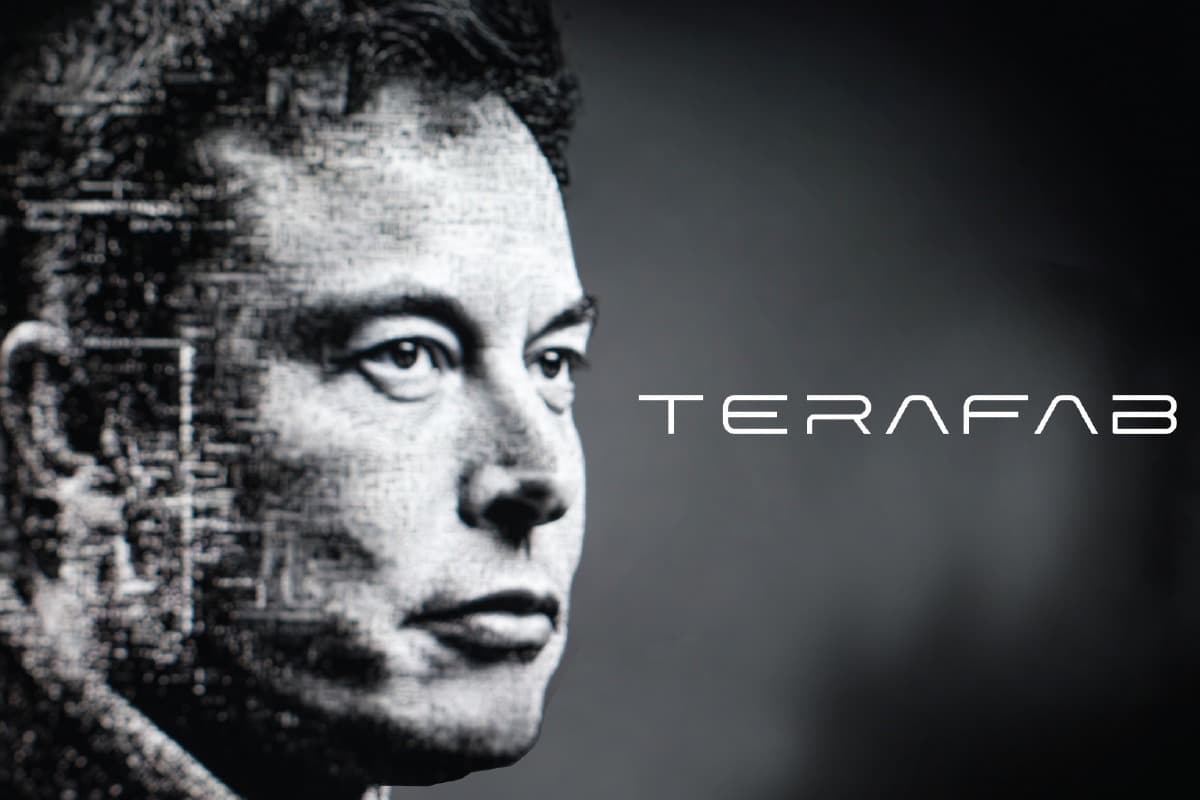
Not surprisingly, that’s just what Musk did last month when he announced that three of his companies were teaming up to spend up to US$25 billion building a Terafab, a giant chip foundry, near Tesla’s Giga Texas campus in eastern Travis County in Austin. Terafab, as Musk has conceived it, won’t just address the huge global chip shortage the world is witnessing right now but also expand AI processor capabilities.
“We either build the Terafab, or we don’t have the chips, and we need the chips, so we’re gonna build Terafab,” Musk said at a livestream event staged inside a decommissioned power plant in Austin two weeks ago.
Terafab’s facility, which is likely to exceed 100 million sq ft, or roughly the size of 1,350 soccer fields, will integrate chip manufacturing for cars, robots and orbital satellites. It won’t just build Tesla-designed D1 Dojo chips used in Tesla’s Fuel Self Driving (FSD) cars or AI4, AI5 and AI6 inference chips it has designed for real-time processing in Optimus humanoid robots and autonomous driving but also an array of other chips and sensors, including high bandwidth memory or HBM chips designed to deliver extremely high-speed data transfer (bandwidth) at low latency for high-performance AI computing.
Musk says bringing fabrication, memory and packaging under one roof in Texas, Terafab could help create a “recursive design loop”, allowing chips to be designed, printed and tested in days rather than weeks or months. Chips made by TSMC are designed in the US by Nvidia, Apple, AMD, Broadcom and others, manufactured in Taiwan, and packaged and tested in Taiwan, Penang, Singapore or Vietnam. They are then sent out to end manufacturers like Hon Hai Precision Industry, which makes Apple’s iPhones at its plants in Shenzhen. Terafab won’t just be a massive vertically integrated chip facility. It will be located right next door to Tesla plants making Cybercab Robotaxis and Optimus Humanoid robots. Moreover, if the Terafab experiment succeeds, it would give Musk’s firms much greater control over the chip-development cycle.
Here’s why Musk believes the world needs the biggest chip-making plant ever built: current chip supply projections of the big two chip fab operators TSMC and Samsung Electronics — the only companies with the capability to build top-of-the line 2nm chips — will satisfy just 2% of what the three tech giants that he controls — SpaceX , Tesla and xAI — need. Whether you agree with Musk’s right-wing policies or his grand vision of “colonising” Mars, one thing is certain: if he is able to build the Terafab, he would fundamentally reshape how the US produces the processors that power AI, electric vehicles (EVs) as well as space exploration. Indeed, everything that is powered by a chip processor.
The way Musk sees it, the Terafab chip manufacturing project is the logical “next step” towards harnessing the power of the sun. The giant chip fab will run on solar power. Musk said nearly 80% of Terafab’s total output would eventually be dedicated to space-based AI satellites. He says solar irradiance is five times stronger in orbit, potentially making space-based inference cheaper than terrestrial data centres within three years. Even if that takes five years instead of three, space-based data centres will be a better option than their earth-based counterparts.
Musk believes Terafab could also help create a “galactic civilisation”, his long-held vision for the future — one where humans expand beyond the earth to colonise other planets like Mars, creating a massive and orbiting solar-powered network of satellites into data centres in space, powered by constant solar energy. By the way, next year, Musk is targeting a Starship space flight to Mars, which will carry Tesla’s humanoid robots. A successful flight he has vowed would pave the way for human landings on Mars probably as soon as 2029, although “2031 is more likely”, he recently tweeted on X. The goal is simple, he said in Austin last month: “Turn science fiction to science fact.”
All of this might sound highfalutin sci-fi gobbledygook to you but companies owned by Musk as well as those owned by Amazon.com’s founder Jeff Bezos are already spending tens of billions of dollars a year to make those space dreams come true. While there is war going on in the Middle East and families and small businesses are fretting about supply chain bottlenecks, inflation and high interest rates, the innovation economy continues to spend hundreds of billions annually on AI and space-related infrastructure. What are Musk and his peers at Google, Amazon, Meta Platform, OpenAI and Anthropic trying to do? The goal is simple, Musk said in Austin last month: “Turn science fiction to science fact.”
Cost and the economic viability
Essentially, Musk is proposing only to build an in-house chip manufacturing plant owned by three firms he runs as CEO — Tesla, SpaceX and AI startup xAI — which is now part of SpaceX. The trio are eventually aiming for 1 terawatt of compute per year. That’s one trillion watts or 1,000 gigawatts. Let me give you a better sense of just how huge 1 terawatt really is. One terawatt, or 1TW, is 50 times the current global compute supply, Stacey Rasgon, Bernstein’s semiconductor analyst, noted in a recent report.
The chips will initially be used only by other Musk firms, which are the giant chip fab’s main investors. For someone who is almost a trillionaire and whose flagship firm SpaceX is readying the largest IPO ever as soon as late June, the US$25 billion initial cost of Terafab is small change with three separate entities pooling money to get the project going. While SpaceX might soon have access to a boatload of money, Tesla is not in the greatest of financial shapes. The EV pioneer generated US$6.2 billion in free cash flow last year, but Goldman Sachs estimates that with EV sales tanking, Tesla’s free cash flow could turn negative free cash flow this year.
Analysts say just the first phase of construction could cost up to US$35 billion. To get to 1 terawatt, Terafab would need to build up to 140 foundries the size of TSMC’s first fab in Arizona. Here’s Rasgon’s math: “1TW of annual compute would require somewhere between seven and 18 million 300mm wafer starts per month (WSPM), dominated by High Bandwith Memory (HBM). This would be equivalent to 140 to 360 new 50K WSPM factories, or US$5 trillion to US$13 trillion dollars of capex spend at US$35 billion per fab-equivalent,” he noted in his report.
Put it another way, “The required 1TW capacity would be on the order of the entire current global installed semi capacity base (around 16 million 300mm equivalent WSPM) and would in fact require many multiples of current installed capacity for “relevant” semis (memory plus leading edge logic wafers; 5million 300mm WSPM),” he noted.
Building chips in a 2nm-capable foundry from scratch is one of the most capital-intensive bets in industrial history. It requires manipulating materials at atomic scales with near-perfect yield, while coordinating thousands of steps using machinery that pushes the boundaries of known physics. A 2nm chip is so small that technology interacts with individual atoms. Foundry engineers are dealing with tolerances measured in fractions of an atom. Only two companies — TSMC and, more recently, Samsung Electronics — have managed to successfully operate a 2nm foundry. The world’s No 3 player, Intel, has splurged tens of billions of dollars over the years and has yet to mass-produce 2 nm chips. Its main problem is low yields or higher level of defective chips. Chinese foundries are at much lower 7nm level mainly because they are banned from accessing chip equipment and tools made by Dutch giant ASML Holdings, which is the sole provider of such sophisticated tools.
Tesla’s detractors say Terafab is just another Musk distraction. Six years ago, the Tesla CEO was promising to deliver 20 million EVs a year by 2030. Last year, Tesla delivered just 1.6 million EVs. Musk officially abandoned his 20 million electric cars target in May 2024 and made a hard pivot to delivering robotaxis and Humanoid robots. Robotaxis are an old obsession of Musk. In 2018, Musk proudly announced that there could be a million Tesla robotaxis by the end of next year, or 2019. Seven years on, Tesla operates just 10 unsupervised or driverless robotaxis in just one city — Austin, Texas. Other Tesla robotaxis operate only with a safety driver. Its rival Waymo, majority-owned by Google, has over 3,500 driverless robotaxis plying in ten US cities currently. Waymo expects to launch driverless robotaxi services in London and Tokyo by end-September.
To be sure, Musk has taken on complex challenges before, like sending 10,000 satellites into orbit, going from near bankruptcy a decade ago to a net worth of nearly US$1 trillion. Yet, building a chip Terafab might be by far the most challenging task he has ever undertaken. Musk has repeatedly proven naysayers wrong far too many times, so I wouldn’t bet against him. I believe someone like Musk, who easily gets bored with mundane things, will ultimately move on to other bigger challenges on earth, or in space. As for Terafab, it probably will still get built but nowhere near the size and scale that is being talked about.
Assif Shameen is a technology and business writer based in North America
Save by subscribing to us for your print and/or digital copy.
P/S: The Edge is also available on Apple's App Store and Android's Google Play.