

This article first appeared in The Edge Malaysia Weekly on April 6, 2026 - April 12, 2026
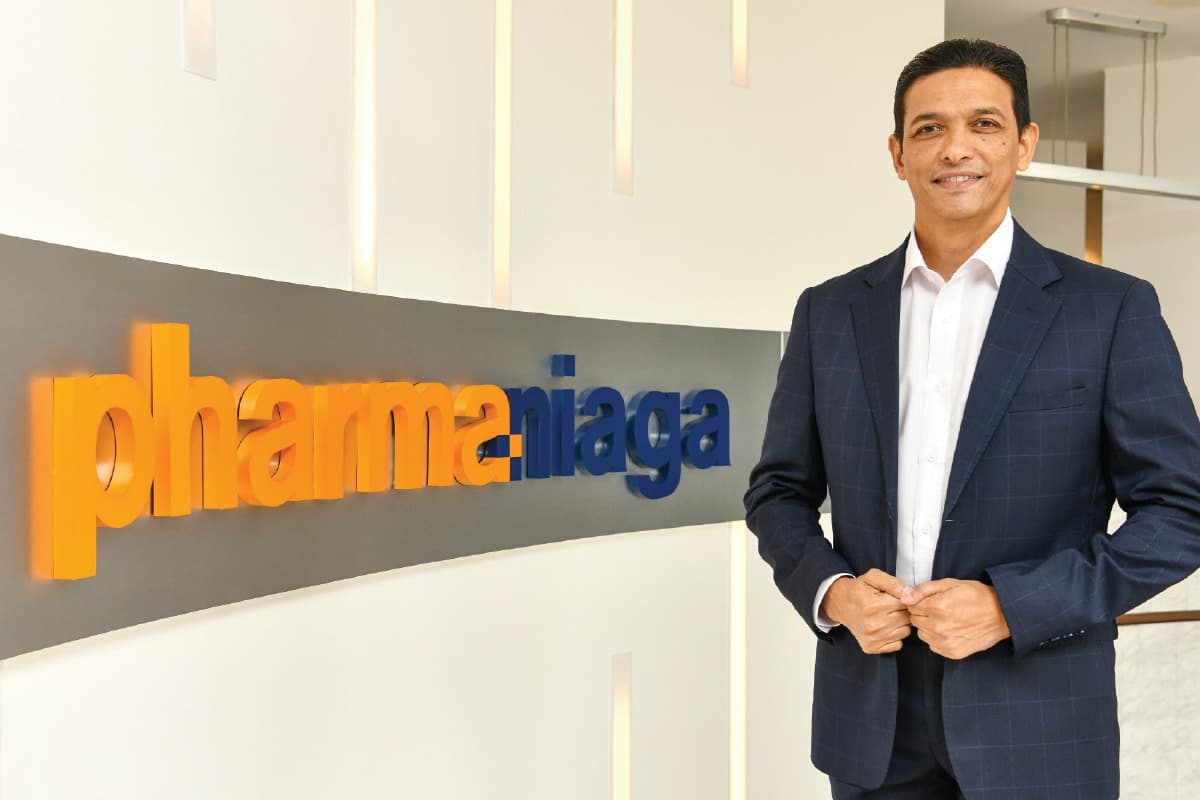
FRESH off its exit from Practice Note 17 (PN17) in March this year, Pharmaniaga Bhd (KL:PHARMA) has emerged as the successful bidder for a contract to supply human insulin to government hospitals, with production to be carried out at its Puchong facility.
The Ministry of Health is understood to be in the process of issuing a letter of award, which would make Pharmaniaga the first local company to manufacture human insulin in Malaysia — marking the group’s push into the biopharmaceutical segment.
In an interview with The Edge, Pharmaniaga managing director Datuk Zulkifli Jafar says the group is also eyeing upcoming tenders for insulin analogues in 2028.
“The human insulin contract will contribute to a total of more than RM281 million in revenue in the next three years with a gross profit of between 25% and 29%. This is just the beginning for Pharmaniaga to position ourselves as the key local player in the insulin business, as we have our eyes on the upcoming 2028 tenders for insulin analogues (Glargine/Aspart and Aspart Mix),” he says.
“In addition, it is a normal progression for all insulin manufacturers to move from human insulin to insulin analogues, followed by an anti-obesity group of drugs (GLP1RAs) to ensure a sustainable product pipeline.”
As part of its push into biopharmaceuticals, Pharmaniaga is focusing on biosimilars, with the expansion into glucagon-like peptide-1 (GLP-1) agonists — namely liraglutide and semaglutide — a class of therapies used to treat type-2 diabetes and obesity, according to Zulkifli.

“This year we aim to launch liraglutide, pending regulatory approval. We will be the first to introduce a generic version. At the same time, we are also venturing into semaglutide, the active ingredient used in drugs such as Ozempic.
“The revenue from GLP1RAs will be very significant if we look at the total addressable market size. At least 53.5% of the Malaysian adults who belong to the overweight and obese population (based on 2023 National Health Screening Initiative [NHSI] reporting) can benefit from product availability at the right price point.”
While logistics and distribution — driven largely by its government concession — remain the main revenue contributors, margins from these segments are lower than those of manufacturing, Zulkifli notes.
“Our larger margins come from manufacturing. Currently, we generate RM350 million to RM400 million from this segment, and we aim to grow it to RM1 billion by 2030. At that level, with margins of 40% to 45%, it will significantly strengthen our earnings base,” he says.
Following its PN17 exit in mid-March — after completing a RM520 million capital reduction as well as fundraising exercises comprising a rights issue and private placement — Pharmaniaga is now focused on business execution. Having risen more than 85% in the last 12 months, its shares closed half a sen, or 1.92%, lower at 25.5 sen last Thursday, valuing the group at RM1.67 billion.
The stock is currently trading at a trailing 12-month price-earnings ratio of 35.1 times, higher than its closest peer, Duopharma Biotech Bhd (KL:DPHARMA), at 14.4 times, according to AskEdge data.
Pharmaniaga’s major shareholders include Boustead Holdings Bhd (24.86%) and Jakel Medical Sdn Bhd (14.29%).
On the earnings front, the group has remained profitable for two consecutive years, with a net profit of RM48.51 million for the financial year ended Dec 31, 2025 (FY2025), though 63% lower against RM131.8 million in FY2024, which was lifted by a one-off RM124.9 million waiver relating to penalties on late deliveries during the pandemic.
Revenue for FY2025, however, rose 8.1% to RM3.93 billion from RM3.76 billion in FY2024, driven by stronger demand in the concession segment, supported by the inclusion of new products in the approved purchase list.
“For this year, we are targeting revenue of RM4.2 billion to RM4.3 billion, although we believe we can exceed that. Following our exit from PN17, we also plan to resume dividend payments, with a payout policy of up to 70% of profit after tax and minority interests (Patami),” he says.
Asked whether Pharmaniaga is affected by geopolitical tensions in the Middle East as well as US tariffs, Zulkifli says he expects indirect pressures from rising global costs, as higher freight and fuel costs could eventually ripple through the supply chain, even though the group sources active pharmaceutical ingredients (APIs) mainly from China and India.
“As we are not supplying to the US or the Middle East, we are not affected for now. Our costs are fixed, our margins with the government under the concession agreement are fixed and inclusive of petrol, diesel and transport charges; so, we cannot pass these through. When we negotiated the pricing, we had already taken these factors into consideration. Typically, in the event of inflation, there is a provision to review the rates every three years, which we can use as a basis for renegotiation. For now, however, the pricing remains fixed,” he says.
“Freight costs are factored into our pricing under the concession, as our role is purely in logistics and distribution. The price is fixed by the government based on an agreed cost structure, which assumes a minimum delivery volume. That volume — 84 million to 85 million SKUs (stock keeping units) annually — is critical, as the pricing is derived on that basis. If the minimum volume is not met, the cost structure will become unworkable, as we incur higher per-unit costs. In such cases, we will need to revisit the pricing with the government, as the agreed rates were based on that volume commitment.”
Expanding into Central Asia
Zulkifli highlights that Pharmaniaga is looking beyond Malaysia for growth, with Central Asia — particularly Uzbekistan — emerging as a potential export market for its halal-certified human insulin and vaccines.
With rising demand for halal-certified pharmaceutical products, he sees strong growth potential in the region. Exports currently contribute only about 5% of the group’s revenue.
“We are in the midst of finalising what is needed and which products to offer in Uzbekistan before going through the necessary processes. Hopefully, by the fourth quarter of this year, we can start with trading,” he says, noting that Pharmaniaga may consider establishing a manufacturing presence in the Central Asia region if demand is strong.
Governments in that region, particularly Uzbekistan, are actively promoting pharmaceutical investments through incentives such as free land and tax exemptions, which have attracted Chinese companies to establish their presence there.
Having said that, Zulkifli stresses that Pharmaniaga’s priority is its commitment to the government, especially the expansion of its vaccine pipeline, including the pneumococcal conjugate vaccine (PCV13) and the enterovirus 71 (EV71) vaccine, which targets hand, foot and mouth disease.
“Currently, vaccines in Malaysia are fully imported, with the government spending about RM250 million annually, mainly for the National Immunisation Programme (NIP). The Covid-19 pandemic showed that without local production, we are dependent on external supply, which can result in delays and limited access,” he notes.
Detailing the vaccine development progress, Zulkifli says PCV13 is on track for registration approval by the second quarter of this year, while EV71 could be launched as early as the fourth quarter or next year.
“We will start with trading first, then move into localisation. The idea is to localise as much as possible, supported by grants from the Ministry of Science, Innovation and Technology to drive development. For example, we have secured grants for PCV13.
“The contract for the vaccine is huge. One vaccine product can generate RM120 million to RM150 million annually. Our focus is to expand further into the NIP. Under the NIP, there are about 11 vaccines, and we are currently developing seven of them.”
Potential corporate exercise in an Indonesian unit
Indonesia remains a key contributor to Pharmaniaga, accounting for about 30% of its earnings. The group holds a 73% stake in its logistics and distribution arm, PT Millennium Pharmacon International Tbk (MPI), and 96% in its manufacturing unit, PT Errita Pharma.
The operating environment in the republic remains challenging, however, owing to currency volatility, high financing costs and regulatory uncertainty.
“Our ringgit is stronger, while the Indonesian rupiah is quite weak now. When we consolidated [the accounts], we were affected by translation losses, about RM150 million in paper losses. Operationally, Indonesia performed very well — revenue increased from about RM1.2 billion in 2024 to RM1.4 billion to RM1.5 billion in 2025. Owing to the currency impact, however, it was reduced to just over RM1.3 billion,” he says.
To address underperformance in its manufacturing segment, Pharmaniaga is exploring options to turn around PT Errita’s business, including potential corporate exercises.
“We are not doing fundraising; we either look at sukuk or longer-term loans. We are also reviewing our manufacturing business model to enhance market penetration across government and private hospitals, as well as pharmacies, supported by a strengthened sales and marketing team,” says Zulkifli.
In addition, the group may look into consolidating its shares in the Indonesian units by bringing in a strategic partner.
At the same time, he says, Pharmaniaga wants to replicate its automation strategy in Indonesia to reduce operating costs. The group has enhanced its Malaysian logistics and distribution operations through automation and digitalisation, resulting in an annual interest savings of about RM7.6 million, with reduced monthly inventory of RM250 million from about RM400 million previously.
Save by subscribing to us for your print and/or digital copy.
P/S: The Edge is also available on Apple's App Store and Android's Google Play.