

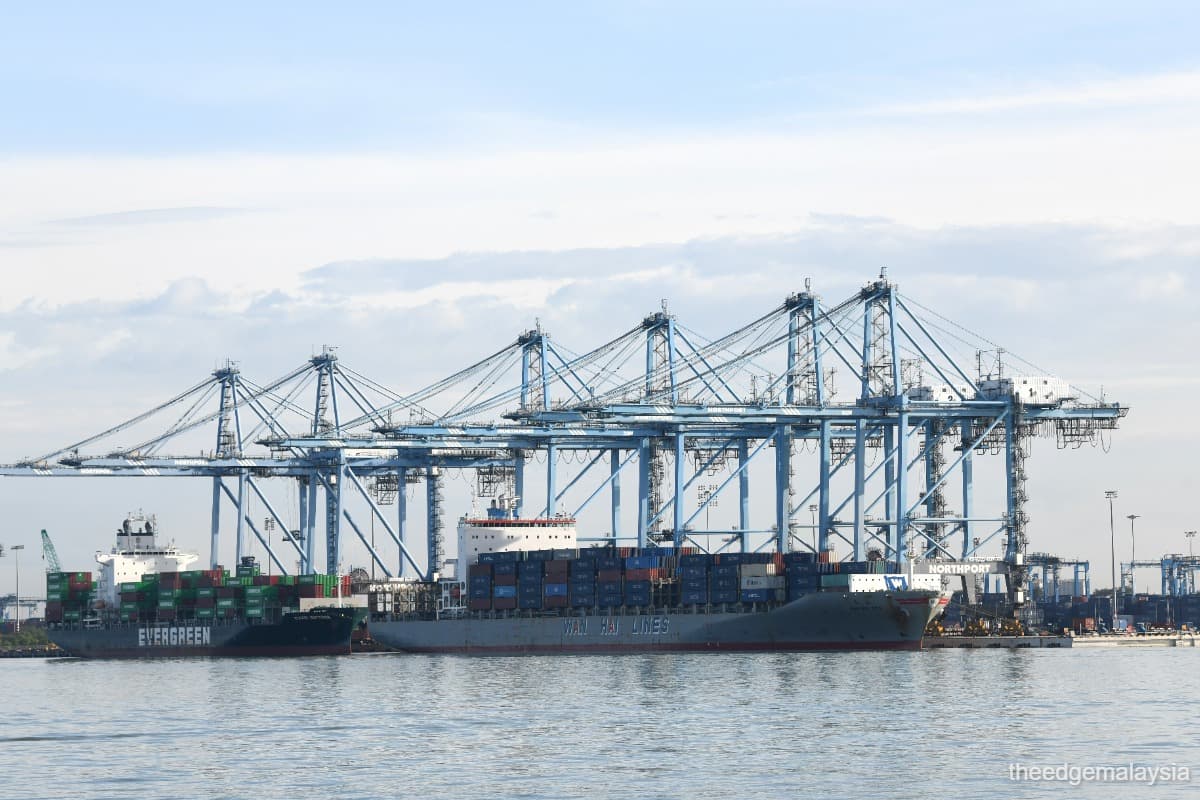
KUALA LUMPUR (April 8): Malaysia’s seaport and logistics sector is expected to remain steady in 2026, with booming e-commerce demand cushioning rising fuel prices triggered by the Middle East conflict, according to Kenanga Research.
The research house highlighted that local e-commerce gross merchandise volume is projected to grow at a compound annual growth rate of 5%, reaching RM1.5 trillion by 2027 from RM1.2 trillion in 2024.
This trend is expected to spur demand for distribution hubs, warehouses and cold-storage facilities despite external shocks, Kenanga added.
Furthermore, local logistics players also remain insulated from rising diesel prices through Malaysia’s targeted subsidy scheme, while seaport operators can only use unsubsidised diesel but are expected to be cushioned by the higher container storage income amid the potential port congestion arising from the reduced traffic in the Strait of Hormuz.
Meanwhile, the World Trade Organization raised its projection for 2026 merchandise trade volume growth to 1.9% in March 2026 from 0.5% in October 2025, with growth expected at 2.6% on the surge in artificial intelligence-related products, supply chain adaptation, and the avoidance of tit-for-tat retaliation on tariffs.
“However, this baseline forecast is under pressure from the conflict in the Middle East and sustained increases in energy prices with potential spillovers for food security and cost pressures on consumers and businesses.
“Note that the high energy price scenario would see world merchandise trade volume growth slow to 1.4% from 1.9%, shaving 0.5 percentage points off,” Kenanga further added in a note on Wednesday.
On regulation, Kenanga flagged medium-term structural headwinds from the International Maritime Organization Net-Zero Framework and the European Union’s Carbon Border Adjustment Mechanism, which could alter trade flows and cargo mix along Asia-Europe trade lanes.
Additionally, the research house also noted that Malaysia is expected to benefit from trade diversion linked to US-China trade tensions, with exports to the US surging 42.3% year-on-year in February 2026, driven by robust demand for electrical and electronic products.
Kenanga has reiterated its ‘neutral’ stance on the sector, noting that while global trade forecasts have improved, mounting geopolitical and regulatory risks continue to weigh on the outlook.
Kenanga has no top picks for the sector.