

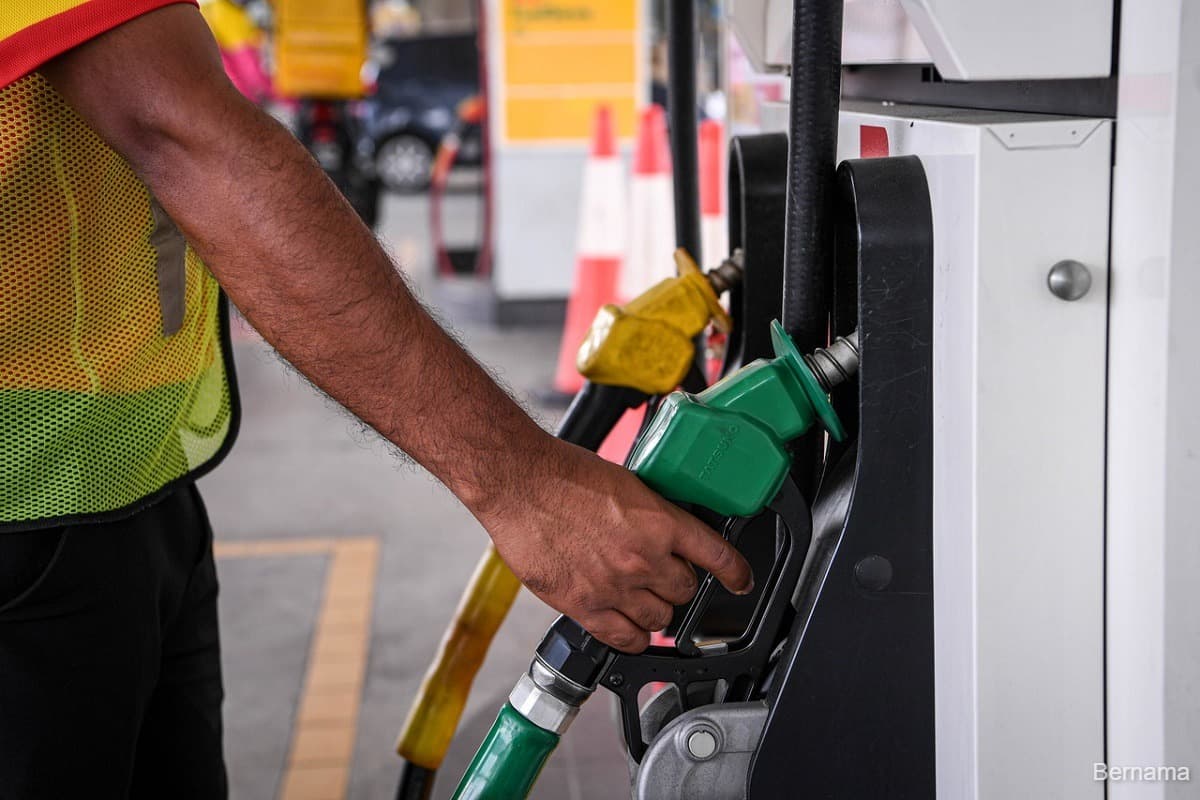
KUALA LUMPUR (April 7): Malaysians should brace for every possible outcome as a protracted Middle East conflict with no end in sight fuels an oil crisis, government backbenchers have warned.
The warning comes amid rising concerns over global supply disruptions linked to geopolitical tensions in West Asia, including risks surrounding the Strait of Hormuz — a key conduit for about 20% of the world’s daily oil and liquefied natural gas (LNG) flows.
Malaysia remains one of the few countries maintaining broad fuel subsidies, keeping domestic pump prices significantly below global market levels.
The government recently announced that the monthly subsidised RON95 petrol quota for eligible Malaysians will be capped at 200 litres starting this year, a move aimed at easing pressure on public finances.
“Yet, the government is projecting to spend about RM6 billion a month on fuel subsidies,” Bakri Member of Parliament (MP) Tan Hong Pin told The Edge. “If the crisis persists, the subsidy bill could reach RM72 billion annually — almost equivalent to the country’s total development expenditure.”
Malaysia’s 2026 budget totals RM470 billion, comprising RM338.2 billion in operating expenditure and RM81 billion in development spending. An additional RM50.8 billion is expected to be mobilised from government-linked investment companies, public-private investments and statutory bodies.
Before the US-Israeli war on Iran started, subsidies for RON95 petrol and diesel cost about RM700 million a month.
Tan said such fiscal pressures are unsustainable, adding that Malaysians may need to adjust to a “new normal” as the crisis could prove potentially more severe than the Covid-19 pandemic in 2020.
“This is also the key message we are trying to communicate to voters at the grassroots level,” the DAP lawmaker said after attending the party's central executive committee (CEC) meeting on Monday.
DAP steps up public outreach
DAP, the largest party in the ruling coalition, has instructed its leaders and elected representatives to brief the public on the severity of the energy crisis.
In a post-meeting statement, the party said leaders have also been tasked with promoting energy conservation and prudent fuel usage to help reduce overall consumption. The CEC was briefed on the developments in West Asia and the possibility that Malaysia could face fuel supply constraints as early as May.
DAP reiterated its support for the government’s efforts to manage the crisis, safeguard economic stability and protect livelihoods while ensuring prudent management of national resources.
“The public should be prepared for all eventualities,” said party vice-chairman Syahredzan Johan, stressing that there is no need for panic or knee-jerk reactions.
The MP for Bangi also urged Malaysians to reduce their reliance on oil while supply remains sufficient, to better prepare for potential disruptions.
Syahredzan noted that public feedback on the government’s response so far has been largely positive, with many people expressing appreciation for how the crisis has been managed.
“The most important thing is to ensure the message trickles down below,” he added, noting that party leaders are expected to use their own methods to communicate the information effectively.