

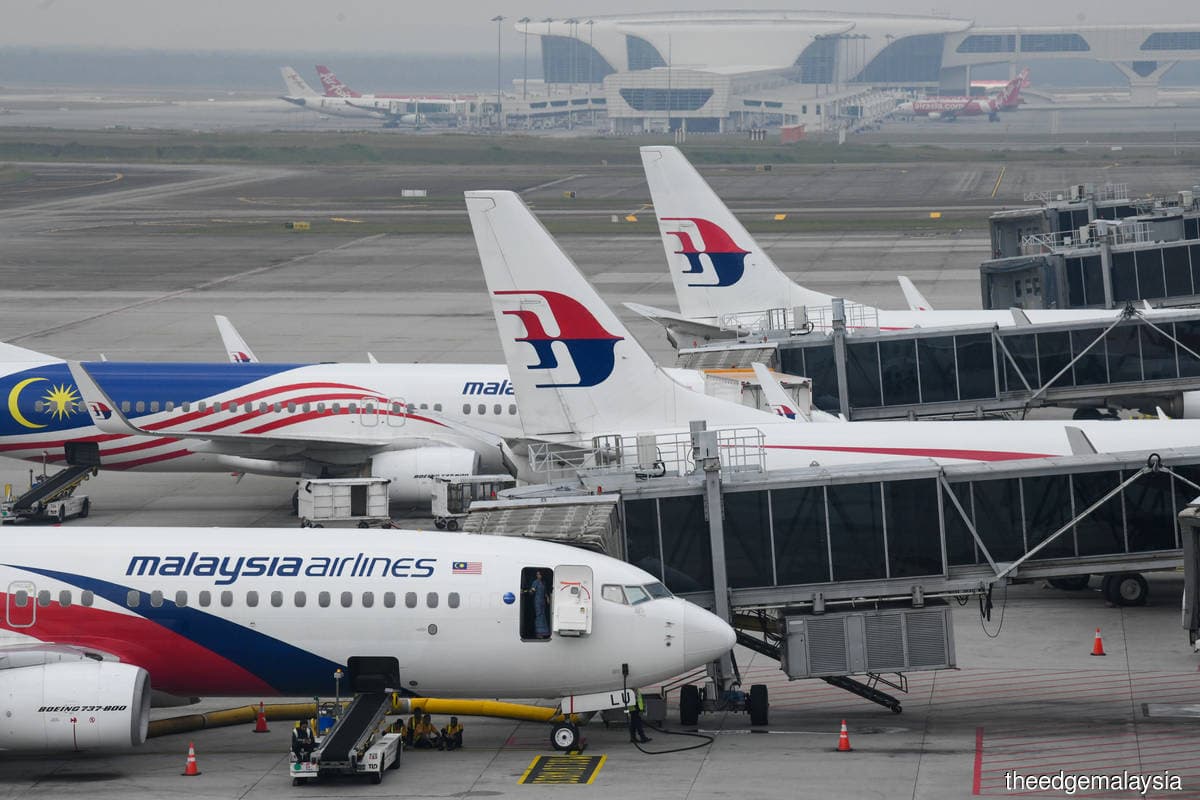
KUALA LUMPUR (April 3): Malaysia Airlines Bhd is pressing ahead with its expansion plans despite elevated fuel costs, unveiling three new direct routes from Kuala Lumpur to Shenzhen and Changsha in China and to Fukuoka in Japan as part of its growth strategy.
The national carrier will begin daily flights to Shenzhen on July 1 and to Changsha on July 8, marking its eighth and ninth destinations in China. It will also resume service to Fukuoka on Sept 2 with five weekly flights, returning to the Japanese city after a two-decade hiatus. The airline currently operates routes to Tokyo and Osaka.
Malaysia Aviation Group Bhd (MAG) president and group chief executive officer Captain Nasaruddin A Bakar said the expansion aligns with strong demand in North Asia.
He noted that passenger load factors averaged about 90% on its Japan routes and 85% on its China sector in the first quarter of 2026.
“With the support of mutual visa-free arrangements between Malaysia and China, this growth allows us to capture rising demand in one of the world’s most dynamic travel markets,” he said at a launch event here on Friday.
The route expansion comes in tandem with the delivery of new aircraft. Malaysia Airlines has so far taken delivery of 10 Airbus A330neo and 14 Boeing 737-8 aircraft, Nasaruddin said.
Under the airline group’s third iteration of its long-term business plan (LTBP 3.0), which outlines its goals from 2026 to 2030, MAG will shift from focusing on stabilisation to disciplined expansion.
“Under LTBP 3.0, we aim to strengthen our competitive position while reinforcing our standing as Asia’s leading travel and aviation services group. Our ambitions include positioning Malaysia Airlines among the Skytrax Awards’ top 10 global airlines by 2030,” said Nasaruddin. In 2025, Malaysia Airlines was ranked 27th.
“We’ve got another four years to go, and we have full confidence that with our 14,000-odd staff, we will be able to rally the group to deliver that milestone and objective. Central to this strategy is also a focus on our network and fleet plan, ensuring that we expand to markets where we see strong demand while delivering a premium end-to-end travel experience,” he added.
By 2035, the airline’s ambition is to grow the mainline fleet to 160 aircraft, supporting a network that reaches 106 destinations, Nasaruddin said. “This ensures we remain relevant in our key long-haul corridors, maintain a competitive fleet mix and deliver operational efficiency.”
Still, Nasaruddin pointed out that across all its initiatives, its actions remain guided by two core principles.
“One is that we have to be commercially sustainable, and, importantly, nation-building as well. Every decision we make must be financially prudent while also strengthening Malaysia’s connectivity, supporting economic growth and enhancing the nation’s presence on the global stage, especially in 2026, as it is Visit Malaysia 2026.”
MAG more than doubled its net profit for the financial year ended Dec 31, 2025 (FY2025) to RM137 million, up from RM54 million in FY2024, marking its third consecutive year of net profit.