

This article first appeared in The Edge Malaysia Weekly on March 30, 2026 - April 5, 2026
NEARLY 18 months after its ACE Market debut, Sorento Capital Bhd (KL:SORENTO) — long recognised for its sanitary ware distribution business — is embarking on a new phase of growth. Its two-pronged strategy is centred on expanding into Malaysia’s vast hardware retail market while elevating its brand through premium offerings.
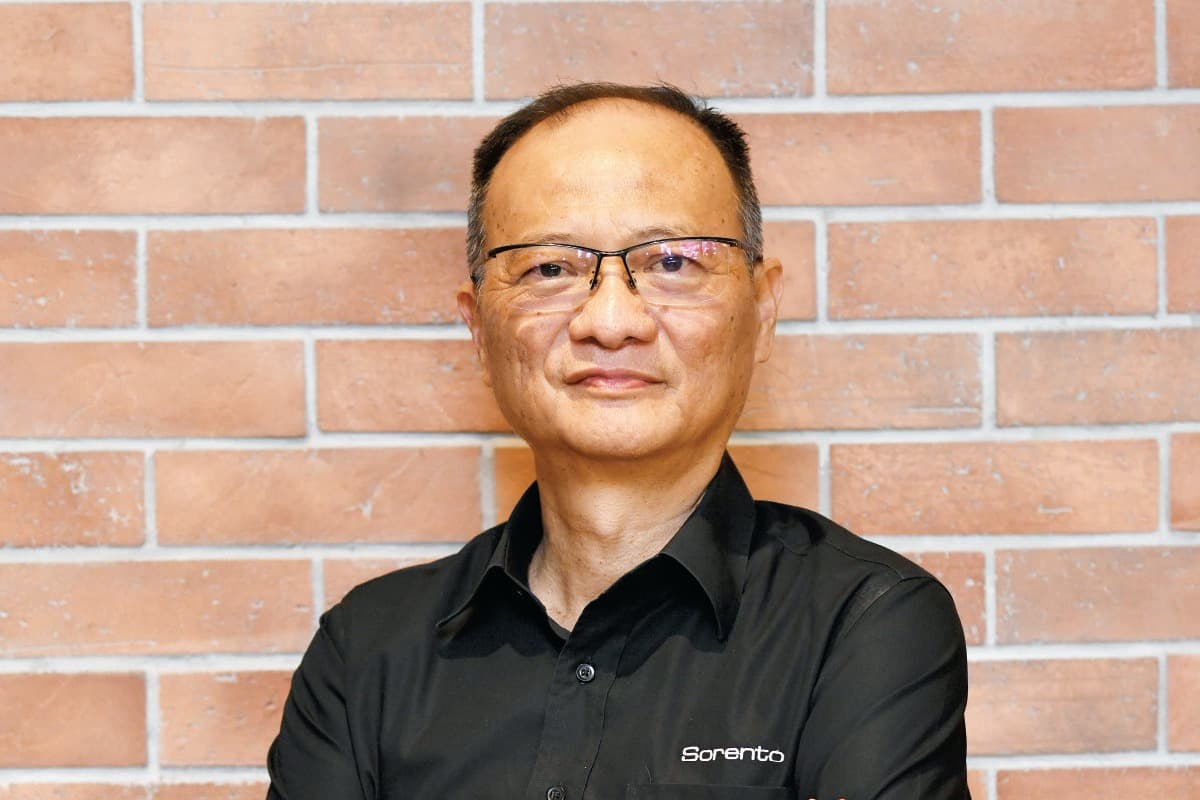
Managing director Loo Chai Lai frames the approach as both defensive and aspirational.
“We want to capture new sources of demand while building stronger brand recognition in an increasingly competitive industry,” he tells The Edge in an interview.
Hardware retail market
Loo describes the planned entry into the hardware retail segment as “a largely untapped replacement market for branded plumbing fittings”, and that Sorento aims to fill that gap with the launch of the “Sorento Lite” series, an economical range designed specifically for hardware retailers.
“Malaysia has more than 10,000 hardware stores nationwide, but many plumbing and sanitary fitting items sold through these outlets remain unbranded,” he observes.

The company will invest at least RM10 million in the new line, debuting with around 200 stock keeping units (SKUs), supported by branded display racks.
Historically, Sorento’s business has been tied to property launches and renovation cycles.
“That model has delivered consistent growth for the past 20 years,” says Loo. “But plumbing fittings follow a different demand dynamic because they are not dependent on new property supply.”
The Lite series will focus on wear-and-tear products such as valves, connectors and fittings that require periodic replacement.
“These are maintenance-driven products. Demand is recurring and less cyclical,” Loo explains.
Furthermore, he says Malaysia’s ageing housing stock supports this replacement cycle. “In the hardware market, demand is constant because when something breaks at home, you cannot wait. Replacement demand is always there.”
Sorento expects to price Lite products about 20% to 30% higher than generic alternatives, though the absolute difference is small — often just a few ringgit. Loo believes both retailers and consumers will pay a slight premium for products backed by branding, quality assurance and warranty support.
“Customers today prefer to browse and make their own choices rather than being sold to. Strong, visible branding that stands out is what helps drive sales,” he opines.
Distribution will be mainly through hardware stores, opening a new channel beyond Sorento’s traditional sanitary ware dealer network. The company is targeting 500 outlets annually over the next three years. Based on estimated annual sales of RM20,000 per outlet — roughly RM1,600 a month or one carton of inventory — Loo believes the forecast is achievable.
He acknowledges that the initial phase of customer acquisition will be the steepest, but once momentum builds, the outlet count of 1,500 could generate about RM30 million of annual sales for Sorento.
“That would represent roughly 16% additional revenue compared with our current business,” he says.
Loo stresses that the strategy is designed to complement, not compete with, Sorento’s existing dealer network.
“The channels are different. Showrooms focus on sanitary ware products for projects and renovations, while the sanitary fittings at hardware stores mainly serve the replacement market,” he explains.
Hardware retailers will purchase inventory outright from Sorento rather than through consignment. To encourage adoption, the company will provide branding support, display racks and competitive margins. The rollout of the Lite series is expected to begin as early as April.
Strengthening brand with premium products
While the hardware strategy is designed to drive volume growth, Sorento is also investing in brand elevation through higher-end offerings. It plans to introduce the “Sorento Serene” line, targeting customers who value refined design and superior finishes.
The initiative includes a 10,000-sq-ft premium showroom in Johor Bahru, operated by one of Sorento’s most trusted dealers — a partner who has worked with the company for more than two decades.
“The Serene series is mainly about branding. It demonstrates that a Malaysian brand can also offer premium-quality products,” says Loo.
Scheduled for a soft opening in May, the showroom will showcase the premium range with experienced staff on hand.
“When selling higher-end sanitary ware, customers expect more detailed product explanations and design advice. That level of service is essential,” Loo explains.
The Serene series may not immediately contribute significant revenue, but it is intended to strengthen Sorento’s overall brand perception and deepen relationships with key stakeholders — from property developers and architects to interior designers and end consumers.
While nearly 60% of sales currently come from the Klang Valley, Johor has emerged as one of Sorento’s most important markets, supported by spillover demand from Singapore.
“[We see] increasingly more people working in the city state choose to purchase homes in Johor because favourable exchange rates increase their purchasing power. These homeowners typically spend more on renovation and interior fittings, creating opportunities for suppliers of sanitary ware and home improvement products,” Loo notes.
Long-term infrastructure developments, such as the Johor Bahru-Singapore Rapid Transit System (RTS) Link are also expected to underpin the demand in Johor.
“These are structural shifts with medium- to long-term visibility, not short-term cyclical tailwinds,” adds Loo.
Investing in logistics and digital systems
As Sorento’s business scales, the company is preparing to invest in a smart warehouse estimated at RM20 million. The facility will incorporate automation and artificial intelligence (AI) to manage inventory and distribution more efficiently as its retail footprint expands.
“If the number of sales points increases significantly, we cannot continue operating in a traditional way. If deliveries become slow, it will affect our service to customers,” says Loo.
Beyond logistics, the company is also embracing digitalisation, with the adoption of AI tools to enhance both internal operations and customer service, including automated systems capable of assisting customers with product enquiries and providing information in real time.
According to Loo, the shift reflects changing demographics among Sorento’s partners and customers. “Many of them are younger and more comfortable using digital platforms. We need to adapt to how they interact and expect service today.”
Unfazed by competition from China
Competition in the sanitary ware market is intensifying, particularly from Chinese suppliers targeting overseas markets. Many compete primarily on price, selling low-cost products through e-commerce platforms like Shopee and Lazada.
“Chinese players usually enter through online platforms selling very low-cost products. Those are not our competitors. If it is unbranded, the only thing left to compete on is price. That kind of strategy is not sustainable,” Loo highlights.
Sorento’s growth trajectory in recent years has been shaped by its experience during the pandemic. While many businesses scaled back investment, Sorento continued building inventory and strengthening supplier relationships.
“We maintained adequate stocks when supply chains were disrupted, allowing us to capture market share as competitors faced shortages,” Loo recalls.
The results speak for themselves. Revenue grew from RM66 million in the financial year ended June 30, 2021 (FY2021) to RM180 million in FY2025, while net profit jumped from RM7.78 million to RM26.24 million.
Almost 90% of Sorento’s stock supply is imported from China, but with more than two decades of experience managing manufacturing partners, the company is well-versed in supply chain management and risk diversification. A strengthening ringgit has also provided a tailwind to margins.
At the same time, Sorento has stepped up marketing efforts on social media platforms such as Facebook, TikTok and Xiaohongshu, building brand awareness among younger homeowners undertaking renovation projects. This digital push has helped the company broaden its reach and capture a new generation of customers.
Formal dividend policy and Main Market transfer
At end-2025, Sorento was in a net cash position of RM47.39 million, with total cash holdings of RM47.99 million against borrowings of just RM601,000.
The company has consistently paid dividends over the past five years, with a payout ratio of 16.4% in FY2025. It recently adopted a formal dividend policy targeting to pay up to 30% of net profit.
“The approach balances reinvestment for growth with shareholder returns,” says Loo.
On March 19, the company applied for a transfer to Bursa Malaysia’s Main Market.
“We have demonstrated revenue scale, profitability consistency and balance sheet strength. We believe the business has reached a level of maturity appropriate for Main Market positioning,” he says, adding that it would enhance institutional visibility and broaden investor participation.
Since the start of the year, Sorento’s shares had risen 31.3% to close at 65 sen last Wednesday, valuing the company at about RM559 million. The stock is now up 75.6% compared to its listing price of 37 sen on Oct 28, 2024.
According to AskEdge data, the counter is currently trading at a price-earnings ratio of 18.1 times. In comparison, Signature International Bhd (KL:SIGN) and Fiamma Holdings Bhd (KL:FIAMMA) trade at around 10.6 times and 8.6 times respectively.
Save by subscribing to us for your print and/or digital copy.
P/S: The Edge is also available on Apple's App Store and Android's Google Play.