

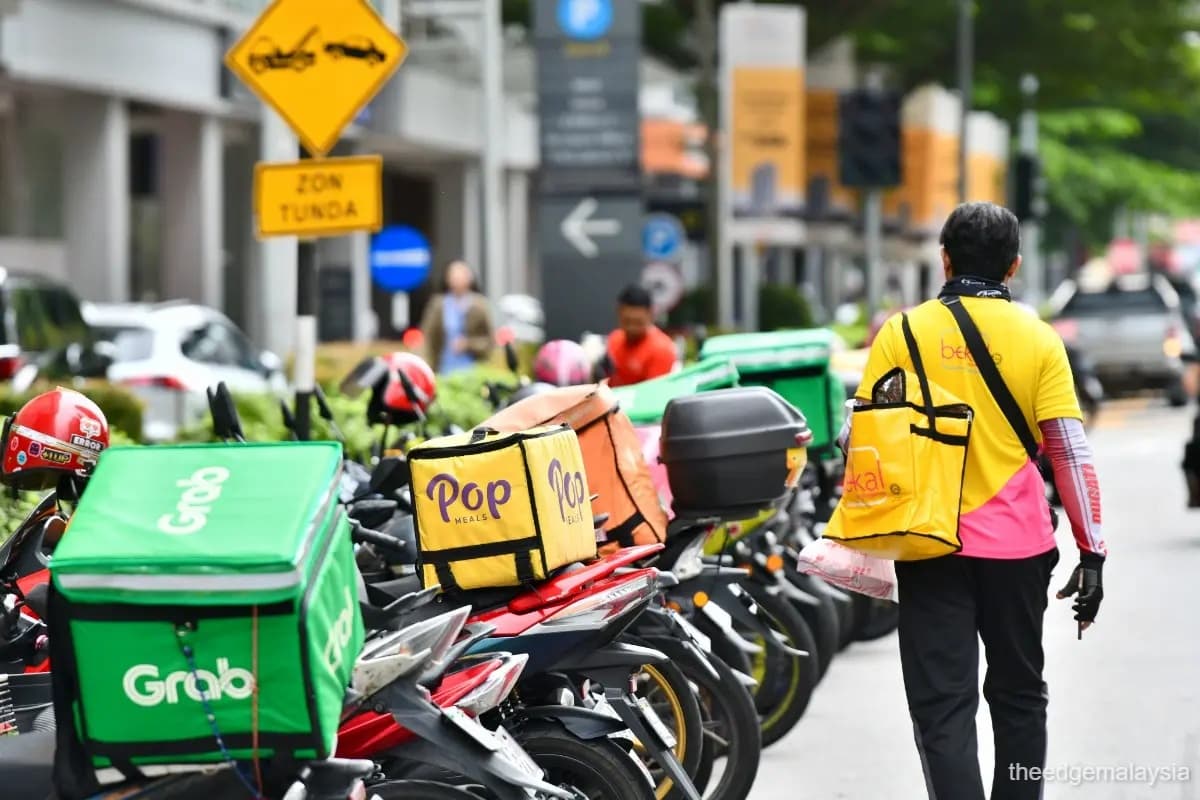
PUTRAJAYA (March 31): The Gig Workers Act 2025 has come into full force today, protecting 1.64 million gig workers in Malaysia — including both citizens and permanent residents.
The definition of a "gig worker" was also clarified to include any individual who has entered into an agreement with a contracting entity, whether through a platform provider or otherwise, and who receives income or payment for services rendered.
Minister of Human Resources (MOHR) Datuk Seri Ramanan Ramakrishnan said that while neighbouring countries such as Singapore, Indonesia and the Philippines continue to introduce gig worker protections incrementally or limited to specific sectors, Malaysia has adopted a more holistic approach by establishing a dedicated legal framework to protect gig workers comprehensively.
This, he said, places Malaysia among the leading nations in Asia at the forefront of introducing specialised legal safeguards for the gig economy.
Up to six months to comply with technical requirements
Separately, he said that platform providers will be given a three- to six-month window to comply with the technical requirements of the Act. He added that technical discussions and notice were given to platform providers since March last year and various consultations were done with industry players as well.
Industry sources told The Edge that the application programming interface (API) documentation was provided by the Social Security Organisation (Socso) on March 11, which is insufficient time for platform providers to do the necessary integrations to comply with the Act.
“When there is change, we need time to adapt, so as long as [the platform providers] are taking those steps and we can see it, it is perfectly fine. We will not go after platform operators immediately but we will be monitoring it closely and ensuring the act is enforced and taken seriously,” Ramanan said at the press conference.
In Digital Edge’s cover story (Gaps remain in gazetted Gig Workers Act) published Feb 9, 2026, it was highlighted that social security contributions are to be deducted from a gig worker’s earnings and paid to Socso by the contracting entity or platform on the worker’s behalf. Gig workers must also be able to view these deductions through the digital intermediary system developed by the platform.
Meeting these obligations will require significant technology investments, including infrastructure upgrades and engineering resources to integrate with government systems and industry players expressed concern that if government back-end systems were not equipped to handle high-frequency, real-time API calls from multiple platforms, the system could come under strain.
It was also clarified that a 1.25% automatic Socso deduction will be applied to all jobs accepted by gig workers, which will exclude a worker’s tips and incentives earned.
First MyGiG meeting to be held this Friday, gig income rates first order of business
The Malaysian Gig Economy Council (MyGiG), a tripartite platform including the government, gig worker representatives and contracting entity representatives, which will be responsible for advising and making recommendations to the government, will come into force tomorrow (April 1). Its first meeting is set to take place on Friday (April 3) where its first order of business will be to discuss the minimum income rates of gig workers.
The council will overlook and set the minimum income rates, formulas and minimum standards to be applied based on sector, region and the specific type of gig worker or service. The council will also serve as a platform for dialogue, negotiation and advisory services concerning policies and emerging issues within the gig economy involving relevant stakeholders.
“This approach is adopted to ensure that minimum income rates are determined through a mechanism that is dynamic, equitable and informed by current economic market data,” Ramanan said.
MOHR also launched an online grievances system as the primary platform for receiving complaints, enquiries and feedback from workers. Set to go live tomorrow (April 1), gig workers will be able to lodge formal complaints regarding their work, including issues such as income payments, account suspensions, or breaches of agreement terms.
This system is accessible via the Ministry's website at https://eaduan-gig.mohr.gov.my/.
“In line with the ministry's ‘No Wrong Door Policy’, gig workers may also visit any department or agency under the ministry to file a report,” Ramanan added.
The drafting process for the Act began as early as 2024, with MOHR conducting 37 engagement sessions involving approximately 3,873 participants.
These stakeholders included government agencies, trade unions, employer federations, associations, platform providers, employers, gig workers, and academics and universities across Peninsular Malaysia, Sabah and Sarawak.