

This article first appeared in The Edge Malaysia Weekly on March 30, 2026 - April 5, 2026
WITH tightening global emissions standards accelerating the shift towards cleaner and more sustainable energy sources, Elridge Energy Holdings Bhd (KL:ELRIDGE) is racing to scale up its production capacity, betting on sustained demand for biomass fuel.
Policy tailwinds are supporting that view. Initiatives such as Saudi Arabia’s Vision 2030 and Japan’s Green Transformation are driving renewable energy (RE) adoption, particularly in markets where biomass plays a key transitional role in decarbonising industrial heat and power generation.
Against this backdrop, the home-grown biomass producer has earmarked RM70.49 million in capital expenditure to develop three new processing facilities in Kuantan, Pahang; Pasir Gudang, Johor; and Lahad Datu, Sabah. Each facility will house two palm kernel shell (PKS) production lines with an annual capacity of 240,000 tonnes.
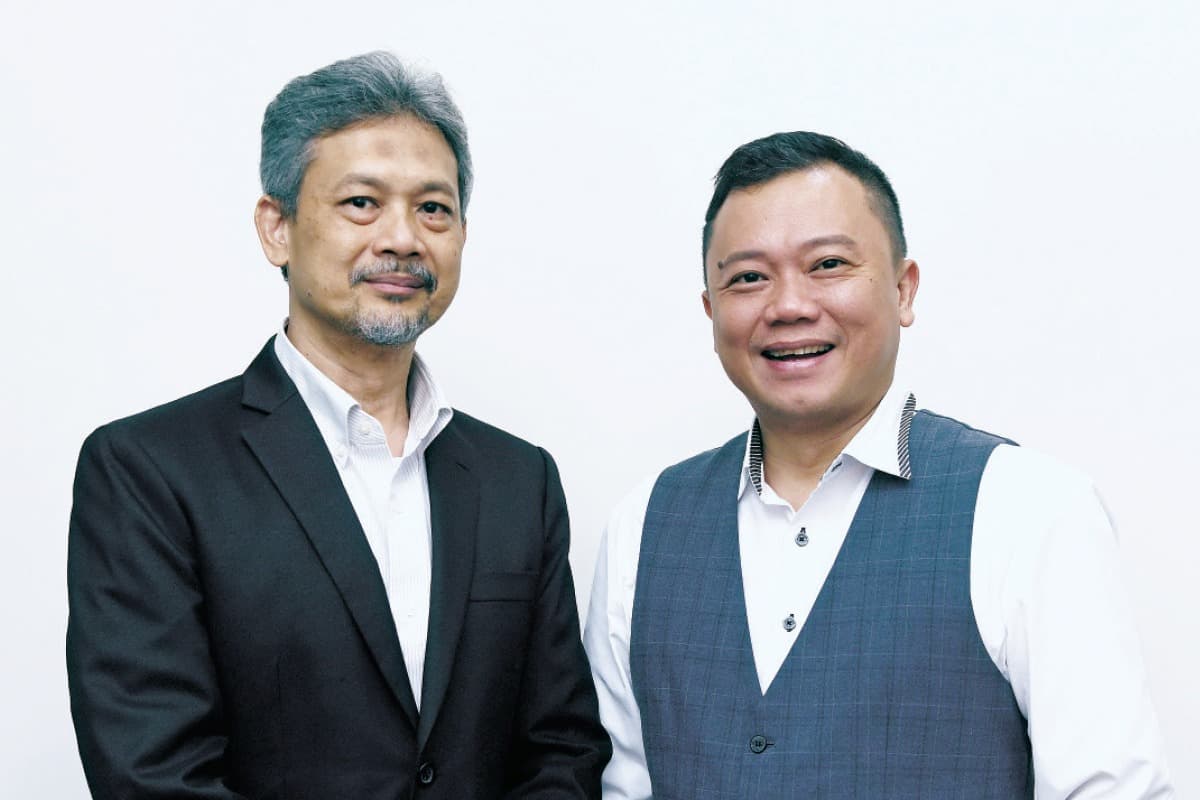
“Our existing clients are already pushing for more capacity [to meet their supply needs],” executive director and CEO Oliver Yeo Hock Cheong tells The Edge in an interview.
The Kuantan plant began operations in January, with Pasir Gudang set to come online next month and Lahad Datu later this year. Once completed, total output will increase to 1.68 million tonnes, up from 960,000 tonnes at its Port Klang and Kapar facilities in Selangor, which are running at roughly 90% utilisation.
Elridge collects PKS and wood residues from palm oil millers and sawmills and processes them into biomass pellets for use by industrial boilers and power plants. The company’s customers are primarily trading houses that distribute biomass fuel to end-users such as manufacturers that require industrial boilers for heat or energy generation, although Elridge occasionally sells directly to power plants and manufacturers.

“In recent years, some of the traders we supply our PKS to serve 20 to 30 end-users, many of which are in the process of building biomass power plants. It’s really a matter of time before those projects are commissioned and orders begin to ramp up,” says Yeo.
Japan remains Elridge’s largest market, underpinned by an estimated 600 operating biomass power plants ensuring sustained fuel demand. The company’s other key markets include Thailand, Singapore, Malaysia and the Philippines.
After years of steady traction, Elridge expects PKS sales from Japan to rise this year, although Yeo says logistics planning remains critical to secure timely transport.
Breaking into Japan has required patience and proof. “It’s not an easy market to penetrate. Before committing to long-term contracts, buyers typically start with spot deals. Our trading partners often need to send trial shipments to new end-users to validate product quality before scaling up,” he says.
That persistence began to pay off in 2024, when Elridge secured a landmark 15-year supply agreement with JFE Shoji Group. Under the memorandum of understanding (MoU), Elridge will deliver 150,000 tonnes of Green Gold Label (GGL)-certified PKS annually from April 2025 until March 2040, anchoring a steady revenue stream in one of the world’s most quality-sensitive markets.
“The Japanese traders or end-users require extensive due diligence from day one. They need assurance not just on quality but also on our ability to meet long-term demand. Once we demonstrate capacity expansion and consistent product standards, orders follow,” says Elridge executive director and finance director Salihudin Mohd Razali.
Beyond Japan, Thailand is emerging as a growth market. An MoU with Berkana Power Co Ltd calls for the annual supply of 100,000 tonnes of PKS, expected to commence this year.
Operationally, the new plants are aligned with regional demand. The Kuantan facility will primarily serve Japanese and Thai customers, whereas the Pasir Gudang plant is positioned to support Singapore-bound shipments, optimising logistics based on cost efficiency.
Despite Asia-Pacific’s fragmented biomass market, Elridge has carved out a leading position, commanding more than 20% market share, according to its 2024 initial public offering (IPO) prospectus. Yeo attributes its edge to quality. “Primarily, it’s our product quality. Many buyers have visited our facilities and seen first-hand how our processing lines are able to remove even very fine impurities. That’s what differentiates us from competitors.”
The distinction is particularly notable in Malaysia, where relatively few biomass producers specialise in PKS production. “Most biomass feedstock here comes from oil palm empty fruit bunches,” Yeo observes.
On the supply side, raw material availability is structurally resilient. “PKS, a byproduct of palm oil milling, is generated daily, providing a steady and scalable input stream,” Salihudin says.
This combination of scale, consistency and quality assurance has become central to Elridge’s value proposition, particularly in demanding markets such as Japan, where contract tenures can stretch from five to 30 years, according to Yeo.
The group continues to explore international growth avenues. In January, it signed an MoU with Saudi Arabia-based Green Stream LLC to explore biomass and RE opportunities in the Middle East. While plans have been temporarily slowed by geopolitical uncertainty linked to the Iran war, Yeo sees potential for collaboration closer to home.
“This could be an opportunity to invite them to set up a biomass facility here instead. We have the technology and the market, and they can help open doors for us in Saudi Arabia,” he says, adding that Saudi’s Vision 2030 still represents a compelling long-term entry point.
At the same time, not all negotiations translate seamlessly into firm deals. Elridge’s MoU with PT Orion APAC Indonesia, signed in September 2024 for the annual supply of 150,000 tonnes of PKS over three years, remains under discussion as both parties work through pricing and contractual terms.
Growth momentum seen into 2026
Elridge is exploring opportunities downstream without straying from its core biomass feedstock business. While PKS, wood pellets and wood chips will remain primary revenue drivers, the company is evaluating higher-margin products such as activated carbon and biochar.
“The opportunity is there. PKS can be the feedstock for both biochar and activated carbon. We can either sell it as is or convert it into higher-value products, but the latter has to be cost-effective,” says Yeo.
Potential export markets for these products include Japan, China and Europe, where demand for sustainable materials is rising alongside stricter environmental standards.
For now, PKS continues to dominate the revenue mix. The group maintains a smaller, but strategic, presence in wood pellets and wood chips, serving largely South Korea and Japan.
“We keep the segment because customers may require complementary products such as wood pellets or chips. Wood pellets and wood chips contribute around 10% of group revenue,” says Yeo.
Elridge has delivered strong year on year (y-o-y) earnings growth, with net profit for the financial year ended Dec 31, 2025 (FY2025), rising 39% to RM57.31 million. Momentum accelerated in the fourth quarter, where net profit jumped 84% y-o-y to RM17.71 million from RM9.63 million, driven by improved margins and higher PKS sales.
Revenue for FY2025 increased 11% to RM431.98 million, with the most recent quarter up 19% y-o-y to RM113.32 million.
Yeo points out that Elridge’s revenue performance is closely tied to how much it can produce, reinforcing the strategic importance of the group’s ongoing plant roll-outs.
Apex Securities, currently the only research firm covering Elridge, forecasts net profit to reach RM77.8 million in FY2026 and RM89 million in FY2027, implying continued growth as new capacity comes online.
Macro conditions are also turning supportive. Rising geopolitical tensions, including the impact of the Iran war, have pushed up global energy prices, widening the cost gap between fossil fuels and renewable alternatives. That dynamic is nudging more industrial users towards biomass.
Yeo expects PKS prices — currently averaging US$100 per tonne — to trend upwards, albeit at a slower pace than coal. “Biomass prices may increase, but not as sharply as coal. In times of disruption, users will turn to alternative fuels.”
Currency dynamics are also working in Elridge’s favour. With both sales and raw material purchases denominated largely in US dollars, the strengthening greenback provides a natural hedge and margin support.
Despite its scale, Elridge operates with a lean workforce of just over 50 employees, reflecting the high degree of automation across its facilities.
Sell-off belies strong fundamentals
Despite strong fundamentals, shares in Elridge have come under severe pressure since late February. After hitting a post-FY2025 results high of RM1.49 on Feb 27, the stock has since tumbled 41% to close at 88.5 sen last Wednesday, leaving it down 12% year to date. The sell-off prompted Yeo to issue a statement on March 9, reaffirming that the group’s fundamentals, expansion plans and operational momentum remain intact.
During the interview, Yeo doubles down on that message, attributing the decline largely to external factors.
“Based on our review of the record of depositors’ analysis, part of the recent share price movement may be attributable to foreign fund outflows,” he says, adding that profit-taking by overseas investors is not unusual. “As long as the business is healthy and running as usual, there is nothing to worry about.”
Amid the share price weakness, Yeo himself stepped in to buy 10 million shares worth RM9.7 million, lifting his direct stake to 7.479% and indirect holdings, via Kayavest Sdn Bhd, to 16.366%, signalling confidence. He remains the company’s largest shareholder. Other key investors include Mikro MSC Bhd (KL:MIKROMB), which holds a 20.625% stake, and Urusharta Jamaah Sdn Bhd, a special-purpose vehicle under the Ministry of Finance, with a 6.522% stake as at March 13, 2026.
Notably, shares in Mikro MSC experienced a pullback of 22% from a peak of 45.5 sen on March 3 to a low of 35.5 sen on March 10 before rebounding slightly to close at 37 sen last Wednesday.
The balance sheet provides ample flexibility. As at end-December 2025, Elridge held RM176.36 million in cash against RM68.34 million in borrowings, translating into a net cash position of RM108.02 million. It also retains RM55.31 million in unused proceeds from its August 2024 IPO, which raised RM101.5 million.
For now, however, the group is prioritising growth over dividends. “We have not paid dividends before,” Yeo says, emphasising that cash will be reinvested into expansion initiatives.
Move to Main Market only at the ‘right size’
While the company is open to mergers and acquisitions, Yeo says there are currently no compelling targets. “We are interested in opportunities that are relevant to our business, both locally and overseas, but we’re not in talks with anyone at the moment.”
He adds that the group retains multiple funding options, including equity issuance, supported by low leverage.
As for a potential migration from the ACE Market to Bursa Malaysia’s Main Market, Yeo indicates that while Elridge already meets the Main Market listing requirements, timing will be key.
“We want to move when we are of the right size and can deliver strong value. The Main Market is where the big funds are. We would rather go there when we can offer something substantial to our stakeholders.”
Save by subscribing to us for your print and/or digital copy.
P/S: The Edge is also available on Apple's App Store and Android's Google Play.