

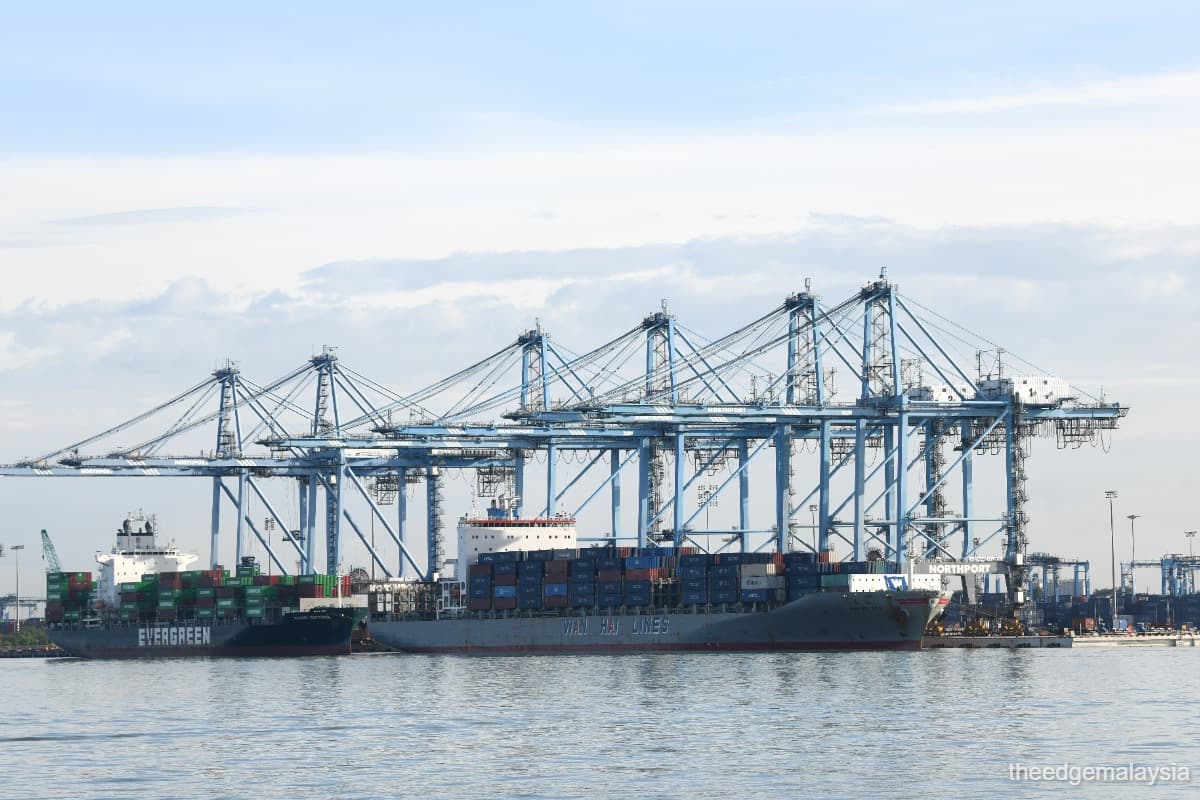
KUALA LUMPUR (March 31): Malaysia’s trade is expected to pick up in 2026, with imports to slightly outpace exports, says Bank Negara Malaysia (BNM).
The central bank forecasts gross imports to rise by 9% and exports by 8.6% for the year, driven by manufactured goods — particularly electrical and electronics (E&E) products, which account for the bulk of the country’s exports.
While the import forecast is higher than the 6% growth recorded in 2025, the central bank noted that capital imports may ease slightly following strong investments in data centres and E&E-related projects.
The export estimate, meanwhile, is an improvement from the 5.4% growth seen in 2025.
Manufactured exports, which made up 86% of total shipments last year, are expected to increase by 9.6%. Commodity exports are projected to grow by 1.6%, supported by a 13% rebound in mining goods.
“Malaysia’s prominent role in the global E&E supply chain will benefit from the continued demand for semiconductors and advanced electronic components,” said BNM in the newly issued Economic and Monetary Review (EMR) 2025.
The central bank said that artificial intelligence (AI)-led demand and tech trends would support Malaysia’s growth as it keeps global demand for semiconductors and high-tech components on the upwards.
Meanwhile, Malaysia’s non-E&E products such as refined petroleum and petrochemicals may see mixed results and could potentially benefit from higher global prices amid escalating geopolitical tensions in the Middle East, but these exports would face heightened competition from regional players, especially China.
BNM also pointed out that commodity exports are also expected to recover and mining products may fare better due to stronger oil and liquefied natural gas (LNG) prices, while agricultural goods including palm oil may fall as output returns to normal levels amid ongoing replanting.
As such, the central bank forecasts gross exports to grow 8.6% in 2026, up from 6.4% in 2025. Manufactured exports, which accounted for 86% of total shipments last year, are expected to rise by 9.6%. Commodity exports are projected to grow 1.6%, led by a 13% rebound in mining goods.
However, agricultural exports may decline 7.6% due to lower crude palm oil (CPO) production amid yield normalisation following a surplus in output last year.
Malaysia’s current account surplus — a measure of how much more foreign currency a country receives than it spends — is forecast to remain at 1.5% to 2.5% of gross domestic product (GDP), remaining in a similar range of 1.6% in 2025.
“This is driven mainly by continued goods and services surplus despite a challenging external environment, which is partially offset by a widening of primary and secondary income deficit,” said BNM.
The central bank said the goods account surplus is expected to widen to RM128.1 billion from RM110.9 billion, while the services account could post a higher surplus of RM5 billion, anchored by tourism with the Visit Malaysia 2026 campaign and ICT services exports.
Deficits in the primary and secondary income accounts are likely to continue due to profit repatriation by foreign investors and outward remittances by foreign workers, though partly offset by Malaysians sending income home from abroad.