

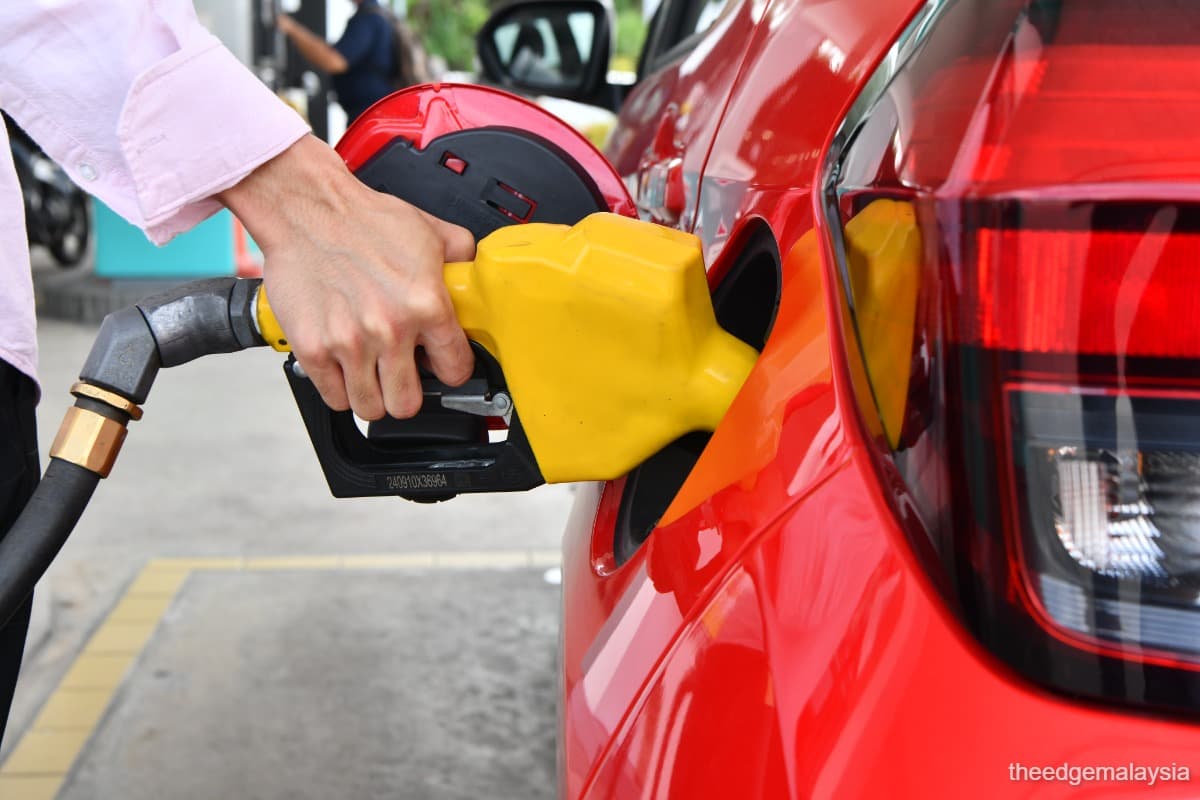
KUALA LUMPUR (March 30): The Socio-Economic Research Centre (SERC) has proposed that the government cap its subsidy for RON95 at RM1 per litre, roughly half the current level, and consider a special dividend from Petroliam Nasional Bhd (PETRONAS) this year. The moves are to preserve fiscal space and keep the budget deficit within target amid persistently high global oil prices.
SERC executive director Lee Heng Guie said the government should consider limiting its subsidy commitment and gradually passing additional costs to consumers if elevated oil prices persist.
"The government needs to bite the bullet...I think RM1 [subsidy] is reasonable for the government to maintain," he said during a media briefing on Monday.
At present, the government subsidises about RM1.88 per litre for RON95, based on a subsidised pump price of RM1.99 versus an unsubsidised price of RM3.87. The monthly subsidy bill has swelled to around RM4 billion from RM700 million previously.
Lee said such a move would be necessary to safeguard fiscal sustainability after global crude oil prices rose and as the war between the US, Israel, and Iran drags on.
He added that Putrajaya may also need to consider a special dividend from PETRONAS this year to support fiscal consolidation. PETRONAS has announced a RM20 billion dividend to the government for 2026.
In 2022, PETRONAS doubled its dividend to the government to RM50 billion compared to the previous year, comprising its scheduled dividend and an additional RM25 billion following a request from the government.
Fiscal pressure building
Last Thursday, the government moved to tighten its targeted subsidy framework under the Budi95 scheme, reducing the standard monthly subsidised quota to 200 litres from 300 litres effective April 1.
Prime Minister Datuk Seri Anwar Ibrahim said the move is necessary to “safeguard the broader public interest” as Brent crude prices have surged past US$100 per barrel — well above the US$65 assumption in Budget 2026 — driving the subsidy bill sharply higher.
Despite the adjustment, the subsidised RON95 price remains at RM1.99 per litre, while unsubsidised prices have climbed significantly, widening the subsidy gap.
Unsubsidised RON95 has climbed RM1.20, or nearly 45%, to RM3.87 per litre since March 11, from RM2.67 previously.
At the same time, RON97 has jumped by RM1.90 or nearly 59% to RM5.15 per litre from RM3.25, while the pump price for diesel in Peninsular Malaysia is up RM2.40 or nearly 77% to RM5.52 per litre, from RM3.12.
SERC warns that if Brent crude stays around US$100 per barrel, US$35 above the 2026 budget estimate, Malaysia would gain RM10.5 billion — RM14 billion in extra oil revenue, but spend about RM33 billion on fuel subsidies.
This could raise the fiscal deficit by 0.9 to 1.1 percentage points from the government’s 3.5% target, underscoring the need for subsidy rationalisation and spending reprioritisation.
Lee said the government may need to recalibrate expenditure, including subsidy cuts and potentially tapping additional revenue sources, to keep the deficit manageable.
Scenarios hinge on duration of conflict
SERC outlined three economic scenarios depending on the duration and severity of the conflict in Iran and disruptions to global oil supply.
Under a baseline scenario, where the conflict lasts one to two months, Brent crude is expected to range between US$80 and US$90 per barrel, with Malaysia’s gross domestic product growth projected at 4.0% to 4.5% and inflation at 2.5% to 2.8%.
In an adverse scenario, involving a three- to six-month conflict and partial supply disruptions through the Strait of Hormuz, oil prices could peak at US$110 to US$120 per barrel before easing to US$95 to US$100, with GDP growth slowing to 3.5% and inflation rising to between 3% and 4%.
A severe scenario, characterised by prolonged disruptions exceeding six months and significant damage to energy infrastructure, could see oil prices surge to US$140 to US$180 per barrel, pushing Malaysia’s economy into contraction of about 0.5% and driving inflation to as high as 6%.
Lee said the government is effectively “buying time” with current measures, but may need to act more decisively if oil prices remain elevated beyond May.
“Nobody knows how much the government wants to subsidise… but RM1.88 is a lot already,” he said, adding that prolonged high prices would leave policymakers with limited options but to recalibrate subsidies.