

This article first appeared in Forum, The Edge Malaysia Weekly on March 30, 2026 - April 5, 2026
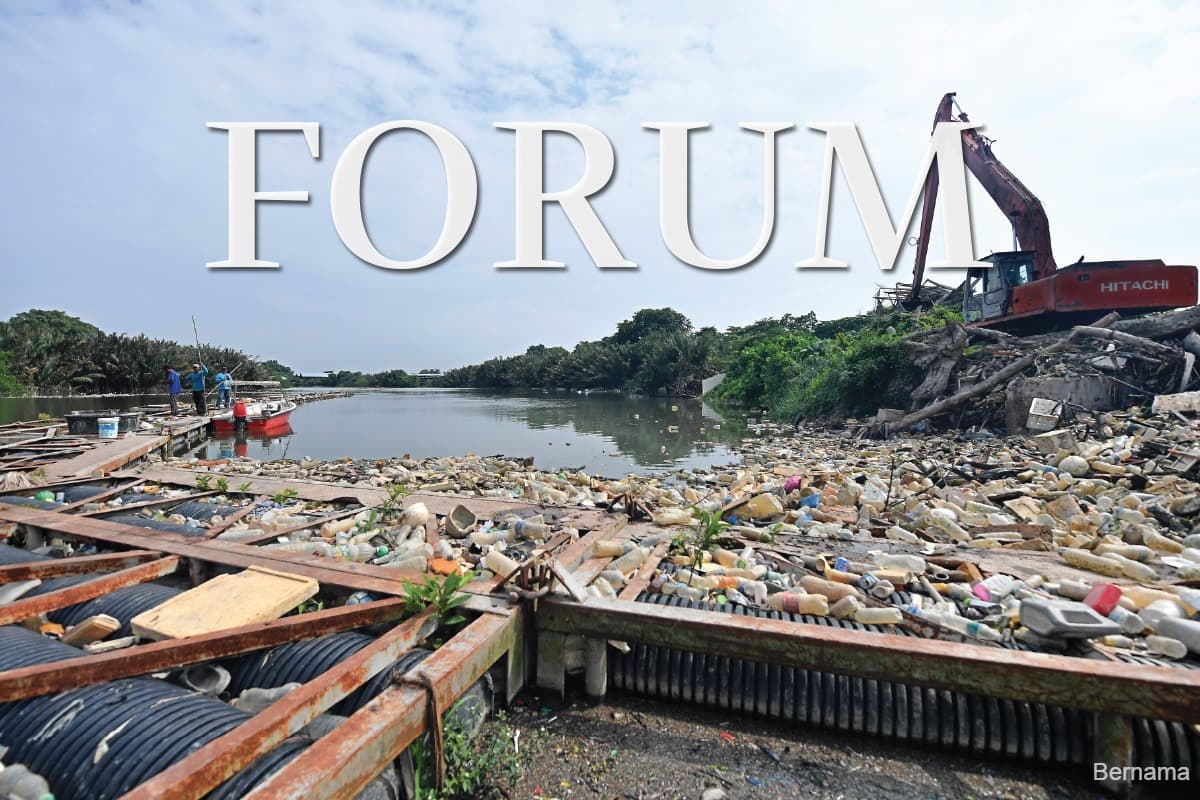
Malaysia has a familiar script for river pollution. A chemical dump, a poultry spill, and the same chorus follows: emergency water cuts, a menteri besar’s visit, then a solemn promise of war on polluters. The country has heard the song so many times that it has begun to mistake the repetition for the rhythm of progress.
At the end of last year, Sungai Johor ran the colour of wet cement. A sand-washing pond near Kota Tinggi had failed. Six retention ponds breached, sending a wall of sediment downstream that buried the riverbed and spiked turbidity to 37,400 NTU (Nephelometric Turbidity Units), roughly 37 times the maximum a standard treatment plant can handle.
As water treatment plants shut down, 800,000 people found their taps dry. In the villages, the damage was quieter but more permanent. “The losses we suffer are ongoing,” says Majid Jantan, a village head whose community watched its fishing grounds suffocate in a single afternoon.
For a state marketing itself as a global hub for green data centres, the incident was more than an environmental mishap. It was an infrastructure failure that threatens the very “green” credentials Johor hopes to sell.
The national dip
The crisis traces back to Malaysia’s industrial transition. Through the 1970s, the crude palm oil industry generated organic waste equivalent to ten million people’s. As it matured, contamination shifted towards manufacturing, particularly small and medium enterprises. Yet the shared assumption persisted: pollution was either an inevitable cost of growth or a problem that dilution could solve. History has disproved both.
Today, Malaysia is grappling with a paradox of progress. While flagship projects like the Selangor Maritime Gateway have hoisted the Sungai Klang from a “dead” Class 5 to a drinkable Class 3 in three years, the national trend is dipping. By the end of 2025, clean rivers nationally had fallen to 468, from 486 a year earlier, while slightly polluted rivers rose from 25 to 33.
In Johor, the friction is already visible with Sungai Kempas, Sungai Buluh, Sungai Tampoi and Sungai Pandan belonging to the “bad boys” club of polluted rivers. Nor is the pollution rot confined to the south. Just last month, the odour of recycled oil and plastic waste from the Mahkota Beranang industrial zone drifted into Sungai Kabul in Semenyih — the 13th such emergency in Selangor since last year — a pattern that extends to Sungai Pertang in Jelebu, Negeri Sembilan.
From the industrial estates of the Klang Valley to the agricultural heartlands of the interior, the map of Malaysia’s waterways is increasingly a map of vulnerability. It is a slow-motion haemorrhage that the United Nations Environment Programme warns is characteristic of nations that treat rivers as an infinite sink. The numbers are damning: UN-Water estimates that over 80% of global wastewater returns to the environment untreated.
Then there is the invisible threat. The National Water Research Institute of Malaysia detected microplastics in the Klang and Johor basins at concentrations as high as 4,541 particles per litre. These particles degrade into chemical compounds like Bisphenol A (BPA), a reproductive toxin that bioaccumulates up the food chain, from river fish to dining tables.
The Sungai Kim Kim pollution incident casts a long shadow. In March 2019, illegal dumping of toxic chemical waste displaced thousands of residents and led to the closure of 111 schools. The clean-up cost millions of ringgit in public funds. The penalties imposed on offenders were mere pocket change.
A shift in policy
That disproportion has not gone unaddressed. Our long-standing Achilles’ heel — the contravention licence, which allowed companies to legally exceed standard environmental limits — has at last found its teeth. The 2024 amendments to the Environmental Quality Act (EQA) have effectively ended the era of the “slap-on-the-wrist” fine. For water pollution, the maximum penalty has been raised to RM10 million for serious violations.
The real sting for the C-suite, however, lies in liability. Under the current framework, the corporate veil has been pierced: directors, chief executives and managers are now held to a higher standard of accountability. To evade liability, an executive must prove that the offence occurred without their knowledge and that they exercised “all such diligence” to prevent it. For serious water and waste offences, jail time is no longer at the courts’ discretion. It is now mandatory.
Yet laws are only as effective as their reach. Malaysia’s regulatory landscape remains pockmarked with loopholes. Federal law exempts sand-mining operations on sites smaller than 20ha from a full Environmental Impact Assessment. It was precisely such a “small” site that disrupted Johor’s water supply last November. This blind spot leaves unchecked the high-risk operations clustered at the throat of key water intakes.
The more effective intervention is upstream. Selangor’s Zero Discharge Policy provides the clearest local example. Factories pay discharge fees based on the volume and concentration of their effluent, incentivising on-site treatment and reuse. Water source pollution cases decreased by 65% in 2025.
The industrial way forward
Punishment alone will not restore a river. The more effective change is structural: viewing river health not as a compliance obligation but as an investment opportunity. The “Green Economy” phase of environmental policy embeds sustainability into production design rather than bolting it on after the fact.
The opportunity to inject regenerative capitalism into our waterways is real. South Korea’s playbook from over a decade ago is instructive: river restoration was the centrepiece of a national green growth strategy. Malaysia is already testing this model with the Selangor Maritime Gateway. There, joint ventures between state-linked companies and the private sector tie the cleaning of Sungai Klang to land development along its 56km banks.
Scaling it up requires public-private partnerships and blended financing beyond the “polluter pays” model. Establish a framework where the private sector earns returns through ecosystem restoration — via water-quality credits or specialised green bonds — and the river becomes an investment class. If corporate boardrooms find a way to profit from a clean river, the cement-coloured river water in Kota Tinggi will finally be a thing of the past.
The EQA Amendment Bill 2026 extends greater state autonomy over scheduled waste management. Yet legislation and technology treat symptoms. Real change requires a shift in corporate and public attitudes. For boardrooms across Johor and beyond, that shift is now a matter of fiduciary duty. A pollution incident triggers not only prosecution but potential divestment and credit downgrades.
Malaysia’s rivers are its urat nadi (artery). A developed, high-technology Malaysia cannot be built on infrastructure as murky as its rivers. The cost of inaction is no longer abstract. For some executives, it is a prison sentence. It is time to lift the needle from the groove.
Dr Hezri Adnan is a sustainability strategist bridging public policy, markets and industry
Save by subscribing to us for your print and/or digital copy.
P/S: The Edge is also available on Apple's App Store and Android's Google Play.