

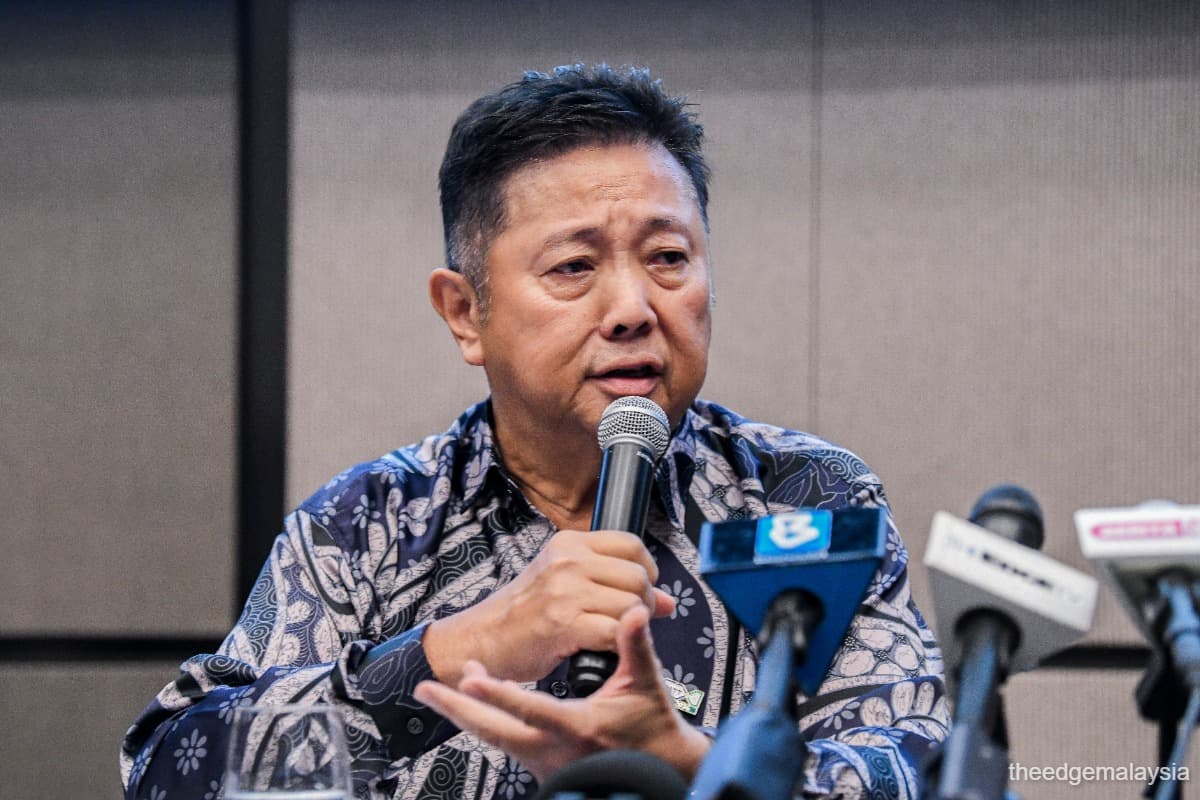
KUALA LUMPUR (March 26): MTT Shipping and Logistics Bhd, en route to listing on the Main Market, said it has sufficient buffers to manage rising fuel costs amid escalating geopolitical tensions in the Middle East.
While higher oil prices inevitably raise operating expenses, the shipping industry has long-established mechanisms to mitigate such fluctuations, Ooi Lean Hin, the managing director of the container liner operator, told reporters after the company’s prospectus launch on Thursday.
“We have in the industry a mechanism called a fuel adjustment factor…that is how we recover the increases in the bunker cost,” Ooi said. “This factor moves according to the price.”
The current adopted mechanism, commonly referred to as a bunker adjustment factor, allows shipping companies to impose surcharges on customers from fuel cost increases in a relatively transparent and standardised manner.
However, there is no assurance such cost pass-through can be sustained indefinitely, particularly in a competitive market environment, MTT Shipping flagged in its prospectus.
Ooi was responding to questions from reporters about the heightened geopolitical risks as the US-Israel and Iran war rages on in its fourth week, which have disrupted shipping routes and raised prices of oil and other key commodities.
Fuel expenses — comprising heavy fuel oil, very low sulphur fuel oil and marine gas oil, all used to power vessels — accounted for about 20% of MTT Shipping’s operating costs on average over the past three financial years.
Ooi, who is also the chairman of the Shipping Association of Malaysia, said the disruption has had a cascading impact on global logistics, particularly for cargo bound for Gulf states.
“The disruption worldwide for, especially the Gulf states, is terrible…you have totally no shipping now to the Gulf, and whatever is inside the Gulf is stuck there,” he said, adding that supply uncertainty had triggered precautionary stockpiling and speculative activity.
Cargo is increasingly being rerouted via alternative ports in Oman, Türkiye and the Red Sea, before being transported inland — adding to transit times and costs, he noted.
Limited direct exposure, but risks remain
For now, MTT Shipping’s direct exposure to the Gulf remains limited, according to Ooi. Its container liner services primarily operate between ports in Peninsular Malaysia and Sabah and Sarawak, as well as regional routes covering Brunei, China, India, Indonesia, Thailand and Singapore.
“We are not exposed to the Gulf trade…cargo volumes for us are the same,” he said.
A prolonged conflict would eventually ripple through global trade and energy markets, affecting shipping demand and cost structures across regions, Ooi cautioned. The ongoing disruptions have already influenced freight and charter rates at certain routes, he flagged.
“Some trades are up 20%, some 30%, some 50%…the initial reaction was sharp, but it has come down to reflect more of the additional voyage cost,” Ooi said. He added that vessel supply remains tight globally, particularly in the feeder segment, which continues to support relatively firm rates.
Read also:
MTT Shipping seeks up to RM652 mil in Malaysia’s largest logistics IPO in over a decade
MTT Shipping & Logistics targets Main Market listing to fund fleet expansion
MTT Shipping and Logistics cleared by SC for Main Market listing
MTT Shipping inks IPO underwriting agreement, targets 2Q Main Market listing