

This article first appeared in The Edge Malaysia Weekly on March 23, 2026 - March 29, 2026
JUST three months into 2026, speculation over Malaysia’s next election cycle is already heating up, with fresh political signals raising questions about how the main coalitions will position themselves for the 16th General Election (GE16).
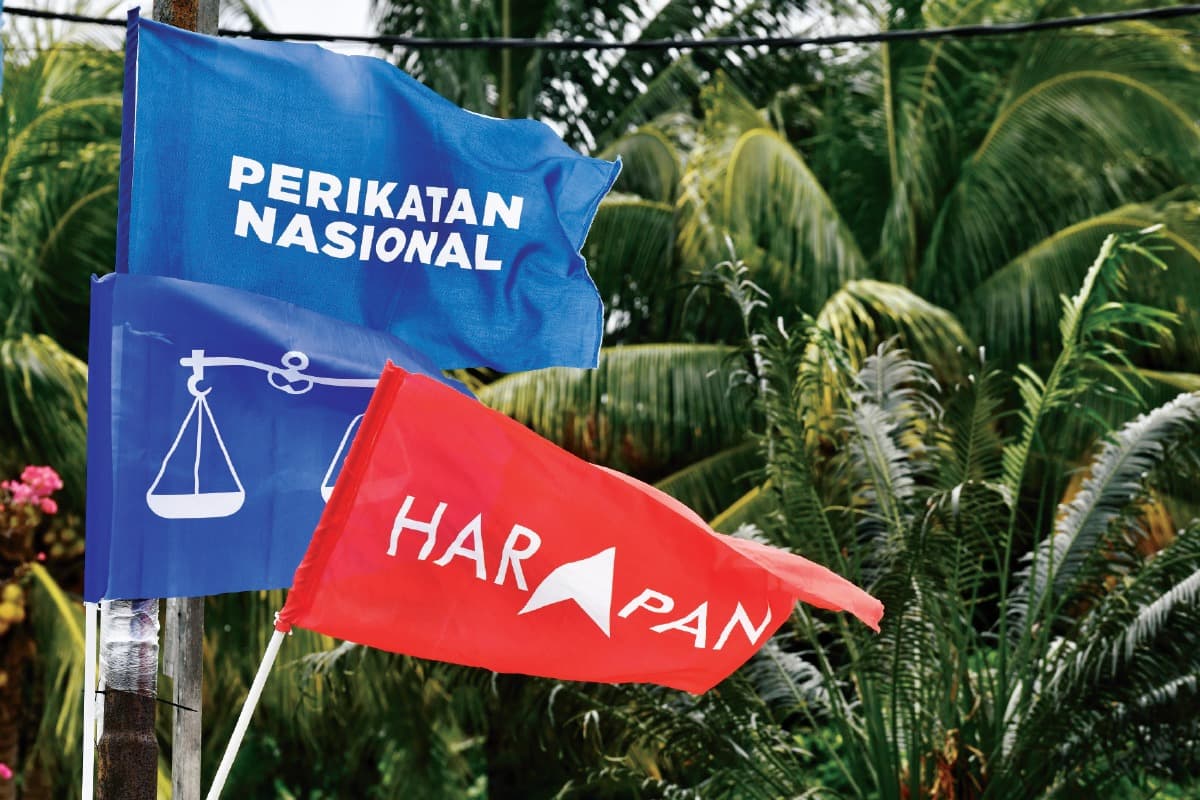
The focus is not only on whether Prime Minister Datuk Seri Anwar Ibrahim will call for early polls, due in February 2028. The big question is whether the two key coalitions of the unity government formed after GE15 in November 2022 — Pakatan Harapan (PH) and Barisan Nasional (BN) — will contest GE16 independently or negotiate a deal to avoid repeating the three-cornered fight with Perikatan Nasional (PN) seen in 2022.
Last month, Anthony Loke, secretary-general of the Democratic Action Party (DAP), PH’s largest party in parliament, reiterated his preference for GE16 to be held alongside two upcoming state polls.
Unlike previous cycles, Melaka and Johor held their state elections separately from GE15, in November 2021 and March 2022 respectively. As a result, Melaka is due for a state election by February 2027, followed closely by Johor.
BN chairman and United Malays National Organisation (Umno) president Datuk Seri Ahmad Zahid Hamidi reportedly told coalition members recently that BN should contest 115 seats to avoid being seen as PH’s junior partner. According to reports last week, Umno also aims to defend 40 of Johor’s 56 state assembly seats.

With local sentiment strengthening in Sarawak and now Sabah, the contest between PH, BN and opposition PN will focus on Peninsular Malaysia, which holds 165 of the country’s 222 parliamentary seats.
In an analysis of GE15 voting patterns, The Edge concluded that a PH-BN collaboration would give them an advantage over PN in GE16. In the November 2022 general election, fought largely in multi-cornered contests, PH won 71 peninsular seats, BN took 23 and PN secured 70 — gaining an additional seat in a subsequent by-election.
Based on the GE15 voting pattern, had it not been for the three-cornered contests, a PH-BN collaboration in GE15 could have reduced PN’s peninsular tally to just 38 seats — assuming full vote transfer between PH and BN supporters.
Seat negotiations will be a big challenge for most coalition parties, however, especially after decades of rivalry between parties now sharing power under the unity government formed no more than four years ago.
As Umno fought for seats against PH component parties Parti Amanah Negara (Amanah) and Parti Keadilan Rakyat (PKR) in GE15, PKR also took seats from the Malaysian Chinese Association (MCA) and Malaysian Indian Congress (MIC). MCA would also have to negotiate for seats with its direct rival DAP, which won most of it GE15 head-to-head contests by a huge majority.

DAP stands least to gain; overlap in Umno, PKR and Amanah seats
Of the 165 peninsular seats, PH polled more votes than BN in 90 seats in GE15, while BN had more in 75, based on election data (this does not necessarily mean they won those number of seats, as the comparison excludes PN).
In GE15, DAP contested 40 peninsular seats and won 33, including 30 with comfortable majorities ranging from 14,000 to 129,000 votes.
Of the seven seats that DAP lost, it had fewer votes than Umno in six seats and MCA in just one. This means Umno and MCA are likely to insist on fielding their own candidates in these seats — especially if BN is indeed aiming to contest as many as 115 seats.
Even if the 115-seat target includes East Malaysia, BN would still be eyeing about 101 peninsular seats, given that it contested only 14 seats in Sabah and Labuan in GE15.
In GE15, Umno contested 107 peninsular seats, winning more votes than PH in 72 of them. Ultimately, however, it won just 20 — which means it lost 52 to PN, with PH finishing third. Umno and PKR clashed in 52 seats and contested against Amanah in 45 seats.
Under a PH-BN pact, Umno could have secured an additional 21 seats with support from PH voters — but it may have had to give up at least eight potential seats to PKR (six) and Amanah (two) since it had fewer votes in those seats than PH.
But this is still a good bargain, unless Umno/BN believes it is in a better position today than during GE15 and can secure more than 41 seats.
With PN’s leadership in disarray, Umno may see better odds in Kelantan, Terengganu and Kedah, where it lost to PN in 18, eight and seven seats respectively.

Bersatu is split in two, with the way forward unclear for sacked deputy president Datuk Seri Hamzah Zainuddin, while coalition partner Parti Islam Se-Malaysia (PAS) was forced to name one of its own — Terengganu Menteri Besar Datuk Seri Ahmad Samsuri Mokhtar — as PN chairman to keep the coalition going.
Umno could attempt to fill the gap as a more stable option for conservative Malay fence-sitters. But if it wants to win big in GE16, it may need to negotiate for seats where PH’s support base outweighs its own.
But that sets up friction between PKR and Amanah. From PKR’s perspective, it could have gained 17 more seats with BN voter support — including seven PN seats where Umno had outpolled them.
Amanah, meanwhile, may not simply yield to Umno, especially in seats where it trailed by only a few thousand votes.
In fact, all but one of the 46 seats Amanah contested involved direct competition with Umno. The exception was Kota Raja, where its president Datuk Seri Mohamad Sabu won against seven candidates, including one from MIC.
MCA is also in a tough spot. Besides 31 seats contested against DAP, where it won only two, it faced PKR in 13 seats — losing all of them.
MIC, too, mainly faced PKR in eight seats, winning only Tapah through deputy president Datuk Seri M Saravanan. It also contested — and lost — one seat each to DAP and Amanah.
Last week, it emerged that MIC had joined PN, according to the latter’s secretary general Datuk Seri Takiyuddin Hassan. This was denied by Saravanan, who said the party only made an enquiry.
Note that MIC delegates at the party’s annual general meeting last November had unanimously approved a resolution to leave BN to join PN.
Seat negotiations
During seat negotiations between two coalitions, the incumbent typically keeps the seats it won. The coalitions then discuss who contests the seats they both lost. Examples from GE15 include Pagoh, where combined PH and BN votes would have exceeded Bersatu president Tan Sri Muhyiddin Yassin’s total; and Tasek Gelugor, won by Bersatu’s Datuk Wan Saiful Wan Jan, who has since left the party after a leadership fallout.
Umno may also push for seats such as Lumut, where Datuk Seri Zambry Abdul Kadir lost by just 363 votes to Bersatu candidate Nordin Ahmad Ismail; as well as Gua Musang and Jasin, where it lost to PAS by narrow margins.
For PKR, a PH-BN pact makes strategic sense in seats such as Permatang Pauh, where deputy president Nurul Izzah Anwar — Anwar’s daughter — lost to PAS’s Muhammad Fawwaz Mohamad Jan by 5,272 votes, a 6% margin. In short, the negotiations would favour the candidate with the higher vote count between PH and BN in each seat. Talks could be challenging in 21 seats where the margin between PH and BN candidates was under 5%.
Negotiations may be tough even in incumbent seats. This includes Kuala Selangor, where Amanah’s Datuk Seri Dzulkefly Ahmad, now health minister, won against Tengku Datuk Seri Zafrul Aziz by around 1,000 votes, a 1.2% margin. Zafrul has since left Umno and joined PKR. Similarly, in Sungai Buloh, Khairy Jamaluddin Abu Bakar lost to PKR’s Datuk Seri Ramanan Ramakrishnan by a 2.1% margin.
The circumstances are changing for both PKR and DAP as they try to pacify supporters unhappy with the progress of certain political and economic reforms, while figures such as ousted PKR leader Datuk Seri Rafizi Ramli — and even MCA — are positioning themselves as the obvious alternative.
There is even talk that both Umno and PKR have been in touch with PN members to gauge the way forward.
From another perspective, 31 of the 38 peninsular seats that PN could still have won against a PH-BN alliance in GE15 would have come at Umno’s expense.
The fluid political situation means strategies and partnerships can still morph in the next few months. And as long as no single coalition is able to take the lead, Malaysia is likely once again to see its federal government formed by a coalition of coalitions — with Sarawak as the kingmaker.

Save by subscribing to us for your print and/or digital copy.
P/S: The Edge is also available on Apple's App Store and Android's Google Play.