

This article first appeared in Forum, The Edge Malaysia Weekly on March 23, 2026 - March 29, 2026
For two decades, global university rankings have quietly reshaped the behaviour of universities around the world. Now, some universities are beginning to ask whether the influence has gone too far.
In September 2025, Sorbonne University announced it would withdraw from the Times Higher Education (THE) World University Rankings, concluding that academic purpose should not be reduced to numerical indicators. The withdrawal takes effect this year.
Sorbonne is not alone in its unease. The University of Zurich and Utrecht University similarly withdrew from the THE rankings in recent years, citing concerns that the rankings place too much emphasis on scoring and competition, and fail to reflect the full range of teaching and research activities.
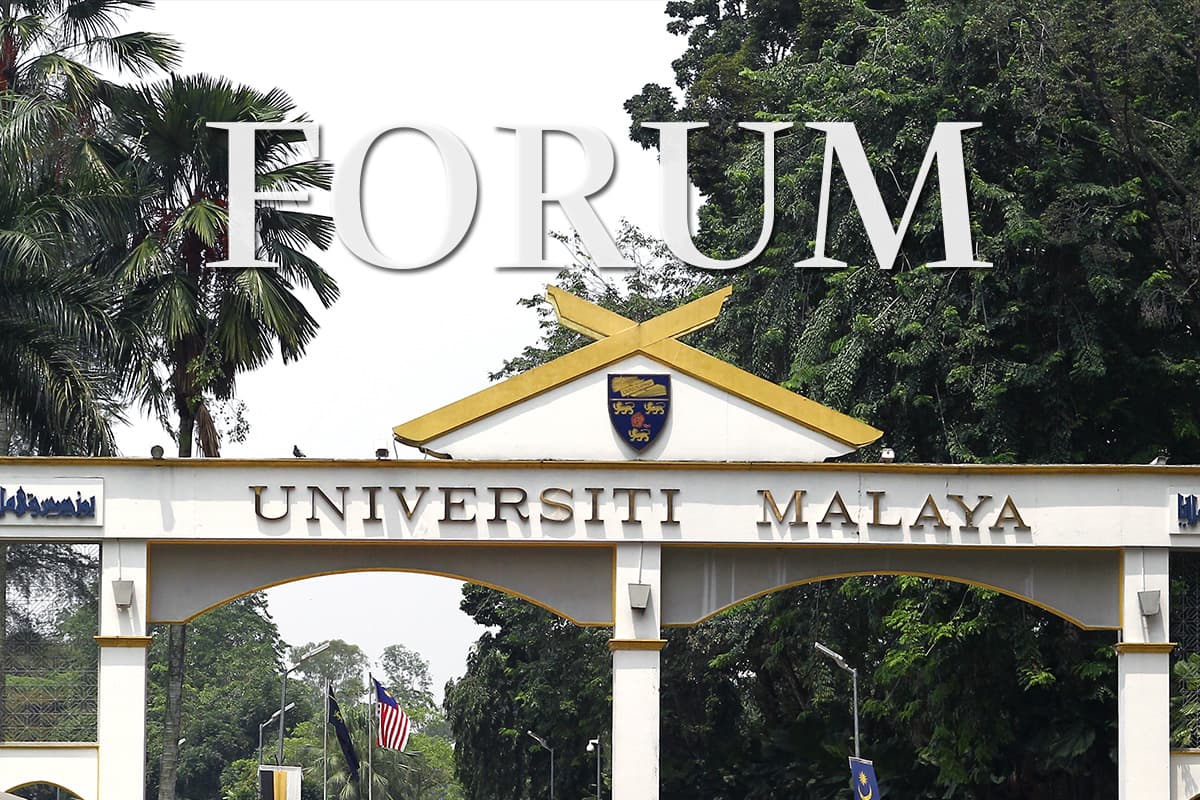
Malaysia has seen this drama before. In the mid-2010s, both Universiti Malaya (UM) and Universiti Kebangsaan Malaysia (UKM) chose to opt out of the THE rankings.
THE’s methodology places heavy emphasis on citations per faculty and research impact, areas where Malaysian universities considered themselves disadvantaged.
The withdrawal from the THE rankings did not last long. The universities gave no detailed explanation, but the pressures were evident. In markets with imperfect information, signals matter, and absence from global rankings is more often interpreted as weakness than deliberate choice.
Malaysian public universities continue to struggle in the THE rankings. Their performance in the Quacquarelli Symonds (QS) World University Rankings has been considerably stronger, reflecting methodological differences between the two systems. Universiti Malaya, for example, stands at No 58 globally in the 2026 QS rankings.
These results are often cited as evidence that Malaysia is producing “world-class” universities.
The influence of global rankings is also reflected in policy. The Malaysia Education Blueprint (Higher Education) 2015-2025 identifies QS rankings as a principal indicator of institutional excellence. The latest blueprint, covering 2026-2035, extends this approach to include the THE rankings and several other global rankings.
Yet, this rise in global rankings sits uneasily beside a different set of numbers.
Malaysia’s broader education system has struggled to maintain foundational learning outcomes. The Programme for International Student Assessment, better known as PISA, offers a useful reference point.
The 2022 round followed the disruption of the Covid-19 pandemic, which affected schooling worldwide. Yet, according to analysis by ISIS Malaysia, Malaysia was among the countries experiencing the largest declines in reading, mathematics and science. The learning loss has been estimated at more than a year of schooling.
These results reveal how fragile Malaysia’s academic foundation has become, forming the base on which its university system rests.
The two developments now exist side by side. Even as the country celebrates the global rise of its universities, 15-year-olds are losing ground in foundational skills. The contradiction invites a simple question: What exactly are these rankings measuring?
Part of the answer lies in the structure of the ranking industry itself. Universities can decline to participate in, for example, THE rankings by withholding data, but they cannot prevent other organisations, such as QS, from evaluating them using publicly available information.
In practice, participation becomes difficult to avoid. If a ranking relies on incomplete proxies because an institution remains silent, the result can be reputational damage. Administrators therefore conclude that participation is safer than abstention. Once this logic takes hold, the system becomes self-reinforcing.
Scholars have long noted that ranking systems create powerful incentives. In the book Gaming the Metrics: Misconduct and Manipulation in Academic Research, higher education researcher Barbara M Kehm observes that universities worldwide increasingly adjust strategies in response to ranking indicators, raising concern that measurable performance may gradually reshape institutional priorities.
What is measured begins, slowly but unmistakably, to shape what institutions do.
For parents and prospective students facing imperfect information, rankings function as a shorthand for quality. High placement attracts attention, and attention attracts applicants and international students.
Over time, these flows reinforce several ranking indicators, creating a feedback loop that sustains an institution’s position in the tables. Numbers intended to measure reputation gradually begin to produce it.
Against this global competitive backdrop, the dynamics of rankings are clearly visible across Malaysia’s higher education landscape. In the 2026 QS global rankings, UM is joined in the top 150 by UKM, Universiti Putra Malaysia and Universiti Sains Malaysia.
The same intensity is now evident in the THE global rankings, where the traditional hierarchy among Malaysian universities is shifting as newer institutions improve their research visibility.
Here the deeper contradiction comes into focus. Competition of such intensity inevitably alters institutional behaviour. Rankings come to be treated as a measure of success and, in Malaysia, the measure has become the objective of both universities and the government.
The most important task of a university, however, is not easily captured by such indicators. It is to teach students how to think carefully about difficult problems. They learn to weigh evidence, question assumptions and reason through uncertainty.
In Malaysia, that task is made harder when the foundations built in school begin to weaken. When those foundations erode, the contradiction becomes stark. A nation may climb steadily in the global league tables of universities while the intellectual foundations of its education system quietly weaken.
Absent from rankings yet indispensable, these habits of mind — learning to weigh evidence, question assumptions, and reason through uncertainty — equip graduates to meet society’s most complex challenges, from artificial intelligence to climate transition and geopolitical uncertainty.
What would it mean for Malaysian universities to take their public mission seriously?
It would mean paying closer attention to the outcomes of domestic graduates. It would mean treating undergraduate teaching as a source of institutional pride. And it would require an honest reckoning over whether the pursuit of global rankings strengthens or displaces the responsibilities universities owe to the society that sustains them.
The Sorbonne’s decision to step away from the THE rankings is not a template Malaysia must follow. French and Malaysian universities operate in very different contexts.
Nonetheless, the principle behind the decision deserves reflection. A university’s worth cannot ultimately be reduced to its position on a league table.
Malaysia may continue to climb the global university rankings. Yet, if foundational learning in schools continues to weaken at home, the country risks celebrating prestige that rests on fragile foundations while neglecting the capacities on which its future depends.
Quah Boon Huat is a former sovereign credit rating analyst
Save by subscribing to us for your print and/or digital copy.
P/S: The Edge is also available on Apple's App Store and Android's Google Play.