

This article first appeared in The Edge Malaysia Weekly on March 23, 2026 - March 29, 2026
RISING disruptions are forcing companies to reinvent themselves to remain relevant and sustain growth. Interestingly, CEOs in Malaysia seem to be outpacing their global and regional counterparts in the race to reinvent, a PwC survey shows.
The consulting firm’s latest annual survey of 4,454 global CEOs — including 1,766 from Asia-Pacific, 37 of whom are from Malaysia — found that 84% of CEOs in Malaysia plan to expand beyond their traditional industry boundaries over the next three years, compared with just 53% of global peers and 37% of regional peers. The survey was conducted from Sept 30 to Nov 10 last year.
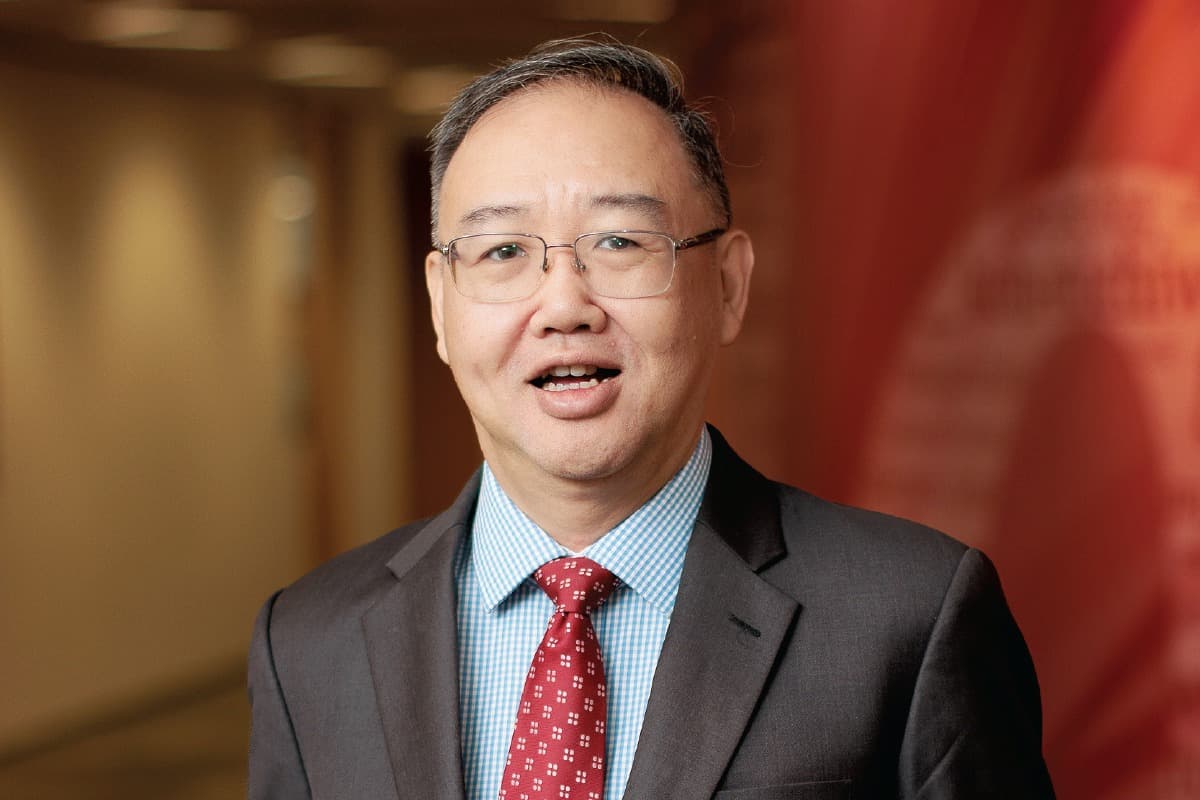
“Even though it is a smaller sample size [of just 37 for Malaysia], 84% is significant — which is interesting. If I were to rationalise it, I would say, generally, Malaysian companies in the past — other than the large ones — were more inclined to focus on the local market,” PwC Malaysia managing partner Soo Hoo Khoon Yean tells The Edge.
“But today, with [industry] porosity, the tendency is to expand out a little more. However, when you do that, you also have to contend with geopolitics and other challenges. So, it becomes a bit of a struggle to find a niche in your original [business], hence the only way [forward] is to consider diversification,” he adds.
“Personally, I am not surprised by companies needing to reinvent, because disruption is real. And when you have such sizeable disruption in your own industry, which makes the industry more porous [in that people, ideas, capital or companies are able to move in and out of the industry more easily], the tendency is not just to defend your space, but also to look to a new space for you to invest.”
He notes that the 37 CEOs polled in Malaysia are in a range of industries.

According to the survey, the results of which were released in late January, the Malaysia CEOs who plan to expand beyond their industry boundaries will target adjacent and fast-moving sectors such as retail (22%), consumer goods and services (16%), and technology (14%).
“It is more of a deliberate reinvention. They don’t move into just any industry, but adjacent ones. That’s the form of reinvention we see. I think a lot of companies are leveraging the core skills they already have, and then using these in a different set-up or industry,” Soo Hoo explains.
“So, for example, oil and gas companies are increasingly exploring renewable energy. Likewise, you see many vehicle manufacturers wanting to invest in batteries, which are expected to power the next generation of mobility.
“We’ve even seen educational institutions and property developers wanting to delve into digital banking, as they believe their assets — particularly customer data — can be monetised through such ventures.”
CEOs are accelerating their expansion into news sectors, he notes, citing PwC’s survey data showing that, over the past five years, the number of Malaysian companies entering entirely new sectors has surged to 76% — a significant leap from 42% in 2025.
This far exceeded the global (42%) and Asia-Pacific (29%) averages, signalling that Malaysian leaders are leading the charge in blurring industry borders to capture new value, says Soo Hoo.
And despite a cautious global outlook for mergers and acquisitions, CEOs in Malaysia were more inclined than their peers to pursue major deals, with 51% planning at least one significant acquisition in the next three years, outpacing both the Asia-Pacific average (28%) and global benchmark (41%).
Interestingly, all these plans for transformation come amid softening business sentiment. Only 33% of CEOs in Malaysia were very or extremely confident in their company’s revenue growth prospects over the next 12 months — a double-digit decline from last year. (Note that the survey took place prior to the US-Israel attacks on Iran, which have led to widespread conflict in the Middle East.)
Nevertheless, the CEOs recognise the need for reinvention, as 70% worry their transformation is being outpaced by technological change, while 41% question if they are doing enough to safeguard their company’s medium- to long-term viability.
Measurable returns from AI

Meanwhile, the survey found that measurable returns from artificial intelligence (AI) adoption remain elusive for most. Less than a quarter of CEOs in Malaysia (23%) report that AI adoption has driven additional revenue over the past 12 months, while 17% are seeing cost reductions. However, 26% say AI has increased their cost base.
“AI is here to stay. But I believe the vast majority of CEOs have not fully experienced or realised the potential of how it can be monetised,” Soo Hoo points out.
“One reason is, if you look at business as a whole, most people tend to focus on the processing power of AI. They think of how to implement or embed [AI] into the business, but then realise that they have not thought through many other things: How would your workflow incorporate agentic or non-human workers? Do you have the right supervisory control over what AI does? How do you audit to identify and manage risks?
“So, because of some of these considerations, you find that there is inertia now, or a limitation, to how you can convert [AI] into monetisation. My sense is that, in the next 24 months or so, business organisations will double down on investment around this area — the adjacent areas of AI. Things like, how do you make sure that your P&P (policies and procedures) are AI-ready.
“You need to have all the controls in place. Get this right, then companies will have much more confidence in applying AI in their day-to-day business and, subsequently, monetise it.”
Save by subscribing to us for your print and/or digital copy.
P/S: The Edge is also available on Apple's App Store and Android's Google Play.