

This article first appeared in The Edge Malaysia Weekly on March 23, 2026 - March 29, 2026
HUME Cement Industries Bhd (KL:HUMEIND) is exploring ways to diversify its revenue streams after it exits the concrete business, including a potential expansion into the non-cement segment.
The group is in the process of disposing of Hume Concrete Sdn Bhd to YTL Corp Bhd (KL:YTL) for RM215 million, in line with its strategic decision to divest non-core assets to enhance its operational focus and reallocate capital into its cement operations. Hume Cement’s concrete business has been loss-making for several years.
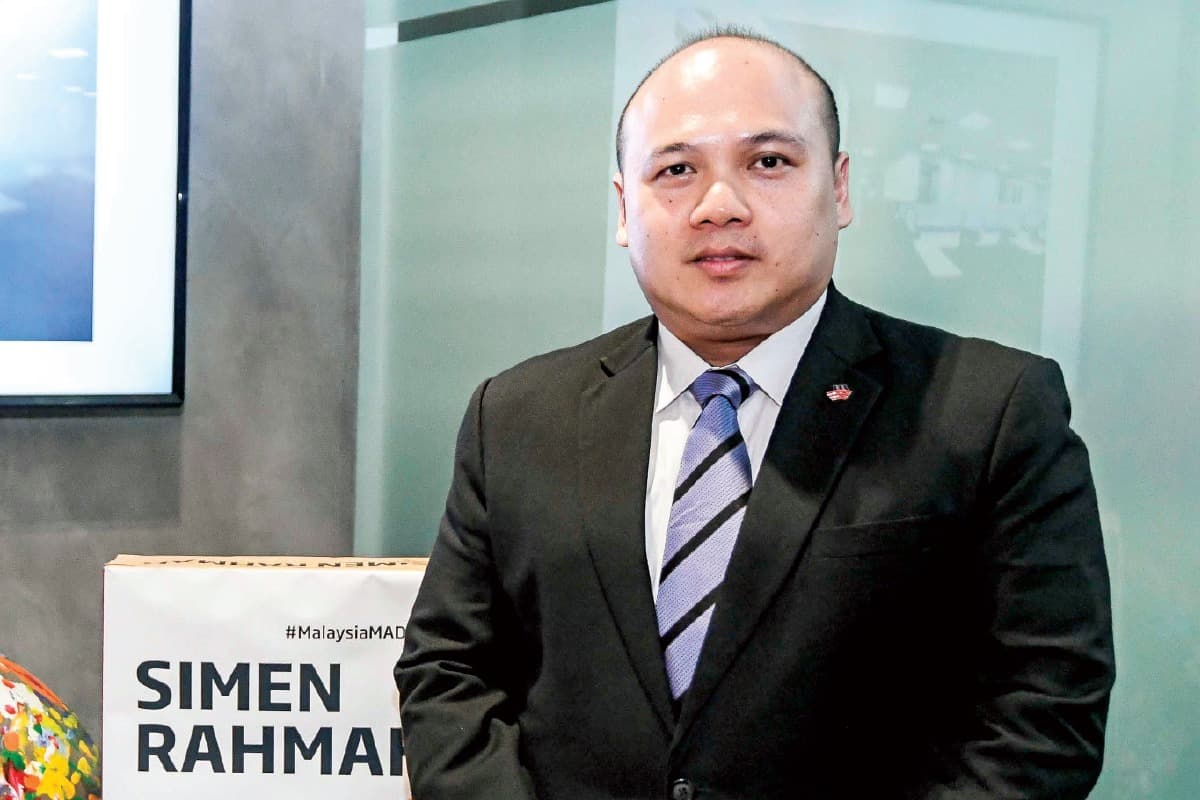
While newly appointed group managing director William Tan Kok Siang declined to reveal details of the potential new business, he says it involves new technologies that could also mark the group’s entry into the non-cement space.
“The traditional precast business has low entry barriers. I’m looking at some niche technologies, which I can’t share yet. My aim is to diversify the group’s business,” the 38-year-old tells The Edge in an interview.
On March 4, the group obtained shareholder approval for the sale of the concrete business, which is expected to be completed by the second quarter of the year. Hume Cement is set to rake in a disposal gain of RM185.74 million from the deal.
The bulk of the sale proceeds, or RM148.9 million, has been allocated to fund “investment opportunities and expansion plans within its cement business”, while RM63.8 million will be used for working capital.

Cash management plans
The disposal gain will further strengthen its balance sheet, which turned into a net cash position early last year. On its cash management plans, Tan says, “Now we have started to generate some cash. Hopefully, when we generate sufficient cash, it can strengthen our capacity to assess potential increase in future dividends.”
The group paid a dividend of 10 sen per share for the financial year ended June 30, 2025 (FY2025), against eight sen in FY2024, translating into a 12-month dividend yield of 3.15%.
In a Jan 12 report, UOB Kay Hian says it expects an improvement in Hume Cement’s dividend payout from the third quarter of FY2026 (3QFY2026), in line with its historical dividend distribution pattern in 1Q and 3Q. “We have raised our dividend payout assumption for FY2026-28 from 40% to 50%, which brings FY2026 dividend per share to 15 sen, translating into a net dividend yield of 4.3%.”
As at end-December 2025, the group had RM171.54 million in cash and cash equivalents and RM84.27 million in borrowings, resulting in a net cash of RM87.27 million.
Hume Cement is 72.77% owned by tycoon Tan Sri Quek Leng Chan’s Hong Leong Group. The group operates a fully integrated cement facility in Gopeng, Perak, with an installed capacity of three million tonnes of clinker and five million tonnes of cement per annum. The plant runs at a utilisation rate of 60% to 70%.
It is the third-largest cement producer in Malaysia, after Malayan Cement Bhd (KL:MCEMENT) — a 59.14%-owned subsidiary of YTL Corp — and UEM Group’s Cement Industries of Malaysia Bhd. Another key player is Tasek Corp Bhd, which was delisted from the local bourse in 2020.
“We always focus on improving our efficiency. Our utilisation rate is about 60% to 70%, so we still have room to grow,” Tan says.
Hume Cement’s profitability improved significantly in FY2024 and FY2025, posting net earnings of RM210.94 million and RM223.17 million respectively, against RM60.03 million in FY2023.
For 6MFY2026, its net profit dipped 2.7% to RM125.46 million from RM128.92 million in the same period a year earlier, on the back of a 21.2% drop in its 2Q net earnings to RM64.25 million because of the absence of a one-off disposal gain booked in the prior year. Cumulative revenue fell slightly by 2.2% to RM561.17 million from RM573.56 million previously.
Tan is confident that FY2026 will be a better year, underpinned by robust market demand and the group’s stronger margins relative to its peers. Rather than chasing large projects at discounted prices, he says Hume Cement prefers jobs that can sustain its high net margins, which widened to 20% in FY2025, from 17.5% in FY2024 and 5.9% in FY2023.
“We have consistently demonstrated our commitment as a reliable business partner, having supported several major national projects, including The Exchange 106, Merdeka 118 and the ECRL [East Coast Rail Link],” he says.
Speaking of business expansion, Tan notes that Hume Cement has acquired land adjacent to its Gopeng plant to further extend limestone reserves, providing a sustainable and sufficient supply to support its core business over the long term.
On the sustainability front, Hume Cement is targeting to launch two new green products by year end at lower cost than its conventional offerings, and to account for 30% to 40% of total sales in future.
The group is also investing RM100 million in a waste heat recovery system, which Tan says is slated for completion next year, with returns anticipated within three years.
“This initiative is expected to reduce our annual electricity consumption by up to 20%, resulting in an estimated 50,000-tonne reduction in Scope 2 CO2 emissions each year. The investment reflects our commitment to operating more efficiently, lowering our environmental footprint and supporting the transition towards a more sustainable and resilient industrial ecosystem,” Tan explains.
A 10% price increase was implemented in the last quarter to offset higher distribution costs following restrictions on overloaded trucks that led to a tighter market supply.
The Ministry of Transport, through the Road Transport Department, began an enforcement operation last October against overloaded commercial vehicles, leading to an immediate increase in distribution costs for both bagged and bulk cement.
Electricity and coal remain key input costs for cement producers, including Hume Cement.
“That’s why I personally monitor coal purchases and take a hands-on approach in managing electricity costs. I’m comfortable with the current cost structure, but we are still pushing for better efficiency,” Tan emphasises.
Currently, Hume Cement is focused mainly on the domestic market.
“We used to export, but with rising manufacturing costs in Malaysia, we are no longer competitive, especially with the higher SST [sales and service tax],” he remarks.
Prior to his promotion to the current position on Jan 1 this year, Tan served as managing director of the group’s cement manufacturing unit, Hume Cement Sdn Bhd, which he joined in 2012.
During his tenure there, he assumed expanded leadership roles across marketing, sales, logistics, exports and plant operations. He is also chairman of the Cement & Concrete Association of Malaysia.
Valuation-wise, Hume Cement is trading at a price-earnings ratio of 11.1 times, compared to its bigger peer Malayan Cement at 12.2 times. Malayan Cement’s FY2025 net margin stood at 14.8%, from 9.6% in FY2024.
UOB Kay Hian, the sole research outfit covering Hume Cement, has a target price of RM4.87 for the stock, which implies a potential upside of 44.1% compared to its closing price of RM3.38 last Monday. At present prices, the group is valued at some RM2.45 billion.
“We continue to like Hume Cement as a laggard play compared with its peers, underpinned by its above industry-average margins, supported by a healthy utilisation rate and superior plant efficiency,” it says.
Over the past year, Hume Cement’s share price has risen 32.4%, but Malayan Cement has recorded a stronger gain of 41%. At last Monday’s closing price of RM6.62, Malayan Cement had a market cap of RM9.23 billion.
Save by subscribing to us for your print and/or digital copy.
P/S: The Edge is also available on Apple's App Store and Android's Google Play.