

A weekly round-up of tanker and dry bulk market (March 20, 2026)

This report is produced by the Baltic Exchange.
The Baltic Exchange, a wholly-owned subsidiary of Singapore Exchange, is the world's only independent source of maritime market information for the trading and settlement of physical and derivative contracts.
Its international community of over 650 members encompasses the majority of world shipping interests and commits to a code of business conduct overseen by the Baltic.
For daily freight market reports and assessments, please visit www.balticexchange.com.
Capesize
It was a week of mixed route performance in the Capesize market. Following a positive close on Friday, the Capesize Timecharter Average (C5TC 182) ultimately rose by US$817 week-on-week. The C3 Brazil to China route edged above US$30, a level last seen in July 2024 with the current laycans across both the first and second halves of April. By contrast, the C5 West Australia to China route remained under pressure, sliding from US$13.475 on Monday to US$11.71 on Friday, a weekly decline of US$1.765. In the North Atlantic, market activity strengthened from mid-week onwards as fresh transatlantic and fronthaul cargoes emerged. This improvement was reflected in firmer earnings by the close, with transatlantic rounds at US$28,575 and fronthaul trips at US$51,111. On the period front, there was talk of a 182,000-dwt delivery China in the first half of April fixing for three years at US$32,000.
Panamax
The week progressed from early caution to firmer momentum, with bunker price uncertainty still underpinning volatility. Monday saw mixed sentiment, as the Atlantic hinted at a potential floor while Asia softened on weaker volumes. By Tuesday, demand picked up, particularly in the Atlantic, driving rate improvements despite ample tonnage, with Asia also rebounding on stronger regional trades.
Midweek, gains accelerated. Atlantic activity strengthened, supported by mineral and grain demand, tightening prompt tonnage in the north and lifting rates. Asia mirrored this trend, with solid Pacific and Australian cargo flows and rising fixtures. By Thursday, the positive tone was sustained across both basins, with continued rate increases and improved sentiment. Overall, the market closed the week on a firmer footing, showing clear signs of recovery and underlying demand support with the P5TC finalising the week at US$17,132.
Ultramax/Supramax
The market closed the week on a cautious note, as limited cargo availability and ample tonnage supply continued to weigh on rates across both basins. In the Atlantic, conditions remained weak throughout the week. The US Gulf continued to face downward pressure amid limited cargo demand and a growing list of prompt vessels, while the South Atlantic gradually lost momentum as the week progressed. A 56,000-dwt vessel open Veracruz was reported fixed for a trip delivery SW Pass to East Coast Mexico with grains at US$16,250, while another 56,000-dwt unit was heard fixed from Recalada to Puerto Quetzal at US$21,000. Activity in the Continent–Mediterranean region remained largely muted, with only sporadic enquiry and little movement in rates. A 58,000-dwt vessel open Naples 19–21 March was reportedly fixed for a trip delivery Garrucha to Conakry with gypsum at US$13,000. Across Asia, sentiment remained soft as charterers continued to push lower rate ideas while cargo volumes stayed limited. Rising bunker prices also contributed to the cautious tone seen across the region. Despite the softer sentiment in the spot market, the period sector saw pockets of activity. A 61,000-dwt vessel was placed on subjects from Guangzhou for 4-6 months at US$17,000, while a 63,000-dwt unit was reportedly fixed from Zhoushan for 4-6 months at US$17,500.
Handysize
The market continued to soften over the course of the week, as limited fresh enquiry across most regions weighed on overall sentiment. In the Continent and Mediterranean, activity remained largely muted throughout the week, with little notable change in rate levels. Across the South Atlantic and US Gulf, sentiment gradually weakened as the week progressed. A persistent oversupply of tonnage combined with a lack of fresh cargo pushed rate discussions lower, with charterers increasingly testing softer levels. Reported fixtures included a 39,000-dwt vessel fixed from the US Gulf to Türkiye with grain at US$19,250, as well as another 39,000-dwt unit fixed delivery Upriver to North Brazil at US$18,250. In Asia, trading activity remained slow and sentiment largely negative. While some brokers noted slight tightening of tonnage in the North Pacific toward the end of the week, limited cargo volumes and ongoing uncertainty surrounding bunker prices kept rates broadly stable. A 38,000-dwt vessel open Bahudopi was placed on subjects for a voyage via West Australia to Japan with gypsum at US$13,500. On the period front, a 40,000-dwt newbuilding was reportedly fixed ex-yard Japan for three years at 122% of the BHSI, with delivery scheduled for May-June 2026.
Clean
LR2
MEG LR2 freight eastward climbed modestly this week. The TC1 75kt MEG/Japan index went from WS353 to WS376.
By comparison, a voyage west saw the TC20 90kt MEG/UK-Continent index came down to US$7.29 million (-US$143,000).
The TC15 80kt Mediterranean/East index dropped by US$170,000 to US$8.23 million this week with the corresponding TCE dropping to US$61,300/day on Baltic description round trip.
LR1
The TC5 55kt MEG/Japan index has been assessed up by 25 points to W388.
A run west on TC8 65kt MEG/UK-Continent ended the week with the index US$109,000 lower to US$5.61 million.
On the UK-Continent, LR1 freight rose another 11 points this week to WS296 for the TC16 60kt ARA/West Africa index. This took the Baltic TCE for the route to US$57,900/day round trip.
MR
The TC17 35kt MEG/East Africa index added 189 points to WS591 this week.
On the UK-Continent, MRs came back up this week. The TC2 37kt ARA/US-Atlantic Coast index was assessed 11 points higher than last week at WS230 with the Baltic TCE for the round trip at US$19,700/day.
In the US Gulf, MR freight resurged this week. The TC14 38kt US Gulf/UK-Continent run is currently assessed at WS413 after beginning the week at WS395. The Baltic round trip TCE for the run is now at US$58,200/day. The Caribbean voyage on TC21, 38kt US-Gulf/Caribbean is presently assessed at US$2.03 million, the corresponding TCE is now at US$93,200/day on Baltic description round trip.
The MR Atlantic Triangulation Basket TCE went from US$69,100/day to US$673,400/day.
Handymax
In the Mediterranean, Handymax’s on TC6, 30kt Cross-Mediterranean index climbed 32 points to WS357 this week.
The TC23 30kt Cross UK-Continent route rose again to WS397 this week (+9) which generates US$72,800/day on Baltic TCE round trip.
VLCC
The continuing situation in the Middle East has meant challenges for the Baltic panellists. The extreme risk to shipping via the Strait of Hormuz still exists, however, our panellists remain able to price Middle East loading for the Crude Oil shipping market. Rates for the TD3C route (270,000mt Middle East Gulf to China) were being assessed at WS427.67 last Friday and is now being rated at WS413.89 which corresponds to a daily round-trip TCE of US$400,928 for the standard Baltic VLCC.
In the Atlantic market, the rate for the 260,000mt West Africa to China route (TD15) has softened from WS162.06 last Friday but remains dramatically firm at WS145.31, giving a round voyage TCE of US$101,912, while the US Gulf to China route (TD22) rose from US$20,322,222 to US$22,217,222 which gives a daily round trip TCE of about US$137,200.
Suezmax
In the Suezmax sector, the rate for the 130,000mt Nigeria/UK Continent voyage (TD20) trip dipped from WS258.61 to WS256.67 which translates into a daily round-trip TCE of US$118,650. The TD27 route (Guyana to UK Continent basis 130,000mt) eased from the WS259 level to WS256 giving a daily round trip TCE of about US$120,500. In the Black Sea, rates for the TD6 route of 135,000mt CPC/Augusta remain around last week’s levels, at the WS350 mark, meaning a daily TCE of about US$232,250. In the Middle East, the TD23 route of 140,000mt Middle East Gulf to the Mediterranean (via the Suez Canal) rose from close to WS520 to WS550.
The new Baltic route of 145,000mt USG/UKC (TD33), climbed from WS253 to WS260.
Aframax
In the North Sea, the rate for 80,000mt Cross-UK Continent route (TD7) moved up from WS225 to WS234, giving a daily round-trip TCE of about US$127,300 basis Hound Point to Wilhelmshaven.
In the Mediterranean, the rate for 80,000mt Cross-Mediterranean (TD19) also moved up, from WS335 to WS361 (basis Ceyhan to Lavera, that shows a daily round trip TCE of just above US$138,400).
Across the Atlantic, the market improved significantly, to say the least. The 70,000mt East Coast Mexico/US Gulf route (TD26) rocketed from WS296 to WS471 (giving a daily round-trip TCE of almost US$150,000) and the 70,000mt Covenas/US Gulf route (TD9) went from WS282 to WS455 (translating into a daily round trip TCE of nearly US$129,900). Since the index was produced on Thursday, rates have continued to surge with about WS500 fixed on subjects for TD26.
The rate for the transatlantic route of 70,000mt US Gulf/UK Continent (TD25) soared from WS254 to WS433 which gives a round trip TCE basis Houston/Rotterdam of over US$120,100/day.
On the Vancouver exports, the rate for TD28 (80,000mt crude oil Vancouver to China) has slipped again, from US$4,425,000 to US$3,962,500 (a round trip TCE of US$55,643/day) while TD29 (80,000mt crude oil Vancouver to Pacific Area Lightering point off the USWC) has fallen from WS377.5 to WS360.
LNG
The LNG spot market continued to show strength this week, with the Atlantic basin rebounding mid-week while the Pacific softened overall. Early weakness across both basins was followed by a pickup in activity in the West, supported by more bullish short-term sentiment driven by recent escalations in the Middle East.
On the BLNG1 Australia–Japan route, 174k cbm vessels declined US$13,500 week-on-week to settle at US$138,000/day, as the Pacific market eased despite some volatility during the week.
The BLNG2 US Gulf–Continent route strengthened, with earnings rising US$12,340 to US$167,000/day. Similarly, the BLNG3 US Gulf–Japan route increased US$18,500 to US$181,000/day, reflecting improved momentum in the Atlantic market during the second half of the week.
In the time charter market, period rates moved lower as sentiment cooled following the recent volatility in spot earnings. The six-month rate fell US$14,100 to US$89,200/day, while the one-year term declined US$14,433 to US$80,167/day. Further out the curve, the three-year period slipped US$3,000 to US$78,000/day, indicating a more cautious outlook in the longer-term market.
LPG
The LPG market strengthened sharply this week as oil and gas prices surged amid escalating strikes in the Middle East, with rising bunker costs adding further upward pressure to freight. Increased volatility and bullish short-term sentiment helped push rates higher across the key routes.
On the BLPG1 Ras Tanura–Chiba route, rates moved up to US$122.00, with TCE earnings settling at US$90,323/day.
The BLPG2 Houston–Flushing route also firmed over the week, rising US$10.25 to US$92.50, with TCE earnings increasing US$14,934 to US$85,299/day.
Similarly, the BLPG3 Houston–Chiba route climbed US$36.33 to US$175.00, with TCE returns jumping US$29,307 to US$72,577/day, reflecting the broader bullish sentiment in the market.
Container
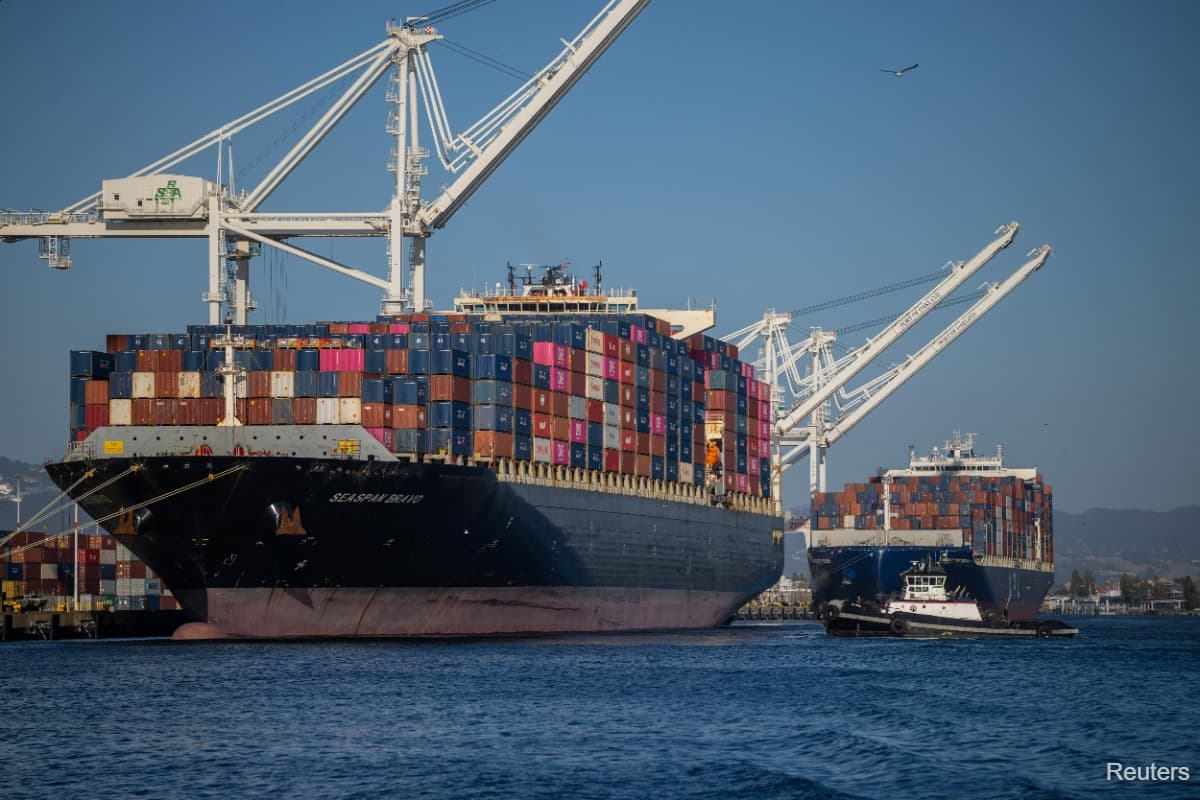
With the ongoing geopolitical issues in the Middle East Gulf and the effective closure of the Strait of Hormuz, the side effects are beginning to show worldwide. We have seen bunker prices hit very high levels all around the globe, as supplies of different grades of fuel and gas oil start to become more sparse. Container lines are reacting to this by adding bunker surcharges into their rates per feu. FBX01 (China/East Asia – USA West Coast) has stayed steady, ending the week at US$2,048, US$7 higher than a week ago. FBX03 (China/East Asia – USA East Coast) has increased by US$180 from last week, finishing the week at US$3,186, up US$502 from the start of the month. FBX11 (China/East Asia – North Europe) dropped by US$133 from last Friday, ending the week at US$2,744. FBX13 (China/East Asia – Mediterranean) increased by US$178 since the end of last week, ending the week at US$4,241, up US$524 since the start of the month.
Disclaimer:
While reasonable care has been taken by the Baltic Exchange Information Services Limited (BEISL) and The Baltic Exchange (Asia) Pte. Ltd. (BEA, and together with BEISL being Baltic) in providing this information, all such information is for general use, provided without warranty or representation, is not designed to be used for or relied upon for any specific purpose, and does not infringe upon the legitimate rights and interests of any third party including intellectual property. The Baltic will not accept any liability for any loss incurred in any way whatsoever by any person who seeks to rely on the information contained herein.
All intellectual property and related rights in this information are owned by the Baltic. Any form of copying, distribution, extraction or re-utilisation of this information by any means, whether electronic or otherwise, is expressly prohibited. Persons wishing to do so must first obtain a licence to do so from the Baltic.