

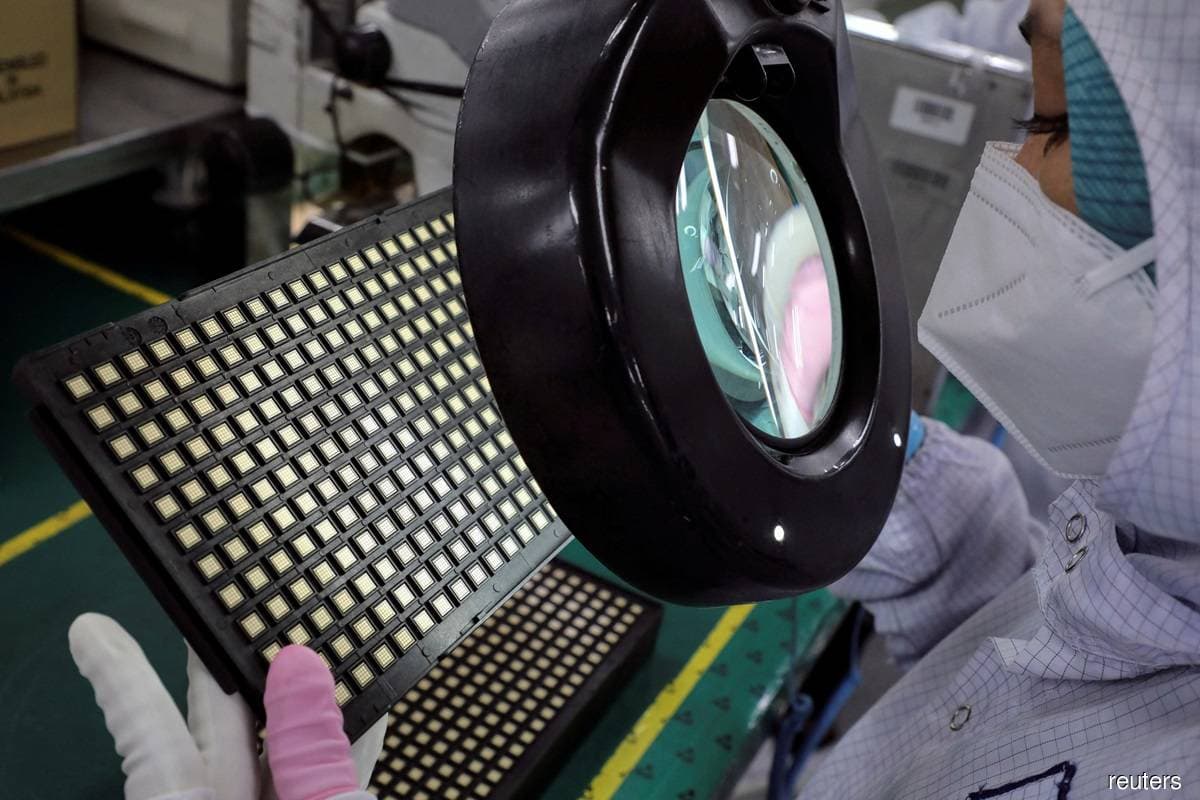
KUALA LUMPUR (March 19): Strong demand for electrical and electronics (E&E) products, along with robust global and regional growth, is expected to support Malaysia’s export performance, despite looming geopolitical tensions and shifts in US trade policy, according to economists.
Data released by the Department of Statistics Malaysia (DOSM) on Thursday showed that the country's February exports rose 10.8% to RM131.0 billion. While positive, the figure fell short of the 12.2% growth projected in a Bloomberg poll of economists.
Imports for the month grew 8.2% to RM114.2 billion, resulting in a trade surplus of RM16.7 billion — a 32.5% increase compared to the previous year.
E&E products remain the primary engine of export growth. “The E&E sector, a cornerstone of Malaysia’s export base, is expected to maintain its growth momentum in the coming months, driven by continued global demand for semiconductor components and consumer electronics,” RHB Research said in a note.
It also noted that Malaysia's trade exposure to the Middle East is relatively low, hence direct impact from the conflict there on Malaysia's exports is expected to remain limited. It also suggested that Malaysia could benefit from the shift in US reciprocal tariff policies to Section 122 of the Trade Act of 1974, as it results in lower effective tariff rates.

Hence, it remained optimistic about Malaysia's trade prospects in 2026, keeping its in-house export projection at a bullish 9.3%. Exports grew 6.5% in 2025.
Kenanga Research also maintained its 2026 export growth forecast, but at a more conservative estimate of 5.1%, as it cited continued support from key exports, particularly E&E products. It also expects higher crude oil and liquefied natural gas prices to aid recovery in the domestic mining sector.
MBSB Research, while noting the resilience of February exports, sustained by strong E&E demand, has projected that 2026 exports would only grow at 4.5% (2025: 6.5%), with imports climbing 5.0% (2025: 6.2%). "The trajectory of Malaysia's export performance remains vulnerable to external trade volatility," it said, including Malaysia facing increasing scrutiny over forced labour allegations and concerns over structural excess capacity in manufacturing.
“Should the ongoing probes yield affirmative findings, the resulting retaliatory duties will likely keep the nation’s industrial outlook cautious throughout the year,” MBSB Research said.
While it continues to expect external trade to moderate, it still sees "potential upside boost driven by front-loading of E&E shipments ahead of phased tariffs by the US on wider semiconductor products, in addition to the sustained global tech upcycle".