

This article first appeared in City & Country, The Edge Malaysia Weekly on March 23, 2026 - March 29, 2026
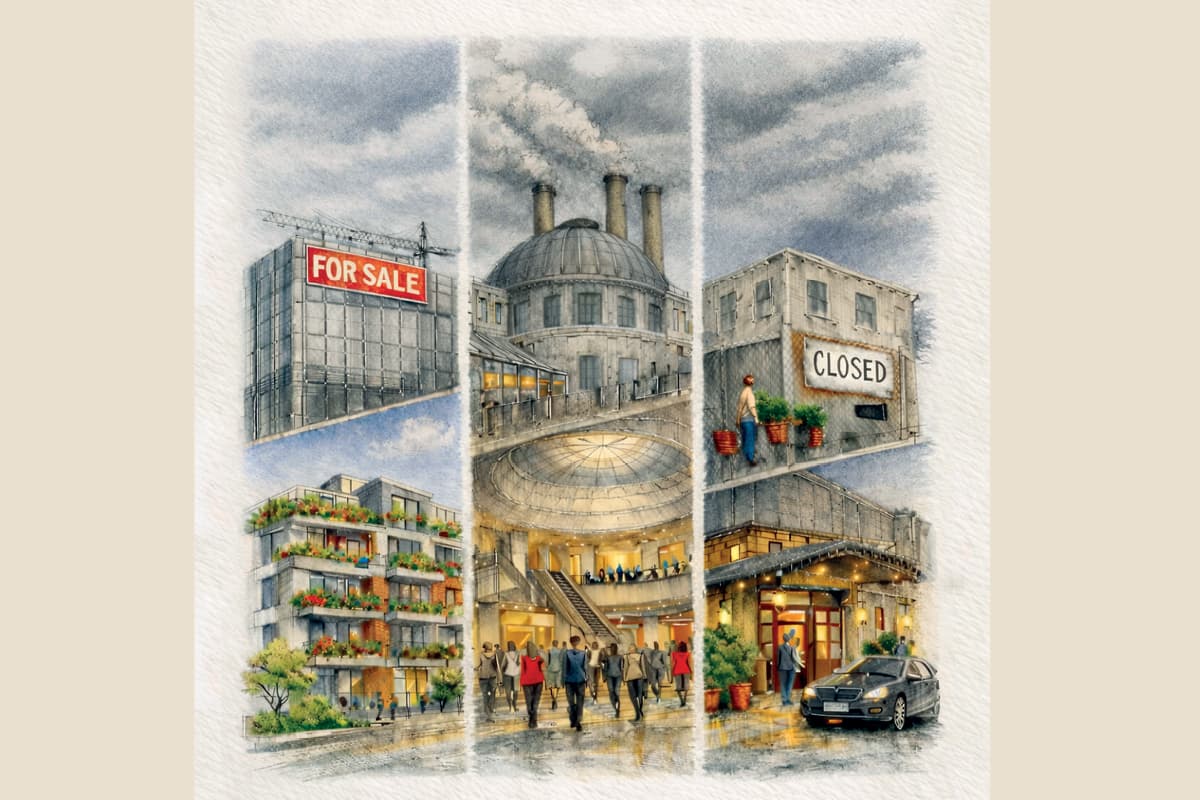
Last October, the government announced under Budget 2026 a special tax deduction equivalent to 10% of the qualifying renovation or conversion costs (capped at RM10 million) for developers repurposing commercial properties into residential use. Although such incentives may help, the viability of these projects remains a concern among developers.
City & Country dives into the complexities of undertaking such an exercise by speaking with property consultant Rahim & Co Chestertons Sdn Bhd director of research and consultancy services Sulaiman Saheh and property developers, as well as looking at think tank Research for Social Advancement’s (Refsa) research report.
According to Sulaiman, there are many idle or underperforming properties in Kuala Lumpur, especially in the older part of town. While many of these assets have been left in a lurch, some were given a new lease of life when their owners embarked on an adaptive reuse exercise.
The movement, although not a new phenomenon, has gained significant traction over the last few years. Sulaiman has observed this practice in older cities like the Klang Valley, George Town and Johor Bahru.
This momentum can be attributed to a city’s decline, as many idle or underperforming assets built decades ago require a refresh or rebranding. However, the case for converting the original use of the property can be attributed to the emptying of the city’s core. For example, downtown Kuala Lumpur has seen a decline in the inner city population as office workers, who once resided in the city, have moved out to the suburbs.

In a September 2025 report titled “The Case for Office to Residential Conversion in Kuala Lumpur”, Refsa says the boundaries of downtown Kuala Lumpur are along the Gombak River, from Jalan Sultan Ismail to Kampung Attap, including Stadium Merdeka, Masjid Jamek and Medan Tuanku towards the east.
On top of that, certain parts of the city lost their appeal when new areas opened up. For example, when the 100-acre Kuala Lumpur City Centre precinct opened up, multinational corporations (MNCs) started moving into the area, leaving downtown Kuala Lumpur hollow. This not only affected the number of people working in the city but also left office buildings empty as MNCs moved into higher-grade offices.
Environmental, social and governance (ESG) requirements are another factor that MNCs prioritise. This led to a number of buildings undergoing asset enhancement initiatives (AEIs) to ensure they are ESG-compliant to attract tenants and improve occupancy rates. Those who are complacent risk affecting occupancy rates with tenants choosing flight to quality.
It is undeniable that AEIs and adaptive reuse are useful strategies to improve the value of a property. The question is whether such exercises are easier said than done. What are the complexities involved for owners who wish to convert their asset into another use?

Things to consider
Sulaiman says there are four key factors to determine whether a property is ripe for conversion:
• The physical characteristics of the building, such as the age, structure, infrastructure, location and size;
• Zoning and legal constraints, which look at the density limits, plot ratios, strata titles and legal framework related to broader development policies;
• Understanding market demand by looking at population trends, income levels, lifestyle preferences and employment patterns;
• Financial viability of the project in terms of raising funds, expected returns, achievable sale or rental values, and the overall cost of undertaking the exercise.
Refsa suggests using a scorecard by global architecture firm Gensler to evaluate multiple factors when converting old office blocks.
There are five main criteria, namely floor plate, form, services, context and envelope. Other criteria that are also looked at are the height of the ceilings, number of lifts, access to transit and parking.
“Buildings with a good score would have shallow floor plates, high ceilings, side cores, zoning for residence, good transport accessibility and good light access,” says the report.
It also spotlights the discrepancy in value between commercial (office blocks in particular) and residential spaces. “The conversion would have to create enough value for developers and owners to agree on. The owner of an upscale office building may hold out for new commercial clients should the proposed conversion be seen as lowering the value of the building. Building owners may also take into account that residential tenants only pay for the space they rent, while offices usually rent out the entire floor.”
After considering these factors, there are two types of conversion to be considered: interim use and long-term use. Sulaiman says in some cases, building owners may convert to interim use before committing to a full conversion or major transformation.
“Interim use is often cyclical and driven by prevailing lifestyle trends. Many of such conversions tend to focus on sectors such as food and beverage (F&B), retail and lifestyle experiences, including pop-up stores and curated shopping concepts. These are often the most appealing and easiest to implement. As a result, adaptive reuse has become a viable way to unlock value,” he adds.
Sulaiman cites aged industrial spaces as examples. “Back then, the trend was [converting industrial spaces] into futsal courts. Today, the trend is lifestyle-oriented spaces and places designed to be visually appealing and Instagrammable,” he says.
REXKL is another example of interim use, which saw an old cinema transformed into a lifestyle venue featuring eateries, retail lots and event spaces. “Projects like these reflect a broader shift in consumer preferences, particularly among the younger urban population who increasingly appreciate experiential spaces that combine heritage, culture and modern lifestyle offerings,” says Sulaiman.
This trend is not limited to Kuala Lumpur. Projects in Penang like the Hin Bus Depot and Blue Mansion were transformed into cultural and hospitality spaces while a former battery factory in Johor Bahru was converted into an F&B and lifestyle destination.
Meanwhile, long-term use is seen as a strategy for developers or investors to generate sustainable returns while maximising the land’s potential value, says Sulaiman. He cites several examples of such conversion projects, including the former Lee Rubber Building into boutique hotel Else Kuala Lumpur; Wisma KFC into Hyatt Centric City Centre Kuala Lumpur; the former Oriental Bank building on Jalan Hang Lekiu, which is now the Moxy Kuala Lumpur Chinatown hotel; a former factory in Petaling Jaya into gourmet mall New Ocean World Fine Food City; and the former Wisma AIA in Kota Kinabalu into Stanton Hotel Kota Kinabalu.
Another developer undertaking this exercise is Land & General Bhd (KL:L&G), which reviewed its plans with The Edge in September last year to convert its office building in Putrajaya into serviced apartments at a cost of RM45 million, citing an oversupply of office space in the area.
He adds long-term use is also relevant to properties in heritage zones, where development intensity is restricted. “In many cases, the plot ratio may be capped at two or three, so owners cannot increase the building’s scale. Because the property is already designated as heritage, redevelopment options are limited. Hence, asset conversion comes into play.”
To better understand the process behind property conversion in Malaysia, we spoke to several property developers who have successfully delivered such projects.

One Shell Square Miri
ParkCity Group converted a half-built hotel in Miri, Sarawak, into an office tower that eventually became the headquarters of Shell Malaysia following the onset of the Covid-19 pandemic.
“We stopped construction in 2019 because there were rumours of a pandemic in China at the time. We looked at our business model to see whether it would still be viable to continue with the project,” says ParkCity Group chief operating officer (East Malaysia and Cheras) Liew Swee Choong.
He says ParkCity was considering whether to redevelop the building with a new function or make use of the existing building and convert it into something else. The developer chose the latter, having considered the sunk cost factor.
ParkCity decided to build a Grade A modern office that fulfilled ESG requirements as there was a lack of such buildings in the Miri office market. Subsequently, it secured Shell Malaysia as the tenant.

ParkCity was able to quickly deliver the building as the structure was already there. Nearly 47.82% of the existing building elements were reused for One Shell Square Miri.
“Of course, there were some redesigns with the limitation of the existing infrastructure. However, it saved time because the structure was already there and that fulfilled some of the client’s needs because it wanted the building to be finished quickly,” says Liew.
The conversion project faced many challenges including adapting the elongated hotel structure with many columns into an open office layout, adjusting the floor-to-floor height and servicing for office use.
As the original serviced suite layout comprised rooms and brick partitions, the walls were largely removed to create an open-plan office environment. The initial design also featured long corridors with two rows of columns, some of which were taken down to improve spatial efficiency.
While the building has a long and narrow footprint, the developer turned this into an advantage by arranging workstations along the extended façade to maximise natural daylight, thereby reducing reliance on artificial lighting and lowering energy consumption.
In terms of the project’s refurbishment cost, the developer says it is more than starting on a blank page because it is a repurposed building.

The Atrium
Paramount Property Development Sdn Bhd converted the former 222-room Ambassador Row Hotel Suites by Lanson Place in Jalan Ampang, Kuala Lumpur, into the 241-unit The Atrium serviced apartments. The developer had acquired the site for RM82 million in 2022.
Its CEO Chee Siew Pin explains that turning the former hotel into serviced apartments was the best option because of the building’s footprint. “If the building were an office block with a square layout, it would be very difficult to convert because residential units require natural ventilation and natural lighting.”

Another consideration was zoning, as converting its commercial title into residential would take longer, subject to approvals of the local planning authority.
“When we bought this property, the zoning was commercial but the title usage was residential. Converting it into serviced apartments made sense,” says Chee.
Time was also critical as a prolonged construction period would lead to increased interest cost. Therefore, the RM212 million project was given two years to be completed. The cost of the construction amounted to RM64 million.
During the refurbishment exercise, every aspect of the building was changed except for the structural framework. Chee says the developer installed new mechanical and electrical (M&E) systems and a new firefighting system, as well as added more parking spaces and updated architectural elements.
Generally, the cost breakdown of the building was roughly 45% for architecture, 35% for structure and about 20% for M&E. Paramount kept about 35% of the original building.
As for the units, Chee says: “Fortunately, this building already had a central atrium. For more natural lighting, we tore down and rebuilt all the façades, including the windows.”
In terms of regulatory approvals, he says the process was relatively manageable as long as all requirements were met. He adds that the authorities support redevelopment projects by providing incentives of about 20% to 30%, which varies for each state.
One key consideration in repurposing projects is financing, Chee highlights. Under the Housing Development Act (HDA) and banks’ lending guidelines, developers typically can only borrow up to about 35% of the project’s GDV. However, the land cost and existing building alone already cost 40% of the development’s GDV.
One challenge the developer faced was unexpected discoveries during construction, such as undocumented columns and pipes, which meant additional financial constraints and longer time to complete.
On top of that, the adoption of Schedule H under the Housing Development Act, under which it follows a progressive payment structure during construction, also meant that some buyers would need to pay about 30% to 35% within two to three months because the structural work had already been completed.
“When we launched the project, we had to inform purchasers that certain parts of the construction such as the foundation and structure were already completed. This meant buyers had to make the corresponding progressive payments according to the construction stage,” Chee explains.

ReU Living @ MiCasa All Suite Hotel
IGB Bhd (KL:IGBB) is no stranger to conversion and repurposing projects, having already worked on a few both locally and abroad. With ReU Living @ MiCasa All Suite Hotel, the developer — under its subsidiary ReU Living Sdn Bhd — decided to convert part of the hotel into an assisted care and senior living facility.
According to ReU Living CEO Estee Tan, MiCasa started in the mid-1990s as a full-suite hotel with kitchenettes and living areas across two blocks. Block A has remained a hotel while Block B underwent a conversion process.

Tan says MiCasa was originally designed to accommodate expatriates and long-stay guests. After the pandemic, the developer started exploring the idea of a retirement village. Instead of building one from scratch, it looked at its existing assets.
“Malaysia is projected to become an ageing nation by 2030. If we do greenfield development, it will take us three to five years. So this kind of conversion or repurposing of the space is the fastest we can get it up, perhaps within 18 months,” she elaborates.
MiCasa All Suite Hotel was identified as a suitable property for conversion because it already functioned as a hotel apartment, meaning much of the infrastructure was already in place, says Tan, adding that the location was also strategic because it is in the proximity of eight hospitals.
The building’s structure was unchanged. The conversion of the property took about seven months and cost around RM10 million.
“Because the building was already operating as a hotel apartment, much of the infrastructure was already in place, which made the retrofit faster and more cost-effective. The project took about seven months to complete,” she says.
The interiors, on the other hand, underwent some major changes such as building a large accessibility ramp to aid mobility, demolishing several apartment units on the ground floor to create a community room and refurbishing units to suit elderly residents.
“We installed grab bars along the corridors and in bathrooms. Then we replaced the carpet flooring with more suitable materials and also brought in hospital beds. So we removed all the hotel beds,” says Tan.
The furniture also had to be changed. “We could not simply buy a normal three-seater sofa and place it there. The height has to be right so our seniors can sit and stand comfortably.”
The lighting was another important consideration, she says. “It cannot be harsh white lighting because that would make the place look very clinical and sterile. Instead, it has to feel warm, so that it removes the stigma people often associate with nursing homes.”
In terms of its operation, Tan says the facility continues to run under the hotel licence. She adds that there was no zoning change because the building was already a hotel apartment. However, the facility had to obtain a licence from the Social Welfare Department (JKM) to provide care services.

Opportunities and challenges of property conversion
According to Sulaiman, the conversion of offices into residential units may solve the country’s housing affordability issue.
“People are increasingly suggesting that instead of immediately focusing on home ownership, we should first explore renting. Although these schemes face challenges, the underlying idea is that one doesn’t need to buy a house immediately to have a decent home in a good location with adequate facilities,” he says.
“Renting allows people to live comfortably while saving money until they are ready to purchase. The focus remains on youth housing. The goal is to enable them to live close to work so that it reduces commuting time and traffic congestion.”
In fact, Refsa’s report highlights a former commercial building that has been retrofitted into Perumahan Bandar in Jalan Tuanku Abdul Rahman, a co-living space offering rental units to Malaysians aged between 18 and 35 by Kuala Lumpur City Hall (DBKL).
Furthermore, co-living and shared facilities were previously trending in the market but interest has waned, says Sulaiman. “With office-to-residence conversions, there is likely to be renewed demand for co-living arrangements.
“Office buildings can be fully converted into independent apartments but this is costly. To reduce expenses, we need to optimise the facilities to match the target market. For instance, units don’t need full amenities. Each apartment can have a private bathroom and essential facilities, while communal areas are shared.”
He also suggests that government intervention could help cushion the financial burden of the developer by allowing idle buildings it owns to be converted into residential properties owing to lower asset valuations.
The conversion of offices into residential units comes with difficulties as well. According to Paramount Property Development Sdn Bhd CEO Chee Siew Pin, this process can be quite challenging.
“Number one, the car park is insufficient. Number two, the office has a large footprint, so when you try to carve out apartment units, they become longish and not very practical,” he points out.
ReU Living Sdn Bhd CEO Estee Tan concurs, saying that when converting offices, the middle section is always the problem.
“Office floor plates are very large. Also, unlike offices, residential units need windows for every room. These rooms are very difficult to sell because people feel uncomfortable staying in a space with no natural light,” she adds.
“To overcome that, for the middle rooms, we had to punch a hole through the building to create a lightwell. This way, the surrounding rooms would also get natural light.”
Meanwhile, ParkCity Group chief operating officer (East Malaysia and Cheras) Liew Swee Choong foresees a trend focusing on smaller projects as the conversion of large offices into residential projects often cannot be justified economically.
“For big buildings, it’s very difficult for developers to justify even though there are some tax breaks. The tax breaks will only have value if the developer can make money out of the projects,” he notes.
“Only when the residential value is somewhat on par with the commercial does it make sense. If the average residential value is still lower than the average commercial value, then I think it’s very difficult for the developer to do that.”
The road ahead
Sulaiman says the Malaysian property development sector is continuously evolving and that today’s younger generation, who grew up in a globalised and internet-connected era, appreciates both modern developments and heritage experiences.
“However, ageing properties face challenges in occupancy, rental returns and maintenance issues, which pressure owners to consider redevelopment or disposal. They must decide whether to continue holding an underperforming asset or repurpose it to maintain commercial viability,” he notes.
According to Rahim & Co’s Property Market Review 2025/2026, which was published this January, Kuala Lumpur recorded 30.51 million sq ft of vacant space, largely in older buildings, while Selangor recorded about 13.9 million sq ft of vacant space.
“With government incentives and the need to repurpose [these] vacant office spaces, these conversions are becoming mainstream. The ultimate goal is to create an inclusive city where all areas remain vibrant and avoid pockets of neglect.”
Save by subscribing to us for your print and/or digital copy.
P/S: The Edge is also available on Apple's App Store and Android's Google Play.