

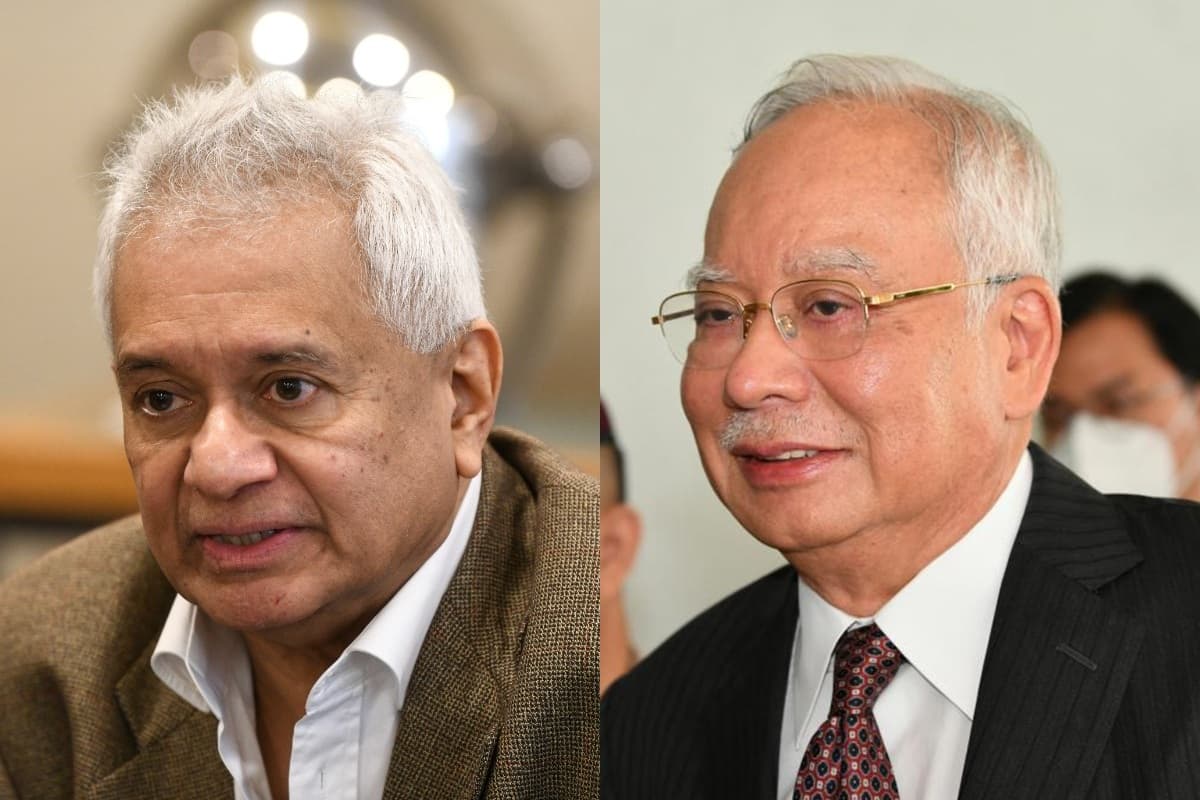
KUALA LUMPUR (March 18): Datuk Seri Najib Razak is now turning to the Federal Court in his latest attempt to revive his suit against ex-attorney general Tan Sri Tommy Thomas for alleged misfeasance in public office.
The imprisoned former prime minister had filed for leave to seek permission from the court to appeal the case via his counsels at Raj, Ong & Yudistra Advocates & Solicitors. He is appealing the Court of Appeal's January decision that dismissed his bid to reinstate his suit against Thomas.
Hearing for the application is set for July 30.
In civil cases, an applicant must first pass the hurdle of obtaining permission from the court by showing how issues in the suit are not frivolous and vexatious.
Najib had listed three questions of law for the apex court's determination. He is asking whether:
- Malaysian law should recognise tort of malicious process as a new legal claim in Malaysian law.
- the AG's conduct before and after charges are filed — even after leaving office — amounts to tort of malicious process.
- tort of misfeasance in public office, especially concerning an AG’s actions, depends on the final result of the criminal case.
At the heart of Najib's 2021 lawsuit against Thomas are the charges brought against him in criminal cases linked to 1Malaysia Development Bhd (1MDB). Najib claims that the charges are part of a “long-planned, premeditated exercise” by the then Pakatan Harapan government.
Najib was suing Thomas for misfeasance in public office, malicious process, and negligence.
Earlier decisions
The High Court in 2022 sided with Thomas and struck out the lawsuit without the matter going to full trial. The court also ruled the suit as premature in light of Najib's ongoing criminal cases, and if allowed would have resulted in a separate trial being heard not only in the criminal court but also the civil court.
The Court of Appeal upheld the decision, but disagreed that Thomas’ position as the AG at the time was immune from any action and his decision non-justiciable.
"[...] Article 145(3) of the Federal Constitution does not confer immunity to the AG with respect to civil suits taken against him personally," the panel ruled.
However, they found that there was no misfeasance in his conduct as Thomas had not led the prosecution of Najib in the four cases and the criminal cases are still ongoing.
The panel also said that the tort of malicious process does not exist in Malaysian law.