

This article first appeared in The Edge Malaysia Weekly on March 16, 2026 - March 22, 2026
MORALE at IJM Corp Bhd’s (KL:IJM) office in Petaling Jaya is visibly low, amid numerous visits by the Malaysian Anti-Corruption Commission (MACC) and the prospect of a takeover by Sunway Bhd (KL:SUNWAY) looming. Judging by the independent advice circular (IAC) to IJM shareholders from M&A Securities Sdn Bhd, however, the Sunway offer of RM3.15 per share appears low (see “M&A Securities says IJM shareholders should ditch Sunway offer” next page).
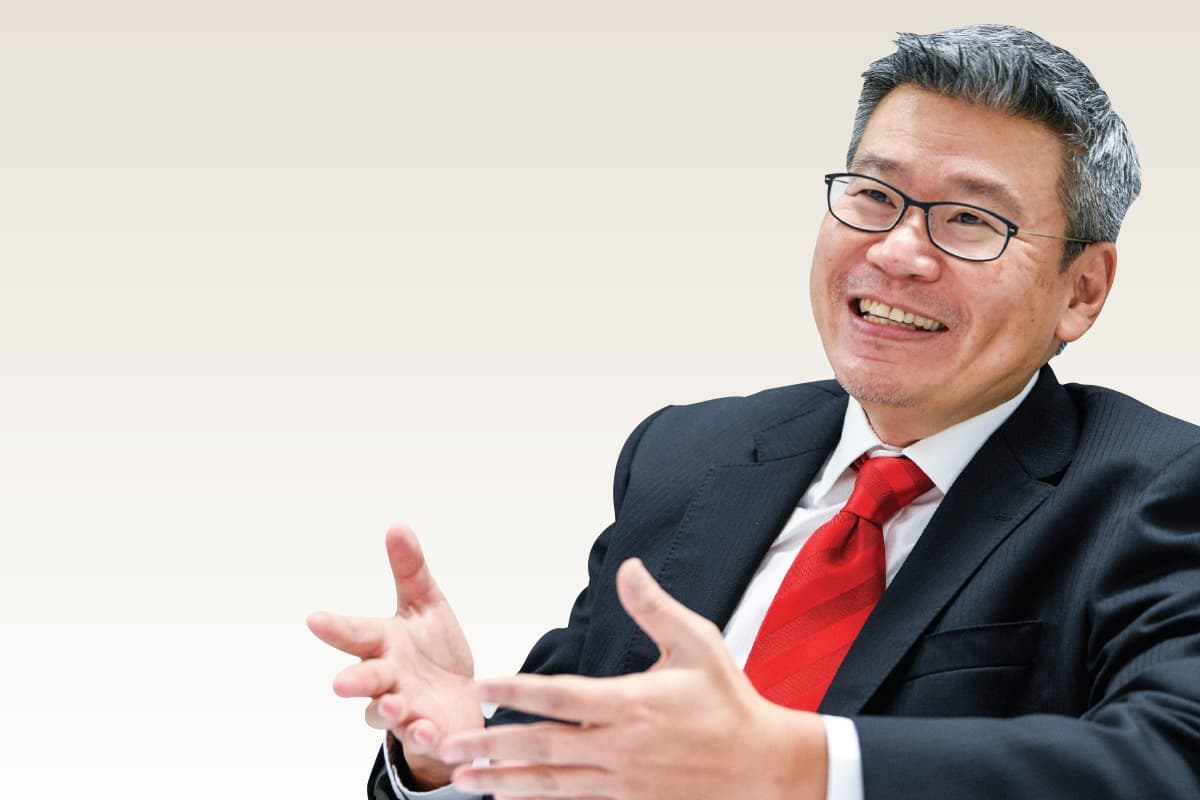
M&A Securities values IJM’s shares between RM5.84 and RM6.48, meaning the Sunway offer is at a discount of 46.1% to 51.4%. While it is unclear whether IJM’s shareholders will reject the seemingly low offer from Sunway, IJM group CEO and managing director Datuk Lee Chun Fai offers his perspective on the offer and talks about his plans for the company should the Sunway bid — which requires an acceptance level of 50% plus one share — proceed.
Here are excerpts of the interview with The Edge.
The Edge: M&A values IJM at between RM5.84 and RM6.48 … pretty far off from the RM3.15 offer by Sunway.
Datuk Lee Chun Fai: We got another valuation by Rothschild, because we just want to be sure; their valuation [of IJM] is RM4.80 to RM5.63, which is way above the offer price. Our board wanted that assurance from another reputable firm to [provide a] secondary valuation for the board to consider.
Unfortunately, people measure you today based on your earnings today … For example, we invested RM1 billion in the WCE (West Coast Expressway under WCE Holdings Bhd [KL:WCEHB]) … Last year, it made a loss of RM50 million. Sometimes, you have investments that have longer gestation periods and the market values you based on your current earnings. So, naturally, you have a big gap.
You see your shareholders have a decision to make.
Sunway offered, that’s Option One. Option Two is if they (shareholders) reject [Sunway’s offer, the question is] what’s in it for them with IJM? More of like, if they choose to stay on with IJM. I just want to emphasise the real issue at hand is shareholders having to make a decision and, for us, it is how to bridge the gap so that the [company’s] assets can reflect the value.
Because when you put everything in the basket — you get highways, projects, companies that are doing well, and also maybe like our Indian operation, which is not doing so well. So when you add everything together, you have an averaging effect.
We plan to address some of the issues. Our construction segment is actually doing very well with all these data centre [projects] and the NPE2 (New Pantai Expressway extension). Things are looking quite right, but if it’s priced as IJM group, you have the plus and minus.
Are the group’s assets being valued at a discount?
Yes … So, we plan to address some of the issues. Our construction arm’s earnings won’t show, although the companies are growing — I think the CAGR (compound annual growth rate) was almost 16% in the last five years. By listing them as separate entities, the market can capture the value of that on what the market will pay for a pure construction company.
Other than the Sunway offer, you don’t see anything else coming?
If you look at deep value, I think IJM will attract a lot of attention but, at the same time, it is also for my shareholders to think the company is worth so much.
We sold IJM Plantation. We build assets and nurture them, and when they mature, we unlock value. We sell [and give] special dividends; that’s what we have been doing all the while.
Unfortunately, the company has become a bit more complex as we shift from property into investment property; we have about RM100 million unrealised forex losses.
Also, the group is complex, with a lot of moving parts, and we are thinking about how to address that. Strategically, we want to be clear about our direction — in the UK, yes, we are going big; in India, we will probably exit. We have land banks and tolled roads, so it will probably take two to three years to exit. In terms of returns at the moment, there are other countries offering us better returns than India.
You know, in India we also have two roads to divest, which will take time. But I have to do something to reduce that complexity, so you can expect IJM to have IPOs; we will have some pure plays. At the moment, we have construction and highways, with a mix of mature and [developing] highways. The mature ones are making money, and we can probably look at ways to unlock their value.
So, with the highways, will you be lumping in ports as well, sort of like an infrastructure IPO?
There are a few big investors coming in, so the structure should be more or less stable — it’s a yield play. But if we need to take another RM500 million loan to build new facilities, the yield for the next few years is affected, which makes things complicated. For example, projects like PETRONAS’ carbon capture and storage, and the refinery, are big projects. If they proceed over the next three to five years, they’ll start a capex cycle.
So, unlocking also depends on timing, the characteristics of the asset, and the opportunity at hand. I think we will just address the immediate to mid-term, the next two or three years.
It’s something we have to think harder about. The best way to do it is you need that growth story, you need something that makes sense when you unlock. You’re not doing it for the sake of doing. It has to be strategic and to make sure that it is in the best interests of my shareholders.
Not premature unlocking. It’s a solid value proposition that investors will say, ‘Yes, this is a good move.’
Have your highways reached that stage? Previously, you said you wanted to set up a highway trust.
I think we cannot wait.
Do you think the Sunway offer has pushed you to speed up the process of unlocking value?
Yes, in a way it did. Just like the tolled roads, we already had plans for that — it’s already in the works. We started looking at highways to monetise them.
For the pure-play parts of our business, like construction, the market seems quite positive, and it offers an opportunity to bridge the gap.
If you look at IJM, in the past we had a listed property arm, we had ICP (Industrial Concrete Products Bhd), which was listed, and our plantations were also listed. We ended up putting everything in one basket, which is why we are in the situation we are in today.
Now is the time to unlock this. You want to make sure you get the correct market pricing for some of these businesses as pure plays.
To ask you bluntly, do you think the Sunway offer will go through?
Well, I think for a shareholder to look at this, it’s our job to tell our shareholders how we think we can deliver value to them because they own 100% of us.
If they elect Sunway and that exercise is successful, they will only have 20% shareholding [in the enlarged entity]. So, in a way, they would get just 20% upside of all these things that we believe we can unlock. You have to choose between 100% or 20% of our world. It’s up to the shareholders to decide. For me, [IJM’s plan] is a lot more attractive.
Does Sunway have the liberty to up its offer? Is there any provision for that?
Yes, there is provision for them. They can if they want to, after looking at this.
Are construction, properties and highways what you are looking at to unlock value?
I think property, because we are incubating assets and building a lot of investment property. We do less land banking today. In the past few years, we’ve been selling some land banks. But we are investing heavily in investment property. We have two big investments in the UK. Here, we have two warehouses, plus a hotel, office building and convention centre. In Malaysia, at TRX, we have the Prudential Tower. A lot of these are still under development and not yet income-generating.
How soon do you see the exit from India?
We have some legacy issues to deal with, but the direction we will eventually take is to be out of India. One market that I like is the UK. The other market we are focusing on is Singapore, which we don’t talk much about because it’s run by our 45% associate company, Hexacon [Construction Pte Ltd].
It’s a very conservatively run company. The remaining 55% is owned by former IJM staff. A few days ago, they secured a very sizeable job, about S$850 million (RM2.6 billion) in Singapore. Think this marks the start of a more aggressive phase for us in Singapore. There are a lot of opportunities, and we are in the process of setting up a branch there.
Is there any concern that, with the story you’re presenting, unlocking value might attract other potential suitors?
The company is obviously very attractive. There are assets within the group, whether concessions or land banks, and of course the biggest asset is the management and the people.
To be blunt, some shareholders might say, ‘You should have thought of unlocking asset value before this’?
Yes, that’s quite a common comment we get. IJM is probably a bit conservative. If you look at cash holdings, I’m holding more cash than Sunway. Sunway is a RM38 billion company, and I have about half their cash. My gearing is also lower than theirs.
So, there’s some truth to it — we’ve been designing the company to be very resilient, so we won’t get into big problems.
Other than Sunway, were there any other offers that came in?
No, we...
Even before Sunway were there any?
We had not received any offers.
Were you in talks with anyone?
We have not been in talks with anyone. But investment banks have all kinds of ideas for their clients, so we’ve heard some noise. But, formally, has anyone come through the front door with a proposal and said, ‘Okay, let’s discuss’? I think we have not got any of that.
Have you spoken to the GLIC (government-linked investment company) shareholders?
We needed the IAC to be issued. I think after that, we made appointments to discuss IJM going forward. Because whether to accept or reject is the shareholders’ decision. We have recommended that they reject. I think the basis is quite clear — it shows deep value, and why leave that value on the table for someone else? Well, you unlock that, and that’s why I started by saying it’s my job to know how to address that gap and deliver value to my shareholders.
And do you need the GLICs’ buy-in?
I mean, of course, we need their buy-in to not sell. It’s value creation at the end of the day, and I believe shareholders will be supportive of anything that creates value.
All this is actually to crystallise the value in pure plays versus keeping all in one basket, where it can’t shine. The value of the assets will emerge eventually.
I think we will engage with our shareholders on the best way to do this.
How do you feel as the CEO of IJM when you are kind of pushed into a corner and don’t find anyone (a large shareholder) has your back?
The company has to stand for itself. It is valuable where it is today, that’s the option available to my shareholders today, right?
If you say we are not behaving like an entrepreneur enough, I think we are taking quite a bit of risk as well.
Have you lost any jobs because of the MACC investigations?
One tender is supposed to come up that we’ve been asked not to participate in. So, it has been detrimental; some of these Western multinational companies are quite sticky. Recently, it has been rather quiet. We have had a few [bank] accounts unfrozen, which I like to view as a positive … No news is good news, I guess.
Are the British authorities investigating your UK operations? Has any government agency contacted your UK office for the probe?
We have not been approached by any UK government agencies and we are not aware of any investigations on our UK operations.
Were you surprised when MACC came out and said it was Sunway’s offer for IJM that they were looking at?
Obviously, for me, when I heard we were the target, we were not the one that came up with the idea to do this. So, obviously, for us, we are at the receiving end.
But you suspended IJM’s shares, which could indicate that you’re colluding with Sunway?
Okay, that’s because Sunway sent us a letter over the weekend asking us to suspend our shares. It was a request to the board to consider suspending our stock. When you undertake this kind of exercise, you have to consult the authorities. So, we agreed to suspend, [and the authorities were informed]. You need approvals, including from Bursa Malaysia, so to us, the checkpoint is there.
The letter was just a request to suspend; there were no details about what they were going to do [or that] there’s a corporate exercise. So, it’s not colluding.
Sorry, could you provide more details on that?
So, on Saturday, they sent the letter to us, actually.
And only after that did you meet with [Sunway founder and controlling shareholder] Tan Sri Jeffrey Cheah?
Yes, we met for lunch on a Monday. And, then, in the afternoon, we received the notice. So, it was during lunch that he revealed his intention to make a particular offer. That’s the first time we formally heard of it.
But what did you discuss during the lunch?
Actually, there’s nothing to discuss because you know this is an offer.
May we ask who was there at the lunch?
Well, me and my chairman (Tan Sri Krishnan Tan Boon Seng) were there.
And the other side?
The key men were there. I think we probably leave it as that. It was a nice lunch at Gordon Ramsay.
Did Cheah seem confident that the exercise would go through?
Well, if you were to start an exercise, of course, you would do it because you believe you have a reasonable chance of [being successful], right?
We are not very familiar with IJM’s board members. We assume some of your board members are representatives of the GLICs.
Only the two: EPF (Employees Provident Fund) and PNB (Permodalan Nasional Bhd).
The board actually recommended that the shareholders reject the offer. So, would you take that as a cue from the two shareholders?
In the circular, it is mentioned very clearly. The recommendation that they make is solely as an individual, as a board member of IJM and in no way to suggest that it is EPF’s and PNB’s view … So, they are recommending in their personal capacity.
So, usually, if someone is going to make an offer like this, there would be the requisite meetings and approvals or support that is obtained. Was any indication given that Cheah had such support?
I am not aware of anything … as I said, we are the target.
To clarify, for the unlocking exercise, the likely assets would be the highways and also the construction business?
Yes, at the moment, we see construction as a potential for unlocking. These are the two that we will look at first.
Within two years?
We think those two exercises can be done within two years.
We need to ask you a very sensitive question. There’s a lot of talk that your relationship with the chairman is strained.
Well, we are still working together. To me, we are still doing what we need to do. As a company, we still need to grow the business.
I don’t know where that came from, but I think, in recent times, he also has some challenges that he has to deal with. From the company’s perspective, [we are focused on doing] what we think is right for the company as well.
My role is very clear. Whatever I do is in the best interests of the shareholders.
What we need to do is to unlock all these assets and show them that the value is there, which is actually protecting the shareholders’ value. [The question] now is who can unlock the value? I have a plan, I believe I can unlock it and I think the plan is believable, and everyone would probably see it as a good way to unlock value, versus a synergy story.
So, for me, I don’t have to throw stones at other people’s ideas. My job is to say, ‘This is my idea.’
If you were to paint a picture for us, what would IJM look like three years from now?
We can see the listing of the construction arm and the highways. Our property portfolio is also significant; we have about RM5 billion worth of assets under development, which we believe will be very sizeable eventually. But it will take time.
You said you don’t want to throw stones at other people’s ideas. But one reason given for this offer is that Malaysia needs bigger construction companies, a larger construction group to benefit from all the investments coming in. Do you agree with this or do you think Sunway, Gamuda Bhd (KL:GAMUDA) and IJM are already big enough?
My view is that we are big enough. I mean, the single-largest project that IJM has done is probably the WCE at a construction cost of RM5 billion.
So, can we handle bigger jobs with this merger? The answer is ‘definitely’ — (but) we (already) have the capacity to do those (bigger) jobs.
Save by subscribing to us for your print and/or digital copy.
P/S: The Edge is also available on Apple's App Store and Android's Google Play.