

This article first appeared in The Edge Malaysia Weekly on March 16, 2026 - March 22, 2026
In February, several Orang Asli communities in Peninsular Malaysia faced eviction, harassment, police arrests, sudden unannounced developments and removal of anti-logging blockades by authorities, according to a joint press release issued by 24 civil society organisations (CSOs) on Feb 21.
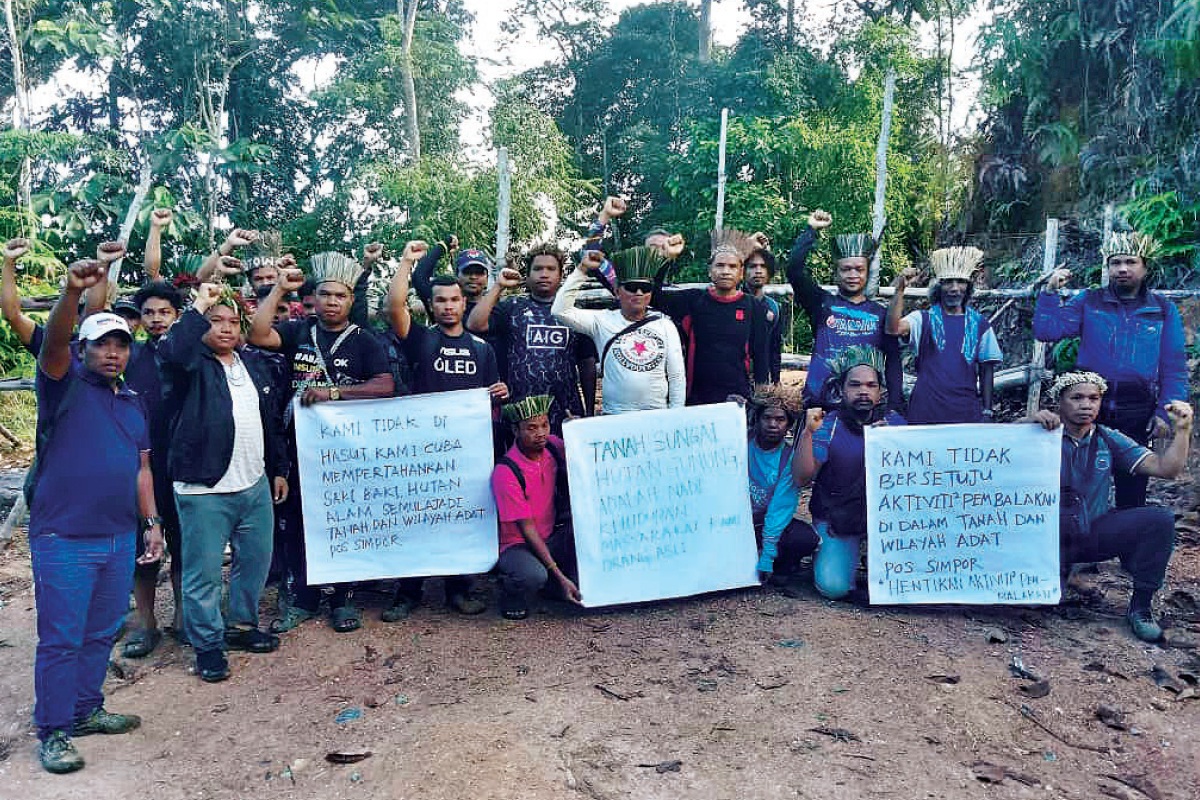
The CSOs highlighted four cases: the eviction of 14 families from the Orang Asli settlement in Bukit Bauk Forest Reserve, Dungun, Terengganu; the detaining of 21 Orang Asli villagers from Kampung Jemeri, Rompin, Pahang, who were protesting development in their claimed customary land; a press conference held by the Orang Asli from Kampung Sungai Kurau, Carey Island, Selangor, on concerns regarding a planned port expansion that they say could threaten their ancestral land and traditional livelihoods; and the taking down of anti-logging blockades by the Orang Asli in Pos Simpor, Gua Musang, Kelantan.
In many of the cases, the Orang Asli claimed that they were not properly consulted or informed of the developments, or did not give approval for developments to occur on the customary land that they had inhabited for generations.
“We want to build the blockade again … The logging company contacted us and asked for permission to log the area again, but I said we are not agreeable,” says Nur Mohd Syafiq Dendi from Pos Simpor. He says the contested area is a forest that includes old farms cultivated by the villagers, and it is where they fish and forage for plants. Dendi says he is the seventh generation to live in the village and rely on the forest.
The CSOs, in the press release, called for the prime minister to affirm the rights of the Orang Asli to preserve their customary land; implement free, prior and informed consent (FPIC), not as a symbolic consultation; and halt the ongoing amendment process of the Orang Asli Act 1954 until legally binding recognition of Orang Asli customary land and territories is included.
The amendment of the Orang Asli Act 1954 was criticised by CSOs and activists last year for failing to conduct proper FPIC and transparently disclose the content and purpose of the amendment to stakeholders.
ESG reached out to the Ministry of Rural and Regional Development, which is responsible for the amendment, but had not received a response by press time.
Colin Nicholas, founder of the Centre for Orang Asli Concerns, one of the CSOs that endorsed the press release, says FPIC cannot be done effectively unless Malaysia first recognises the right of Orang Asli to their customary land, which is where they have lived or have been active in for generations.
Otherwise, other parties can just claim that the land belongs to nobody and no FPIC is required.
According to Nicholas, there have been previous efforts by the Orang Asli — some in collaboration with states such as Selangor — to do community mapping so that the land office is aware of where the traditional territories are.
“The next step is to launch these maps with the land office,” says Nicholas.
In addition, anyone seeking to develop the land must conduct FPIC with the Orang Asli. On whether Malaysia should have an FPIC law, Nicholas notes that the 1961 Statement of Policy Regarding the Administration of Orang Asli in Peninsular Malaysia already affirms that FPIC must be applied and that no Orang Asli can be removed from their land without consent. He says, however, that the process of the current amendment to the Orang Asli Act 1954 does not comply with FPIC.
“Until today, we have not seen the draft of what they have in mind, just the overall principles, concepts and so on … How are people supposed to make a decision on something when they don’t know what’s in there? They have access to it only when it’s tabled in parliament. That’s too late,” says Nicholas.
In addition, the amendment should not try to include too many things in one Act — for example, Orang Asli right to education and culture, alongside their right to land — because it could be distracting and dilute the measures to protect the Orang Asli right to their land, he says.
For businesses, proper FPIC means it must be conducted at the start of the planning process or when the idea is first proposed — not after the project has been decided or is already underway.
“Another way out for businesses is that they tend to approach the batin, or headman. He may agree, but the community may not agree. That’s not FPIC,” says Nicholas.
“It’s not a case of majority wins. You must go by consensus, that means everyone has to somehow work out something and agree to it.”
Save by subscribing to us for your print and/or digital copy.
P/S: The Edge is also available on Apple's App Store and Android's Google Play.