

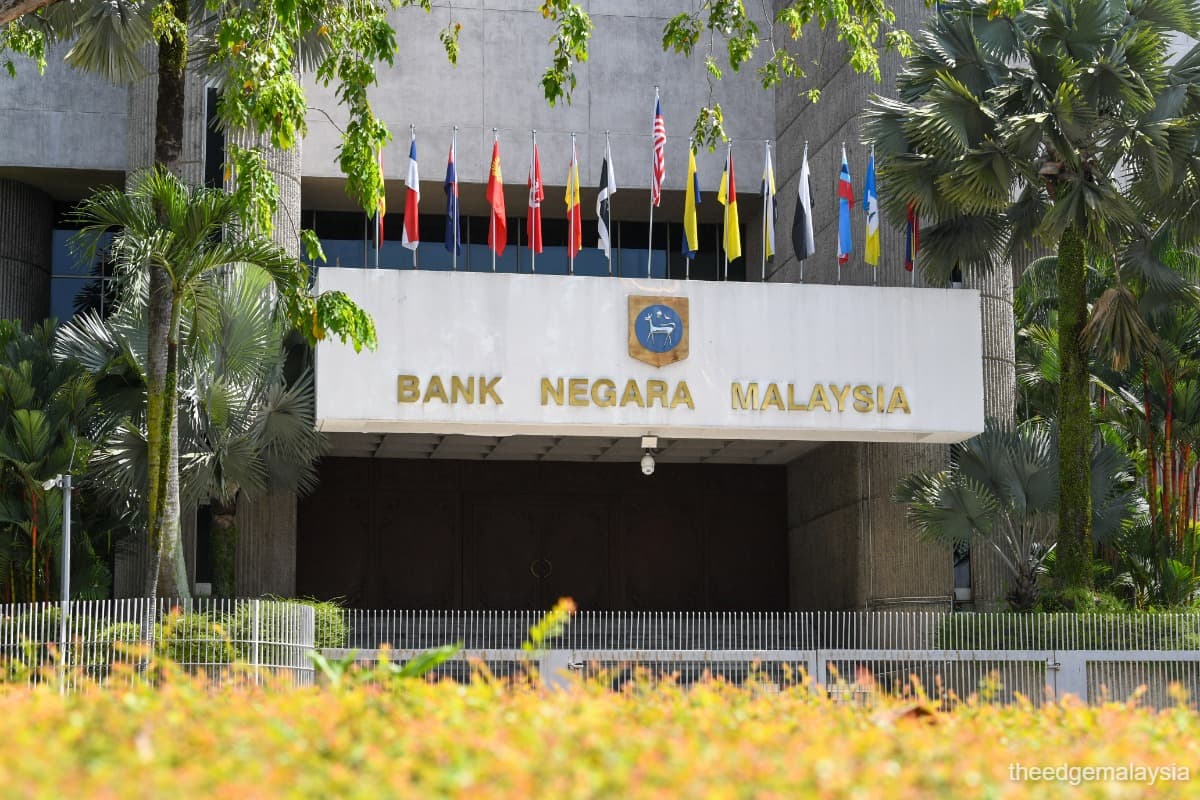
KUALA LUMPUR (March 12): Malaysia’s financial markets remain strong despite global uncertainty, supported by foreign inflows from exporters and investors, according to Bank Negara Malaysia’s Financial Markets Committee (FMC).
The committee in a statement said inflows from exporters as well as foreign direct investment helped offset outflows from domestic importers.
“Overall, FMC members observed that the Malaysian markets demonstrate resilience amid this period of global uncertainty but remain mindful of the risks of a prolonged conflict,” it said in a statement on Thursday following a committee meeting on March 10. Its last meeting was convened in October 2025.
“While uncertainties have risen over developments surrounding tariffs and the length and severity of the conflict, domestic financial markets remain relatively resilient against the global volatility,” FMC said.
It said the ringgit has remained positive, gaining 2.5% year to date (YTD) as at March 9, despite retreating 1.8% against the US dollar since the end of February because investors moved money into safe-haven assets amid the Middle East conflict.
At the time of writing on Thursday, the ringgit is trading at 3.9260 against the greenback. The ringgit is stronger as compared to 4.05 against US dollar at the start of this year.
The committee also noted that the benchmark 10-year Malaysian Government Securities (MGS) yields rose 11 basis points, broadly in line with the rise in global bond yields, but remained near historic lows, while the FBM KLCI was relatively stable with a 2.5% decline, indicating resilience in the domestic equity market.
The onshore FX market also continues to record a robust average daily trading volume of US$21.4 billion (RM84.04 billion) YTD, compared to an average daily trading volume of US$19.8 billion in 2025.
“The demand for government bonds remains healthy with MGS yields relatively anchored, supported by domestic and non-resident demand. This is reflected in the strong average bid-to-cover (BTC) ratio of 2.7 times in the three recent government bond auctions (2026 YTD average: 2.3 times)," it said.
Non-resident holdings of MGS have increased by RM920 million YTD and remain stable at 21.2%, it added.
Similarly, the committee said the domestic equity market has also attracted RM1.5 billion of non-resident inflows YTD.
Accordingly, the positive investor sentiment and the ringgit's strength are expected to be sustained in 2026.
Meanwhile, the FMC welcomed Bank Negara’s commitment and noted that recent efforts, including the Qualified Resident Investor (QRI) programme and engagement with government-linked companies (GLCs), government-linked investment companies (GLICs) as well as corporates, are continuing and expected to support consistent and healthy two-way flows into the market.
“This, along with positive sentiment generated from Malaysia’s encouraging growth prospects and structural reform efforts, will provide enduring support for the domestic financial markets,” said FMC.