

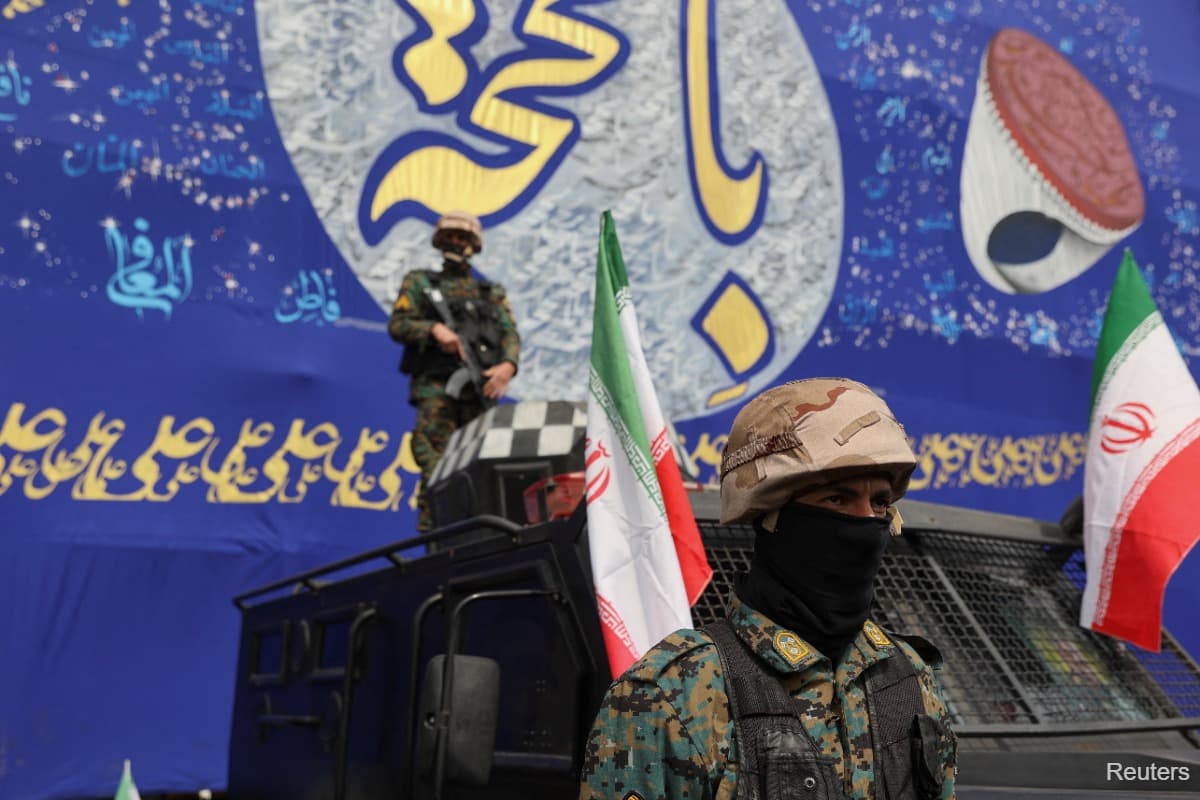
The recent military strikes carried out by the United States and Israel against the Islamic Republic of Iran represent more than another episode in the protracted turbulence of the Middle East. They signal a deeper crisis in the foundations of the international order that has governed global affairs since the end of the Second World War.
At stake is not merely the legality of a particular military action but the credibility of the normative architecture designed to regulate the use of force among states. When the prohibition on unilateral military action, one of the central pillars of the United Nations Charter, becomes negotiable, the stability of the entire international system begins to erode.
Article 2(4) of the UN Charter clearly prohibits the threat or use of force against the territorial integrity or political independence of any state. The strikes on Iran, conducted without the authorisation of the United Nations Security Council, therefore raise serious legal and moral questions. Yet the violation of law itself is only the surface manifestation of a deeper systemic problem. What is increasingly visible is the gradual weakening of multilateralism and the growing normalisation of unilateral power.
The present crisis reflects a broader transformation in global politics. The post 1945 international order was built on the assumption that collective security, diplomacy and legal frameworks could restrain the destructive impulses of great power rivalry. That assumption is now under strain. Increasingly, powerful states appear willing to circumvent institutional mechanisms when these mechanisms do not align with their strategic interests.
In the case of Israel, the justification for military action has been framed in terms of preemptive self defence against a perceived nuclear and missile threat from Iran. The doctrine of preemption is not new in Israeli strategic thinking. It is rooted in a historical experience of insecurity and existential anxiety. Yet the invocation of preemption raises a fundamental question that international law has long struggled to answer. Who determines the threshold of imminence?
If that threshold becomes subjective, if any state may unilaterally define a future threat as justification for immediate force, the prohibition on war becomes hollow. The philosopher Thomas Hobbes once warned that without shared rules and authority, political life risks descending into a condition where power alone determines outcomes. International society was meant to move beyond such a condition. Yet recent events suggest that the line separating order from anarchy is becoming dangerously thin.
What we are witnessing, therefore, is not merely a single military operation but the potential normalisation of a precedent. If the logic of preemptive force becomes widely accepted, other states may eventually claim the same prerogative. The resulting instability would undermine the very foundations of collective security.
A particularly troubling dimension of the current escalation concerns the targeted killing of Iran’s Supreme Leader, Ayatollah Ali Khamenei. The assassination of a sitting head of state of a recognised sovereign nation marks a profound departure from long standing norms of international conduct. While international politics has never been free from violence, certain restraints historically existed, especially concerning the leadership of sovereign states.
The erosion of such restraints risks transforming international relations into a domain where legal recognition and sovereignty carry diminishing weight. Political legitimacy becomes contingent not upon law or diplomacy but upon strategic convenience. This shift is not merely a matter of legal interpretation. It reflects a deeper moral erosion within the global system.
The implications extend well beyond Iran. The precedent of eliminating the leader of a sovereign state through external military action introduces a destabilising logic into international politics. Once established, such precedents are rarely confined to a single case. They reverberate through the behaviour of other states, shaping future conflicts in unpredictable ways.
This crisis must also be understood within the wider context of the ongoing humanitarian catastrophe in Gaza. For more than two years, the international community has struggled and largely failed to halt the devastation unfolding there. The inability of global institutions to effectively address such crises has weakened confidence in the mechanisms of international governance.
The United Nations Security Council, intended to function as the central guarantor of international peace, increasingly appears paralysed by geopolitical rivalries. Emergency meetings are convened and statements are issued, yet decisive action remains elusive. The erosion of institutional authority has created a vacuum in which unilateral initiatives increasingly define the course of events.
For countries outside the major power blocs, including those in Southeast Asia, these developments carry significant implications. The global economy remains deeply interconnected. Instability in the Middle East inevitably affects energy markets, trade routes and economic security far beyond the region itself. For Asean states, maintaining a stable international environment is not merely a diplomatic aspiration but a strategic necessity.
To understand why the present escalation has occurred, one must also consider Israel’s strategic calculations. The attacks of Oct 7 profoundly challenged Israel’s sense of deterrence and security. In response, Israeli leadership has sought to restore strategic credibility through decisive military action.
Yet beneath this immediate response lies a deeper strategic debate about the future of the region. Some voices within Israeli political discourse increasingly argue that long term security cannot be achieved through coexistence or negotiated compromise but through overwhelming military dominance. Such a perspective transforms security from a defensive concept into a hegemonic one.
The partnership between the United States and Israel must also be viewed within this broader strategic framework. The United States, as the principal architect of the post-Cold War order, now faces its own dilemma. It must decide whether to continue defending a multilateral system or to prioritise unilateral strategic advantage. The tension between these two impulses has become increasingly visible in recent years.
The result is the gradual emergence of a more fragmented international landscape. Power is becoming more dispersed, alliances more fluid and institutional constraints less effective. In such an environment, the temptation to rely on military solutions grows stronger.
Yet, history offers a sobering lesson. The pursuit of security through domination often generates the very instability it seeks to eliminate. The philosopher Immanuel Kant argued that durable peace requires not merely the absence of war but the presence of institutions, norms and mutual recognition that make war increasingly irrational. When these foundations weaken, cycles of violence tend to intensify rather than diminish.
The path forward cannot therefore be found in further escalation. The immediate priority must be the cessation of hostilities and a renewed commitment to diplomatic engagement. International actors, including emerging powers and regional organisations, must play a more active role in de-escalation efforts.
In a multipolar world, responsibility for maintaining peace cannot rest solely with a small group of powerful states. Countries across the Global South, as well as international groupings such as BRICS and Asean, have both the moral standing and the strategic interest to contribute to diplomatic initiatives that reduce tensions.
At the same time, the international community must confront the deeper structural weaknesses that have been exposed by this crisis. Rebuilding trust in global institutions, strengthening the authority of international law and revitalising multilateral diplomacy are essential tasks if the international system is to remain viable.
The war on Iran should therefore be understood not as an isolated conflict but as a warning sign. It reflects the growing fragility of a system that once promised to restrain the excesses of power politics. Whether that system ultimately collapses or adapts will depend on the collective choices of states in the years ahead.
The Middle East does not need another cycle of devastation. Nor does the world. What is required now is strategic restraint, serious diplomacy and a renewed commitment to the principles that once underpinned the international order.
History will not judge nations solely by their capacity to project power. It will judge them by their willingness to preserve peace when the temptation to abandon it becomes strongest.
Dr Maszlee Malik is chairman of the International Institute of Advanced Islamic Studies (IAIS) Malaysia.