

KUALA LUMPUR (March 11): Malaysia could face tighter cash flow within its fuel subsidy compensation framework should the current spike in global oil prices persist, according to Moody’s Ratings.
With Malaysia's current fuel pricing regime being fully funded by the government, the current speed of the price surge brings the fuel-pricing frameworks and the adequacy of financial buffers into immediate focus, the rating agency said.
“Price caps and delayed cost pass-throughs [mechanism that is currently implemented in Malaysia] will compress margins and increase working capital needs, weighing on near-term cash flows where compensation mechanisms remain uncertain,” Moody’s said in its report on Wednesday.
The speed of the recent oil price surge, it added, has reduced policymakers’ room to manoeuvre and placed renewed focus on the resilience of fuel-pricing frameworks and financial buffers across Asian economies.

This comes as global oil prices have risen well above the Malaysian government’s US$65-per-barrel assumption used in Budget 2026, with benchmark Brent crude briefly climbing to US$118.93 per barrel on March 9 before retreating to around US$90 per barrel in recent trading sessions.
Sustained high benchmark Brent crude prices — driven by escalating geopolitical tensions in the Middle East — could test the “timeliness and adequacy” of government compensation mechanisms that underpin Malaysia’s regulated fuel pricing system.
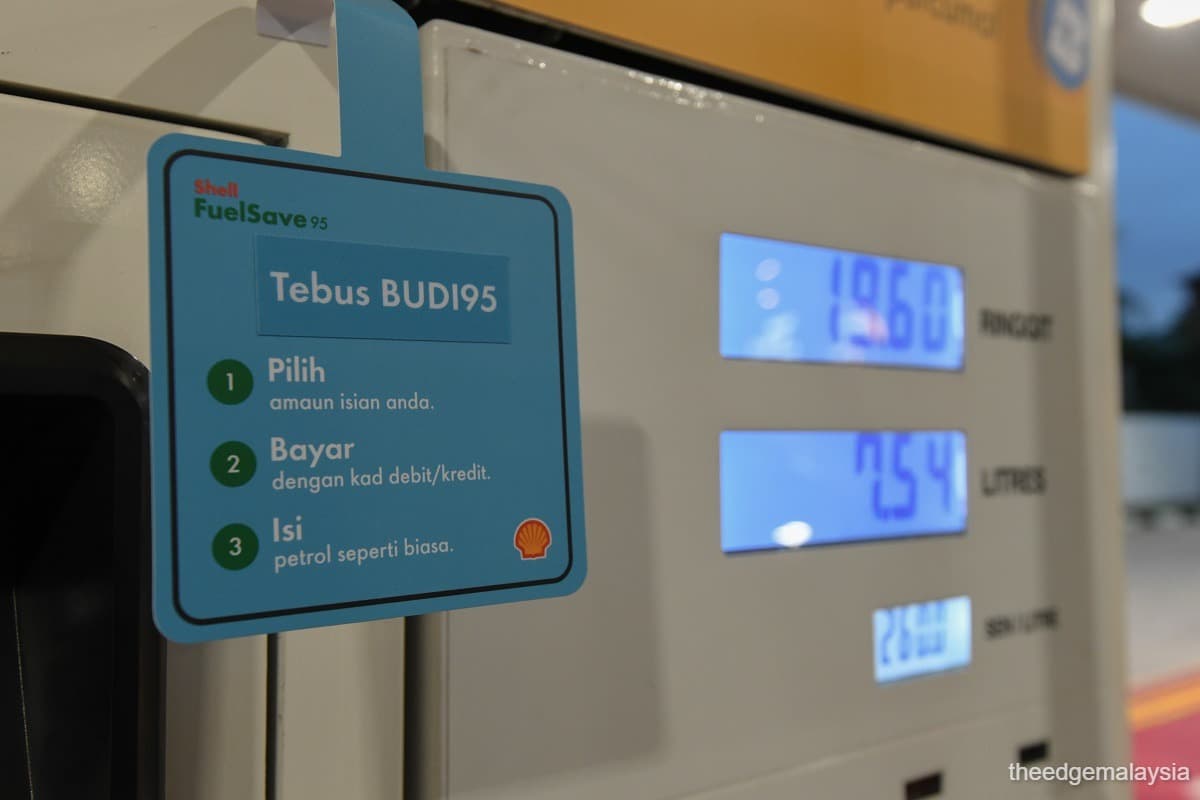
Currently, under Malaysia’s targeted subsidy framework, RON95 petrol — the country’s most widely used fuel grade — is sold to eligible Malaysians at RM1.99 per litre, subject to a monthly cap of 300 litres per person. Such measures are designed to shield consumers from volatility in global energy markets through regulated retail fuel prices.
At the same time, diesel prices are also regulated, with differentiated caps across regions and sectors following subsidy reforms implemented in recent years.
While such policies protect households from price shocks, Moody’s said they can transfer financial pressure elsewhere in the energy system.
Malaysia currently relies on imported crude for roughly 25% of its oil supply, according to the report, though the government typically provides full compensation under the subsidy framework — unlike some regional markets where reimbursement mechanisms are less predictable.
Governments typically act as the ultimate financial backstop in such systems, though the form and timing of support will determine how effectively credit pressures on national oil companies are alleviated, the agency added.
Nevertheless, the rating agency noted that higher energy prices tend to boost the country’s national oil company Petroliam Nasional Bhd’s (PETRONAS) earnings, providing a partial offset to pressures arising from regulated fuel pricing.
Moody’s said PETRONAS’s upstream operations — including oil and gas exploration and production — historically account for the majority of the company’ profits.
PETRONAS has budgeted RM20 billion in dividends for the Malaysian government in 2026, although payouts could increase if oil prices remain elevated and earnings exceed expectations.