

This article first appeared in Capital, The Edge Malaysia Weekly on March 9, 2026 - March 15, 2026
JUST when the local stock market was starting to gain some momentum in the new year, the US and Israel’s bombing of Iran at end-February put a spanner in the works as global stock markets recoiled from the attack, which has expanded to large chunks of the Middle East following Iran’s retaliatory offensive actions.
But the domestic market has yet to see any significant selling pressure as investors appear to be taking a wait-and-see approach to developments in the Middle East.
However, several counters have already come under selling pressure, principally aviation and companies linked to the Middle East.
At the same time, oil and gas (O&G) counters have benefited as Brent crude oil surged to US$84 per barrel last Tuesday on fears that the transport of oil would be disrupted.
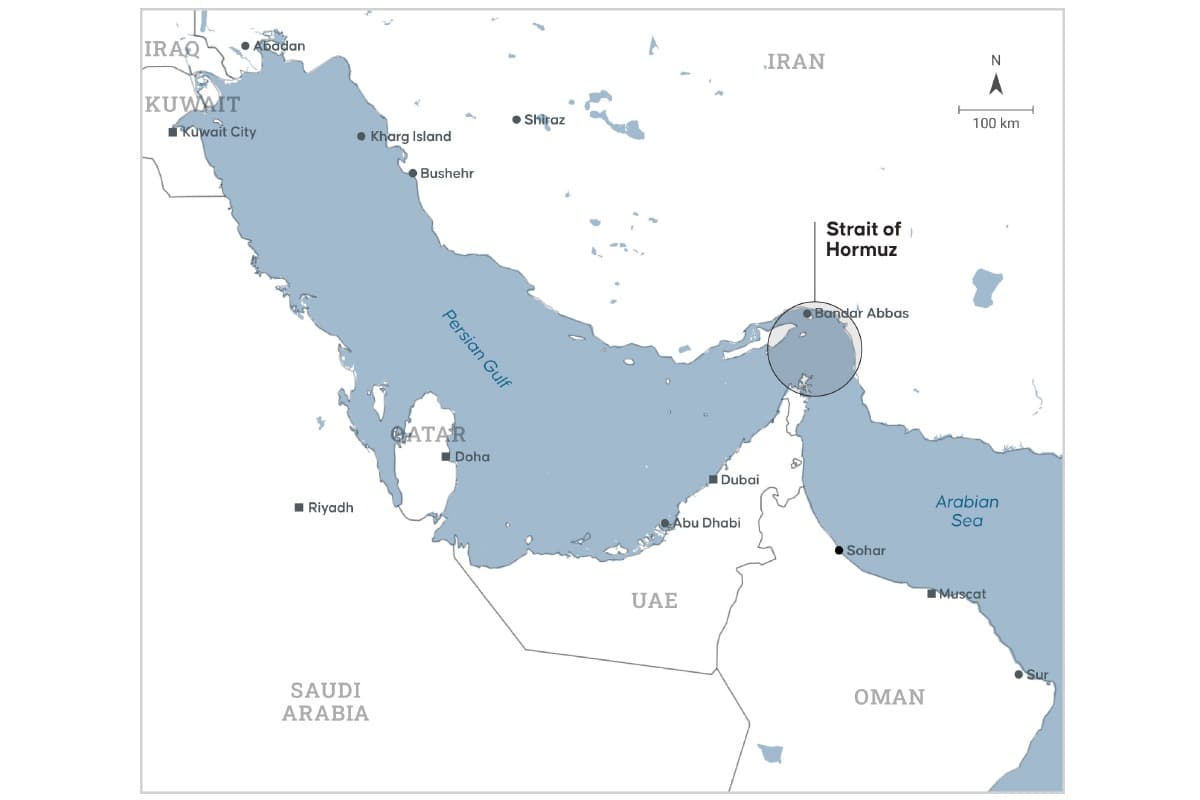
Saudi Arabia, Iraq, Iran, Kuwait, Bahrain, Qatar and the UAE ship crude through the Strait of Hormuz, which handles about a quarter of the world’s seaborne oil trade, and 78% of their cargo goes to Asia. The Strait of Hormuz has been severely affected since the US and Israel launched strikes against Iran.
According to Wood Mackenzie, if tanker flows aren’t restored quickly, oil prices could exceed US$100 a barrel.

As investors brace for uncertainties, the timeline for the Middle East conflict is expected to make up the main theme for at least the first half of the year.
Areca Capital Sdn Bhd CEO Danny Wong is of the view that it would take at least another two weeks to gauge the situation in the Middle East.
“At this point, we are not really sure as the impact usually could be seen in the next one to two weeks.
“If the situation escalates, it could be like when the US invaded Iraq back in 2003, which saw the market volatility last for about two months. It was a short-term uncertainty in the market at that time,” he tells The Edge.
It is worth noting that despite war jitters at the time, global markets eventually rallied strongly post-hostilities, with the Dow Jones Industrial Average gaining about 21%, the S&P 500 rising 26.7% while Japan’s Nikkei 225 surged 55.4%.
Malacca Securities head of research Loui Low expects the market to be volatile for at least the next four weeks as the situation unfolds. “I think it will be short-lived. But it is too early to say as the outcome is still uncertain.”
However, he points out that the market has already priced in the war impact in sectors such as O&G and aviation.
“We don’t know how long the situation will last. If the conflict is prolonged, it will affect operations at the Strait of Hormuz, which has bigger downside risk to the global economy,” he adds, referring to inflationary pressures that could arise because of the tensions.
However, BIMB Securities director of research Mohd Redza Abdul Rahman expects that Malaysia’s headline inflation will remain manageable at 2% this year. “Even if geopolitical tensions escalate moderately, inflation is only expected to edge towards 2.5%, remaining well within historical norms.”
That said, he believes geopolitical tensions in the Middle East have entered a more volatile phase following the strikes on Iran that began on Feb 28.
“While immediate market reactions often trigger a ‘fear premium’, we view the most likely outcome (85% probability) as a prolonged war of attrition. This scenario is characterised by ongoing friction in critical maritime arteries like the Strait of Hormuz, which handles 20% of global oil and seaborne LNG (liquefied natural gas) flows,” he says.
O&G
This sector has emerged as a clear winner in the past week as investors bet that global oil prices would remain elevated. Maybank IB Research expects the local O&G sector to attract greater investor interest, especially those with directly-benefiting upstream assets.
“Sustained elevation in oil prices will also be a relief to national oil company PETRONAS (Petroliam Nasional Bhd), which reported a 21% year-on-year decline in FY2025 core earnings, to RM43.4 billion, primarily due to lower realised energy prices as Brent averaged US$68 per barrel in 2025 compared to US$70 in 2024,” it says in a March 2 report.
Its top picks for the sector include Dialog Group Bhd (KL:DIALOG). The research house noted that while it foresees “minimal impact” on Malaysian equities from the ongoing US-Israel attacks on Iran, several companies listed on Bursa Malaysia including Wasco Bhd (KL:WASCO) have exposure to the Middle East. Wasco has a fabrication yard in Jebel Ali Free Zone in Dubai and a pipe-coating facility in Qatar, giving it operational exposure to the region.
The Bursa Malaysia Energy Index climbed 4.14% between Feb 27 and last Thursday, with several O&G counters ranking among the top 10 most actively traded stocks.
Meanwhile, BIMB Research maintains its “overweight” view on the O&G sector, especially upstream players that are well positioned to capitalise on increased realised prices and upcoming production milestones.
Its top picks include Hibiscus Petroleum Bhd (KL:HIBISCS), Dialog and Dagang NeXchange Bhd (KL:DNEX).
“Earnings sensitivity to higher realised price positions these names favourably in a renewed oil upcycle driven by geopolitical risk premium rather than pure demand recovery,” the research house says in a March 2 note.
Banking
Most analysts are positive on the banking sector unless the situation in the Middle East prolongs and dampens business and consumer sentiment and economic growth.
MBSB Research says the robust economic outlook, high dividend yields with upside possibility, excellent asset quality and superior geopolitical stability (relative to neighbouring peers) make Malaysia’s banks look particularly attractive.
“Only a few banks are particularly vulnerable to headwinds, which come in the form of slowing loan growth and heavier opex (operating expenditure). Dividend outlook remains bright, as more upside announcements are expected in later quarters.
“But the Middle East war and weakening of working capital loans are issues of possible concern,” it says in a March 5 note.
BIMB remains “neutral” on the banking sector as there is no direct exposure to the current turmoil.
“Although domestic financial institutions may have limited direct exposure to the US-Iran conflict, the indirect and secondary effects — particularly rising market volatility and shifts in investor sentiment — cannot be overlooked.”
In the near term, the research house expects Malaysia’s capital-market and corporate-finance pipelines to stay resilient.
“The banking sector is a pillar of stability with strong capital buffers [Common Equity Tier 1 (CET1) ratio:14.5%] to withstand indirect market volatility,” it says.
Areca’s Wong says that he prefers banking counters that mainly cater to the domestic market as they are more resilient to foreign exchange volatility.
Ports
Maybank IB believes that local ports are indirect beneficiaries if access to Dubai’s Port of Jebel Ali is cut off. “Transhipment volumes may need to be rerouted to South or South Asian ports, causing congestion at these alternative hubs.”
If so, its top pick is Westports Holdings Bhd (KL:WPRTS).
On another note, the research house also recommends Northeast Group Bhd (KL:NE), which could potentially benefit as it is the biggest supplier of photonic laser components to military original equipment manufacturers (OEMs) for defence systems against military drones.
Aviation and tourism
AirAsia X Bhd (KL:AAX) continued to face selling pressure last Thursday in line with the global selldown in airline stocks.
Shares of AirAsia fell as much as 26 sen or 15% to close at RM1.42 apiece, its lowest since September 2025. The stock has lost some 28% of its value since the start of the hostilities. Less affected were Singapore Airlines Ltd, which has fallen nearly 7%; and Cathay Pacific Airways Ltd, which declined 8%.
Analysts have warned of mounting pressure on AirAsia X’s earnings, flagging the strong price correlation between crude oil and jet fuel. Every US$1 increase in jet fuel costs could shave off RM80 million or 5.3% from AirAsia X’s bottom line, according to Hong Leong Investment Bank’s estimates.
The sharp decline in AirAsia X’s share price last Thursday also triggered an automatic suspension in intra-day short selling.
Aviation concerns aside, BIMB expects the tourism sector to remain buoyant as it is of the view that direct exposure to the conflict in the Middle East remains contained to that part of the world.
“Chinese and Indian tourists who had intended to travel to Middle Eastern destinations may now reroute within Asia. Malaysia stands to benefit as a politically neutral and relatively safe alternative.
“If substitution flows materialise, they could partly cushion any weakness in Western arrivals, particularly during the peak April and July-August travel windows when Western tourists contribute meaningfully to seasonal uplift,” it says, adding that European visitors account for roughly 5% of total arrivals.
The research house warns that the aviation channel warrants close monitoring, as major Middle Eastern carriers collectively operate more than 120 weekly flights into Kuala Lumpur, with additional services to Penang and Langkawi. These routes are a key conduit for European and other Western-origin flights. “A prolonged conflict would raise the risk of structural capacity cuts, which in turn could impair Malaysia’s medium-term connectivity to long-haul markets.”
REITs and utilities
Loui of Malacca Securities suggests that the real estate investment trust (REIT) sector could be one of the best defensive plays, particularly for trusts whose operations are primarily domestically driven.
“REITs are still ‘sexy’, especially as the overnight policy rate remains intact at 2.75%.
“As a matter of fact, we also prefer consumer-related sectors, including healthcare and construction, which are largely focused on the domestic market,” he says.
BIMB and Areca’s Wong prefer companies that have exposure to data centres in Malaysia as a defensive play, as well as utilities such as Tenaga Nasional Bhd (KL:TENAGA).
“In times of geopolitical uncertainty, investors tend to rotate into sectors with stable earnings visibility. Utilities and data centre-related companies in Malaysia fit that profile as their demand is largely structural and domestically driven,” Wong says.
Save by subscribing to us for your print and/or digital copy.
P/S: The Edge is also available on Apple's App Store and Android's Google Play.