

This article first appeared in Forum, The Edge Malaysia Weekly on March 9, 2026 - March 15, 2026
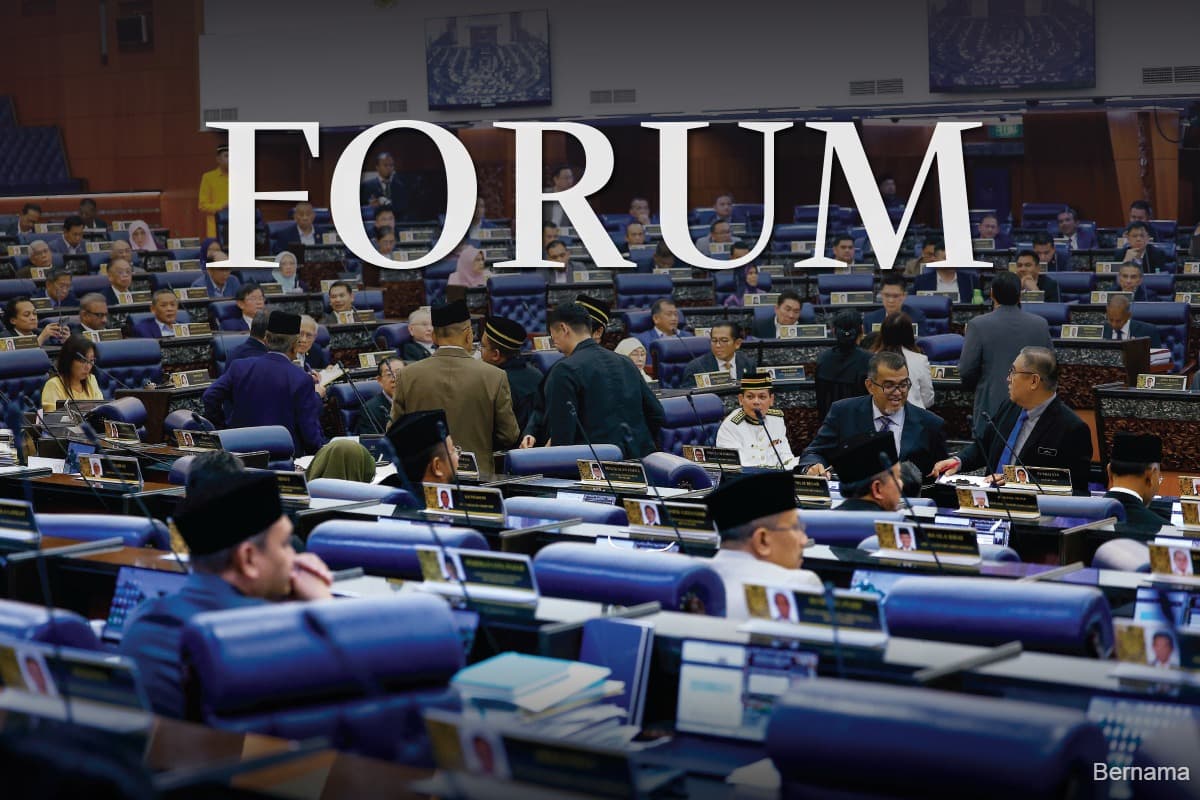
There really is no excuse for the eight members of parliament (MPs) to not turn up to vote on the bill to limit the term of the prime minister last week.
Among the reasons they cited was the lack of communication from the chairman of the Backbenchers Club (BBC), Datuk Seri Dr Zaliha Mustafa, while at least one MP said he did not turn up because he wanted Prime Minister Datuk Seri Anwar Ibrahim to remain in office.
Three were from Barisan Nasional while the others were from parties based in Sabah and Sarawak. Datuk Seri Hishammuddin Hussein, Datuk M Saravanan and Datuk Seri Dr Jeffrey Kitingan have held positions in the federal government.
Although Zaliha is the chief communicator to all MPs, the person responsible to ensure the MPs are accountable and present during voting on important bills is the government whip, who is currently Deputy Prime Minister Datuk Seri Fadillah Yusof.
But the MPs cannot put the blame on Zaliha and Fadillah. That is just shifting their responsibility.
The proposal to limit the term of the prime minister is one of the most crucial institutional reforms that Malaysia can make. The MPs know very well the consequences of having someone stay in a position of power for too long.
In a nutshell, their absence shows their misplaced priorities. They do not deserve to be voted into parliament again as they have clearly let the people down.
The Opposition MPs merely played their narrow role of opposing the government by choosing not to be present during voting. The reason they gave is that the amendment should also include a clause for the prime minister to not hold the post of finance minister as well.
This reasoning is feeble because the prime minister can always appoint a technocrat as the finance minister and indirectly control the Treasury. It has been done before, even when the Opposition ruled the country.
So why use the excuse to not support the bill?
Former MP Charles Santiago points out that in some countries, when a crucial constitutional amendment bill does not get through parliament, it can lead to the collapse of the sitting government.
But that is not the case in Malaysia as the parties that make up the government today have pledged to the King to remain together until the administration’s term ends in November next year.
In another development, the police are investigating a report of an alleged plot by the widow of former finance minister Tun Daim Zainuddin to overthrow the Anwar government.
The logic behind the allegation is that by ousting Anwar, the Malaysian Anti-Corruption Commission’s (MACC) investigations into charges for non-declaration of assets and money laundering faced by Daim’s family members would end.
Daim passed away in November 2024 but the MACC has seized his assets, including the prized Menara Ilham in the city centre. His wife, Toh Puan Na’imah Khalid, and their four children are still under investigation by the MACC and are being asked to account for their assets.
According to the police report lodged by a person who was exploring the possibility of undertaking communications work for Na’imah, the alleged plot involves using a London-based communications company to exert pressure on the government to cause its fall. Na’imah has flatly denied the accusations made in the police report.
In Malaysia and the region, governments have been toppled in several ways.
One of them was the Sheraton Move of February 2020 in Malaysia, when MPs switched sides en bloc. The Pakatan Harapan (PH) government led by Tun Dr Mahathir Mohamad failed to hold on to power after he could not contain a breakaway move from his own party, Bersatu.
Tan Sri Muhyiddin Yassin led Bersatu out of the PH government. They were joined by a group led by Datuk Seri Mohamed Azmin Ali from Parti Keadilan Rakyat (PKR).
A new coalition made up primarily of Bersatu, PAS and Umno MPs took over the government. Muhyiddin was prime minister for 18 months before he himself was replaced by Datuk Seri Ismail Sabri of Umno.
Another way that has caused the fall of governments in the region is the use of strong-arm tactics to quell prolonged street protests over issues related to the cost of living, employment and so on.
In May 1998, President Suharto of Indonesia stepped down after weeks of student-led protests. It happened during the height of the Asian financial crisis when the rupiah crashed, putting imported food items beyond the reach of the ordinary people. Consumables such as infant milk powder became unaffordable, prompting ordinary folk to join the protests.
Suharto’s regime responded with violence. The action eventually led to his resignation and he handed the reins to B J Habibie, who did not hold on to the job for long.
In August 2024, Bangladesh’s prime minister Sheikh Hasina fled to India after prolonged protests led by students. The issue started with students seeking more access to government jobs, which was was being curtailed by a quota system. But it spilled over to cost-of-living issues that drew ordinary people to the streets as well.
Sheikh Hasina used aggressive measures to try and stop the protests, leading to some 1,400 deaths and the arrest of thousands of students. However, the protests intensified and she eventually fled the country. Now, Bangladesh has a new government.
Governments can also fall as a result of a military coup, as was seen in Thailand and Myanmar.
There have been cases in other countries where political parties used communications companies to run publicity campaigns on social media to sway public opinion in their favour during general elections or important polls. In the UK, Cambridge Analytica was accused of influencing voters during the Brexit campaign in 2016. It also happened during the US elections where Russian cybertroopers were said to shape voters’ opinions.
It happens in Malaysian general elections too, with social media used extensively to influence opinions. But the general election is a democratic process; it cannot be equated to the toppling of a government.
If a government can be taken down by a communications company in the UK or by foreign media, that reflects its fragility.
M Shanmugam ([email protected]) is a contributing editor at The Edge
Save by subscribing to us for your print and/or digital copy.
P/S: The Edge is also available on Apple's App Store and Android's Google Play.