

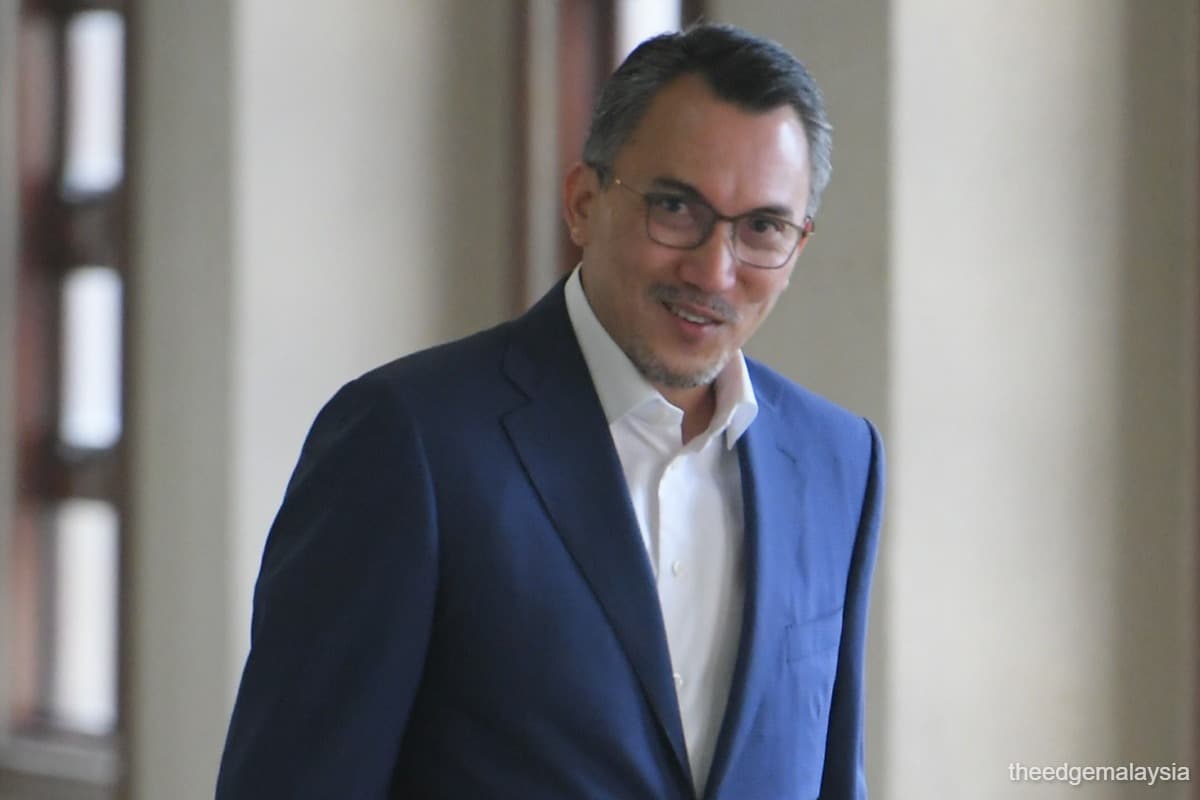
KUALA LUMPUR (March 6): Former prime minister Datuk Seri Najib Razak was better placed than SRC International Sdn Bhd’s board of directors to decide on matters involving national interest, a former director told the High Court here on Friday.
Tan Sri Ismee Ismail said SRC was established to secure energy resources in line with national interests, and it was therefore reasonable for the board to follow instructions from the shareholder if they were believed to be in the best interests of the company and the country.
Najib, who was also finance minister at the time, was SRC’s sole shareholder through Minister of Finance Inc (MoF Inc).
“Who would know better what is good for the country than the government? It is not us, the board,” Ismee said as he concluded his testimony.
Earlier, Ismee agreed with SRC’s counsel Lee Suan Cui of Lim Chee Wee Partnership that board members were not in the best position to determine what was best for the country as they were not part of the government.
Lee: The board believed that the directive or the instructions or the advice is for the good of the country and for the best interest of the company.
Ismee: Yes.
Lee: You also testified that SRC is a special purpose vehicle to execute investments intended to be carried out by the government? And this is also the specific reason why the board of directors would carry out the resolution of the shareholder.
Ismee: Yes.
Lee questioned Ismee on provisions in SRC’s memorandum and articles of association that granted authority to Najib in his roles as prime minister, finance minister and adviser emeritus to SRC.
Under Article 117, the adviser emeritus may advise the board on material matters and issues of strategic interest to Malaysia, and the board is required to give due consideration to and implement such advice.
SRC and its subsidiary Gandingan Mentari Sdn Bhd are suing Najib to recover RM42 million in company funds that were transferred into the former prime minister’s bank account.
The sum is linked to Najib’s SRC criminal case, in which he is currently serving a prison sentence after the courts found him guilty of criminal breach of trust, money laundering and abuse of power.
Although Najib is the main defendant in the civil suit, the court has allowed him to bring six former SRC directors as third-party defendants, alleging they share responsibility for the company’s losses. They are Ismee, Datuk Suboh Md Yassin, Datuk Shahrol Azral Ibrahim Halmi, Datuk Mohammed Azhar Osman Khairuddin, Datuk Che Abdullah @ Rashidi Che Omar, and Nik Faisal Ariff Kamil.
Ismee also told the court that the board was not negligent in SRC’s wrongdoing, describing the company as operating under a “top-down approach”.
He said the company’s objectives had been determined before the board was formed, and government guarantees for loans taken by the company had already been approved before the board’s first meeting.
He was referring to a RM4 billion loan from Kumpulan Wang Persaraan (Diperbadankan) (KWAP), disbursed in two tranches in the second half of 2011 and the first half of 2012.
Ismee was also asked why the board continued to trust former SRC chief executive officer and director Nik Faisal despite being misled, including over SRC’s failure to submit its 2013 financial statements.
“It’s like asking your child whether they have done their homework and later finding out they haven’t. But that doesn’t make you suspect your child of cheating or stealing,” Ismee said.