

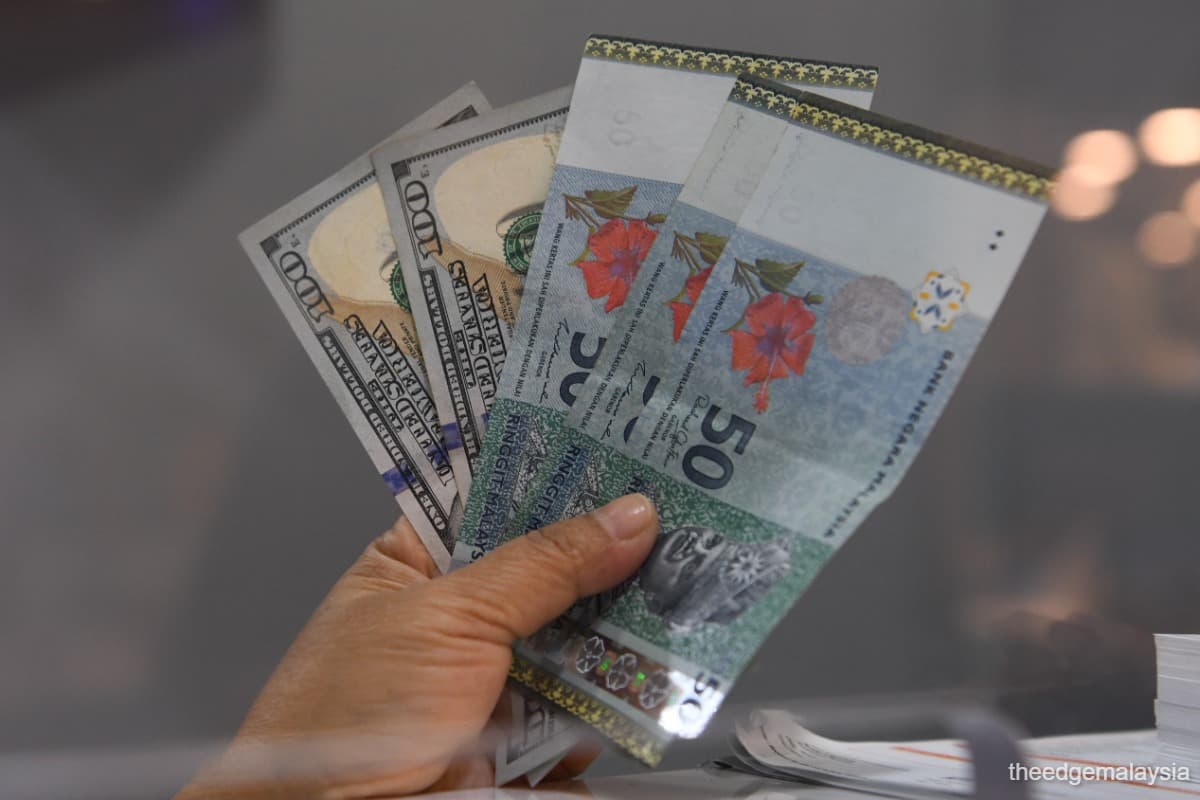
KUALA LUMPUR (March 6): The ringgit is likely to remain under pressure near the 3.95 level against the US dollar as escalation tensions between US-Israel and Iran lift global oil prices, says Kenanga Investment Bank Bhd.
In a currency outlook note, analysts said the dollar-ringgit pair is approaching overbought territory and could test its five-day exponential moving average before stabilising near the 3.94 level, which suggests that it could offer short-term stabilisation for the ringgit.
It expects the ringgit to remain pressured in the near term, trading within a range of 3.94 to 3.98 against the US dollar.
Towards the end of February, the ringgit previously touched an eight-year high of 3.8835/9065 against the greenback, from 3.8995/9055.
Kenanga said attention will now turn to upcoming US economic data, including non-farm payrolls and unemployment figures, which could influence the near-term direction of the dollar.
Higher oil prices have also raised doubts over whether the US Federal Reserve will deliver two interest rate cuts this year, as previously expected. Rising market volatility prompted investors to reduce risk positions and unwind short US dollar trades, further supporting the greenback.
“A deterioration in labour market data could modestly weigh on the US dollar,” said analysts, though markets remain largely focused on movements in crude oil prices and their implications for US inflation and monetary policy.
Analysts said the dollar index rose from around 97.6 last Friday to above 98.3 after the strikes, and later moved past 99.0 when Qatar suspended gas production following an Iranian attack. Brent crude rose about 18% over the past week amid heightened geopolitical tensions.
While higher oil prices can support Malaysia’s economy in the short term, the ringgit no longer behaves like a traditional oil-linked currency and instead trades more like a high-beta emerging market currency, says Kenanga.
Kenanga also pointed out that it was premature to expect a de-escalation in the Middle East conflict, suggesting oil and gas prices may remain elevated in the near term.
“As long as investors lack clarity on how long the conflict will last, the US dollar should remain supported,” Kenanga added.