

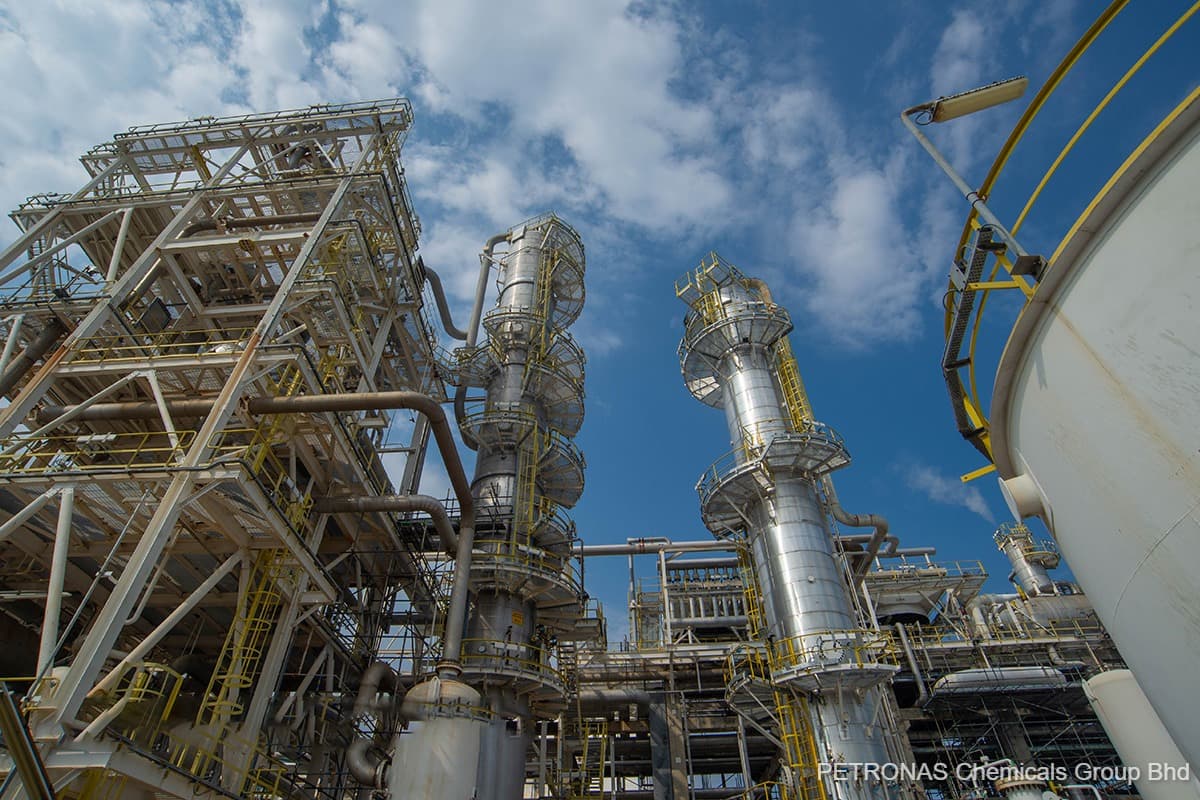
KUALA LUMPUR (March 6): PETRONAS Chemicals Group (PetChem) (KL:PCHEM) shares climbed to a four-month high as it emerges as a prime beneficiary of the Iran crisis, according to analysts, citing its domestic feedstock supplies and cost advantages.
Based on this optimism, CGS International raised PetChem's earnings forecasts to RM143 million in its financial year ended Dec 31, 2026 (FY2026), from a loss of RM667 million previously.
Accordingly, it upgraded the stock to 'add' (from 'reduce'), with a target price of RM4.45, implying an upside of over 20%.
"The key advantage is that PetChem purchases its gas feedstocks from sources within Malaysia, and does not rely on gas sourced from the Middle East. Hence, PetChem’s Kertih O&D (olefins and derivatives) complex and its F&M (fertilisers and methanol) division are not subject to any feedstock supply disruptions arising from the ongoing war in the Middle East," said the research house in a note on Friday.
Additionally, the research firm said, PetChem benefits from favourably priced inputs, with ethane purchased at "fixed and low long-term prices" for its Kertih O&D complex.

The US/Israel-Iran war broke out on Feb 28, 2026, and the Strait of Hormuz has been rendered impassable, locking in 20%-30% of the world's seaborne oil, liquefied natural gas (LNG) and liquefied petroleum gas trades.
This closure has sent shockwaves through global energy markets, with Brent crude prices jumping 17% from pre-war levels.
Naphtha, a key petrochemical feedstock, has surged 26%, while spot LNG prices have "risen more than 50%".
The situation has been further compounded by Iranian drone attacks on a Saudi refinery and Qatar's LNG production facility.
"Also, a Saudi refinery and Qatar’s LNG production facility were attacked by Iranian drones. While the war is not going well for Iran, the country may retain extensive drone production capacity and may disrupt marine traffic through the Strait of Hormuz for months, according to Reuters," it added.
CGS noted that with at least 8-10 million barrels per day of crude oil — representing 25% of seaborne trade — and 18% of global seaborne LNG trade now inaccessible, Brent crude has jumped 17% from pre-war levels.
Meanwhile, naphtha has surged 26%, and spot LNG prices have risen more than 50%, with both naphtha and LNG serving as key petrochemical feedstocks.
CGS said the impact on naphtha-based petrochemical plants will be severely negative, as they struggle to secure sufficient feedstock and have to pay much higher prices for available supplies.
This, it said, could result in a 20%-25% reduction in both production and demand over six to 12 months, leading to possible reduction of operating rates or shutdown of plants.
The beneficiaries from the crisis will be "low-cost producers in the Middle East and in the US, which have access to cheap gas feedstocks".
PetChem joins this privileged group through its unique position in the Malaysian market. At its F&M division, it buys methane at prices that are pegged to the selling prices of the final products such as urea and methanol.
"...this ensures that the F&M division’s Ebitda (earnings before interest, taxes, depreciation, and amortisation) margins are maintained in a tight range through up and down cycles.
"We believe any negative impact on PetChem will be limited to its Pengerang plants under PPC (Pengerang Petrochemical Company), due to potential crude oil import shortages and higher feedstock costs. As a result, we have widened our PPC loss forecasts for FY2026F, but we believe this can be more than offset by stronger earnings from the Kertih O&D plants and from its F&M division," it said.
Potential re-rating catalysts include the expectation that "global product selling price increases are sustainable for six months even if the war ends in one month".
This suggests that even a relatively quick resolution to the conflict may not immediately reverse the favourable pricing environment. The disruption to global supply chains could have lasting effects on petrochemical markets.
However, downside risks remain, including the possibility that "the Iranian regime will capitulate quickly and the Strait of Hormuz reopens to marine traffic".
Such an outcome would "unleash a torrent of petrochemical supplies" back onto global markets, potentially reversing price gains.