

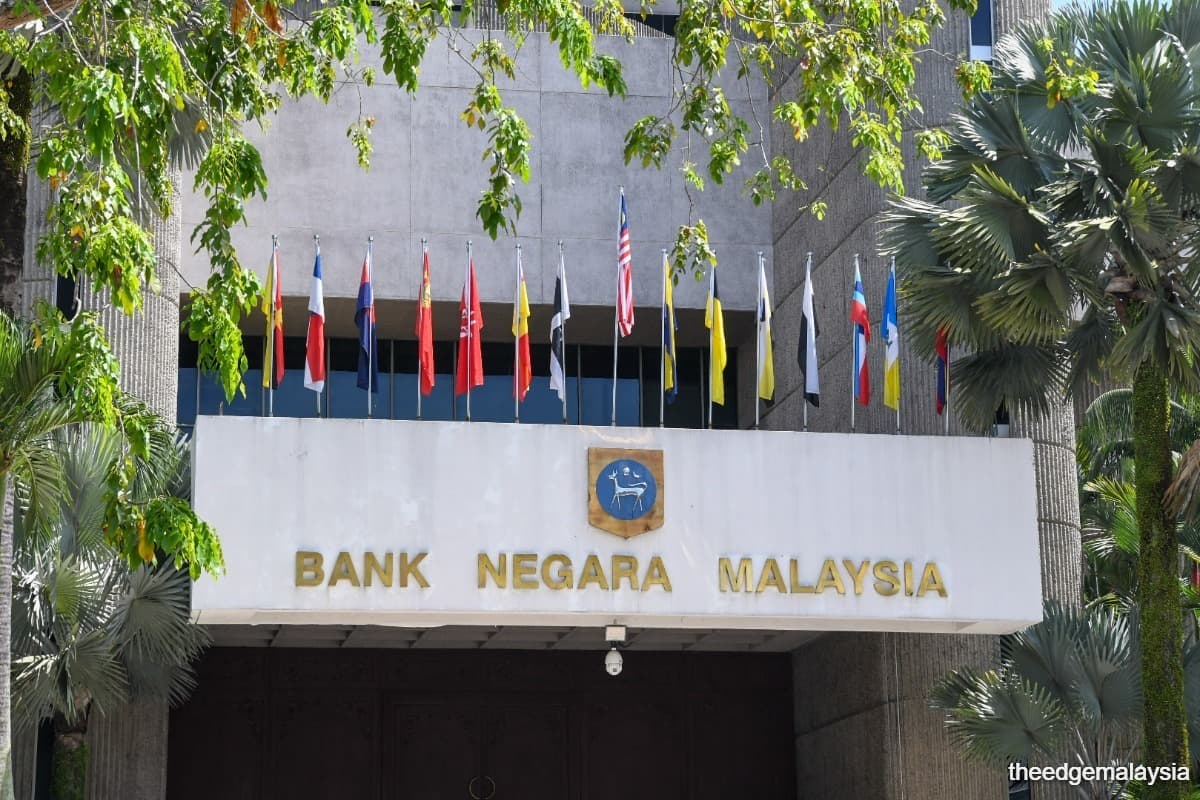
KUALA LUMPUR (March 6): Economists are expecting Bank Negara Malaysia to keep the overnight policy rate (OPR) unchanged throughout 2026, even as financial markets begin pricing in a potential rate hike amid escalating Middle East tensions.
This follows the central bank’s decision yesterday to hold the benchmark rate at 2.75%, a move unanimously predicted by a Bloomberg poll.
While economists are leaning towards a hold as BNM signaled a preference for policy continuity — unless geopolitial developments worsen dramatically — fixed-income investors, including those from JPMorgan Asset Management, are positioning for higher rates.
Bloomberg reported on Thursday that ringgit interest-rate swaps are now pricing in more than a 20% probability of a quarter-point rate hike within the next 12 months. This shift places Malaysia as a "hawkish outlier" in Southeast Asia, where regional peers are largely expected to stay on hold or cut rates further.
The report noted that the rate hike case is gaining traction as a sustained energy shock looms, while Malaysia’s growth remains relatively robust — hitting 6.3% in the fourth quarter of 2025. These factors, alongside potential semiconductor price hikes, could drive inflation high enough to force BNM's hand.
Nevertheless, institutional economists maintain that an imminent policy shift is unlikely. UOB noted that BNM's latest statement, while setting a more cautious tone given new external risks, signals a preference for policy continuity.
“The language signals a preference for policy continuity unless geopolitical developments worsen dramatically, or demand-driven inflation unexpectedly accelerates,” UOB observed in a note on Thursday.
“Presently, the Middle East conflicts remain very fluid. Potential price effects from this event risk are assessed as largely supply-driven. Additionally, current developments have not materially changed the global and/or domestic growth and inflation dynamics just yet,” it added.
Potential pressure points
How the conflict evolves over the next few weeks and months, however, could materially change this picture and have a real bearing on the next monetary policy meeting in May.
A prolonged conflict would seriously impact demand for Malaysia’s electronics exports, Pantheon Macroeconomics Asia economist Meekita Gupta flagged, though higher commodity prices might provide a partial hedge.
CIMB highlighted that the blockade of the Strait of Hormuz and QatarEnergy's force majeure declaration on Wednesday could introduce broader second-round effects on inflation. “These include upward pressure on electricity tariffs through the monthly automatic fuel adjustment mechanism, as well as higher goods transportation costs and increased petrochemical-linked input prices.”
A US$10 (RM39.41) per barrel increase in Brent may translate to a 0.1 percentage point increase in Malaysia’s headline inflation, assuming subsidised petrol is held at RM1.99 per litre, CIMB noted.
Despite these risks, it maintained its unchanged OPR forecast for 2026, noting that headline inflation remains contained below 2%.
For now, the domestic growth engine remains the primary anchor for a hold. Kenanga noted that while growth may moderate slightly in the second half of 2026 due to base effects, it is unlikely to warrant a rate cut, especially since fiscal policy retains enough breathing room to support demand, if necessary.