

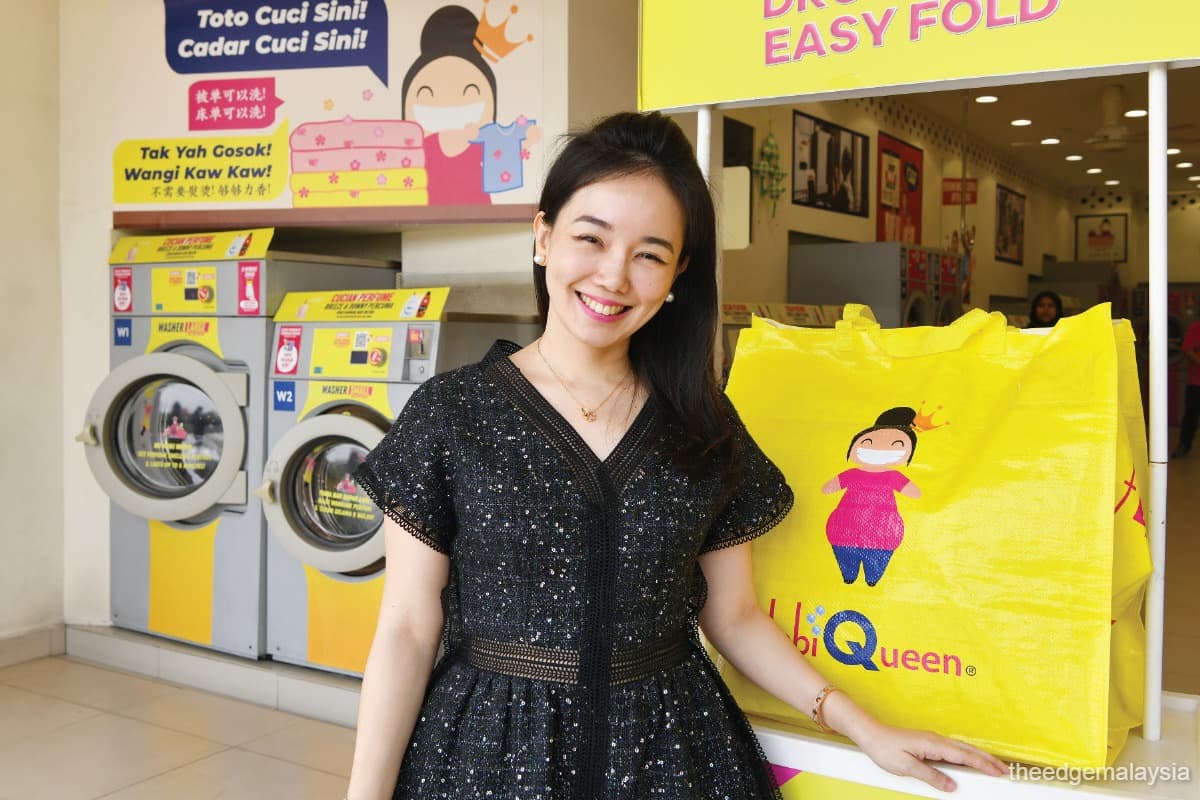
This article first appeared in Digital Edge, The Edge Malaysia Weekly on March 9, 2026 - March 15, 2026
In self-service laundromats, washers and dryers run almost continuously, often without onsite assistance. When a machine breaks down mid-cycle or a payment fails, customers simply do not return and, most of the time, operators may have little visibility into what actually went wrong.
To address this issue, Foto-ZZoom Sdn Bhd, the company behind the dobiQueen self-service laundry chain whose washers and dryers run all day, is using Internet of Things (IoT)-enabled machines to provide full visibility of performance, uptime and maintenance needs.
The laundry machines at the outlets are connected to a central system that tracks productivity, flags breakdowns and notifies the technical support team immediately. This ensures issues are logged, monitored and resolved quickly, with progress updates captured throughout the process, from outlet reporting to the maintenance manager’s follow-up and even ordering of parts.
The system was introduced after a customer complained that her clothes were no longer as dry as before, exposing inconsistencies in machine performance, says Nini Tan, co-founder and executive director of dobiQueen. The company currently operates 90 outlets nationwide and plans to open five to 20 outlets annually until it reaches 300.
Tan recalls a recent incident where a customer did not get the service she paid for. “We checked and found that one of the switches in the board wasn’t working. The customer paid for a hot wash but didn’t receive that. So, she felt deceived, and we needed to compensate her,” she says. Whether the customer will return is uncertain, she adds, but “as a business, it’s important that we deliver what we promise”.
“We got to know all this only because someone filed a complaint, and even then it’s sometimes a bit too late to do anything about it.”
With only 4% of customers lodging complaints, Tan adds, many issues go undetected. “For customers who don’t lodge complaints, we just lose the sale without knowing what went wrong.”
The company acted proactively by installing a device that shows the health of each machine.
The system also provides insights into machine usage patterns, including what time the machines are used, how frequently they are used and performance trends.
This data supports operational planning, including optimising machine layout and determining the right combination of machines for each location, says Tan. With this information, the company has adjusted and moved machines across outlets to better match demand patterns.
For example, one outlet may record 100 washes and 150 drying cycles in a month, while another may record 100 washes and 100 drying cycles. Having this data allows the company to adjust equipment allocation, says Tan.
If dryers experience longer waiting times in the outlet, the company can remove some washers and add more dryers to better meet demand.
Insights into time-based usage patterns help identify peak hours. “The IoT device in the machine tells us how many times it runs. And if we see that the larger machine or the extra-large machine runs more often than the smaller machine, it tells us that the demand for the larger machine is higher. So, we match the needs of the consumers by taking out one medium one and putting in a large one,” explains Tan.
dobiQueen has also developed a mobile app to give customers greater control and convenience in managing their laundry. Through the app, users can activate washers and dryers via QR code, receive real-time updates on machine availability and get notified when their laundry is ready, with payments made in-app. About 60% of customers use the app, while the remaining 40% prefer physical tokens.
For the company, the app also provides valuable insights into user behaviour — tracking how often customers visit, when they come and which services they use most.
For example, working parents and small business owners tend to favour pick-up and delivery — a fully hands-off option that fits around packed schedules. University students gravitate towards drop-off and pick-up, which offers flexibility without requiring them to wait around.
Meanwhile, elderly residents rely on pick-up and delivery to avoid the physical demands of carrying heavy loads.
“What’s more important is their usage — are they a once-a-week user or are they doing laundry for the whole family? If they’re using it for family, the deals we want to give them should reflect that. A two-person household typically spends around RM20 a week, whereas a family spends about RM40. From there, we can tailor things to give them a better deal,” says Tan.
Save by subscribing to us for your print and/or digital copy.
P/S: The Edge is also available on Apple's App Store and Android's Google Play.