

This article first appeared in The Edge Malaysia Weekly on March 2, 2026 - March 8, 2026
IN The Big Short, a movie based on Michael Lewis’ eponymous book about the bursting of the US housing bubble that triggered the 2008 global financial crisis, the eureka moment comes when hedge fund manager Steve Eisman’s character learns that the market for insuring mortgage bonds, including synthetic collateralised debt obligations (CDOs) or bets in favour of the faulty mortgage bonds, is much larger than the market for the mortgages themselves. At the annual American Securitization Forum in Las Vegas, it suddenly dawns on him that the entire world economy could be on the verge of collapse.
The event, since renamed SFVegas, brings together over 10,000 investors, bankers, regulators, rating agencies as well as technology providers. Back then, the asset securitisation conference was mostly a networking event and gabfest for derivative salesmen talking up exotic swaps or structured products. These days, though, hedge fund managers, credit analysts and investors ask hard questions, grilling experts for their own aha moment. At the SFVegas 2026 this past week in the Aria Resort and Casino, which is part-owned by the giant private equity and private credit firm The Blackstone Group, the talk was about what other parts of the artificial intelligence, or AI, data centre ecosystem would be securitised next.
While investors and bankers may remember what happened during the 2008 financial crisis, there is still a palpable fear of missing out, or FOMO. Clearly, the securitisation of vast data centres powered by billions of dollars of GPU chips offers more mouthwatering yields than subprime mortgages ever did at the peak of the US housing boom. Little wonder, then, that bankers were chatting with corporate executives and ratings agencies about selling debt backed by Nvidia’s GPU chips and the electricity generators powering up massive computing facilities. Once the ratings agencies find a way to evaluate fancy GPU or power generation deals, they will only help widen the investor pool just as the funding needs for AI are starting to burgeon. Bank of America expects the securitisation of digital infrastructure assets — including data centres, fibre and cell towers — to grow 50% this year to US$60 billion (RM233.2 billion).
Yet, more than just financing Nvidia’s GPU chips, Broadcom’s application-specific integrated circuit, or ASIC, chips and AI data centres that are bigger than a dozen football stadiums, the talk in Vegas was about how AI is disrupting an array of sectors from software to financial services, and the pain that disruption has inflicted on areas such as private credit and private equity.
Let me explain how private credit, private equity and the ongoing AI boom, including US$700 billion in capex by hyperscalers and the constant talk of the AI bubble bursting, are all interconnected, and how a looming disaster in one area can spoil the party elsewhere.
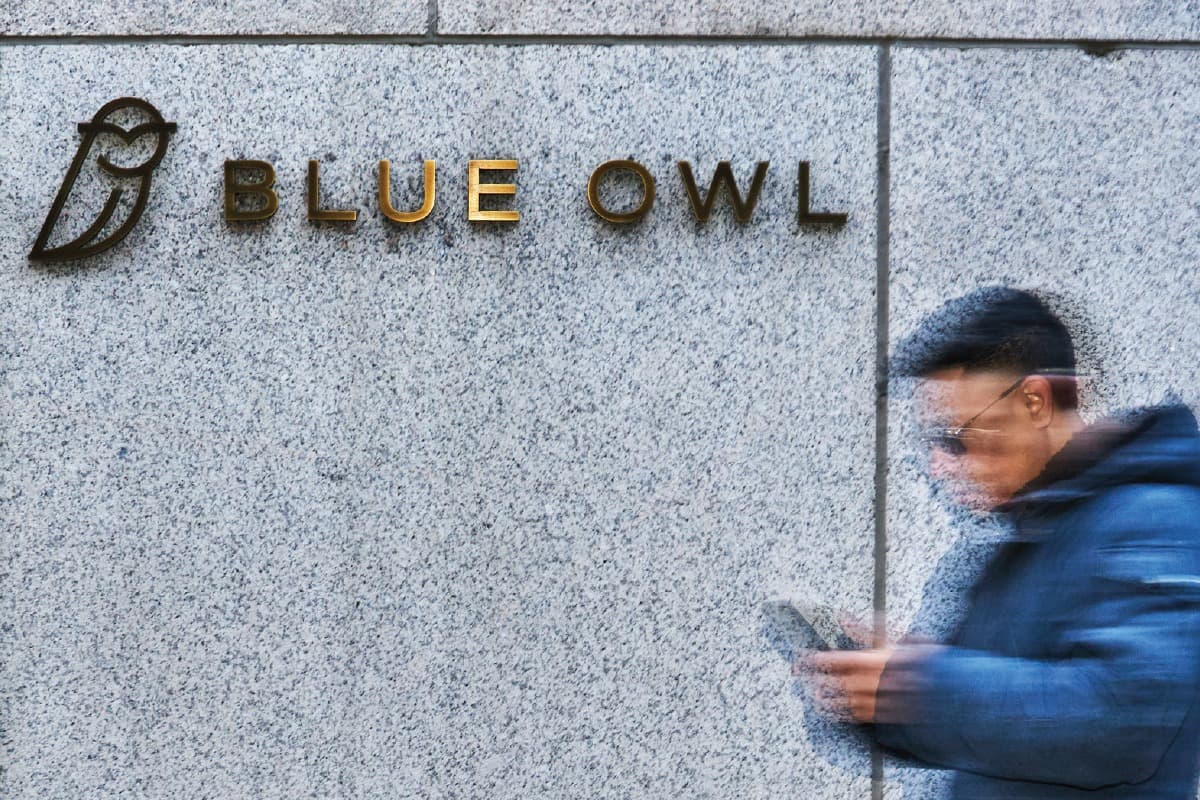
Private credit firms like Blue Owl Capital are non-bank lenders that make loans directly to mid-sized businesses that either can’t access public bond markets or prefer the flexibility of a negotiated deal. These loans aren’t traded on exchanges, hence are “private”. The lender earns higher interest rates in exchange for the illiquidity. The global private credit industry now has about US$3 trillion in assets under management.
In the aftermath of the 2008 financial crisis, regulations on banks tightened, limiting how much risky lending they could do. That in turn created a vacuum which allowed asset managers to step in. Private credit took off during the pandemic. As interest rates soared in 2022, private credit became even more attractive. Since they make mostly floating-rate loans, Blue Owl, Apollo Global Management and Blackstone and their peers earn more as rates keep going up. Institutional investors such as pension funds, sovereign wealth funds and insurance firms poured money into private credit, chasing yield.
Blue Owl is one of the largest pure-play private credit firms and among the fastest-growing players in the US. It listed through a merger with a SPAC, or a blank cheque special purpose acquisition company that had raised capital through a listing specifically to acquire an existing private firm.
Blue Owl focuses on loans to private equity-backed firms or lending to private equity firms themselves against their fund assets. It moved aggressively into real estate credit and tech infrastructure lending after OpenAI unveiled ChatGPT in November 2022. Since its listing, it has been gobbling up or buying firms. Its model is highly fee-oriented and focused on “permanent capital”. The money it manages is locked up long term. But Wall Street loves the model for its predictability.
Largely unregulated
So, what is all the fuss about? For starters, private credit is still largely unregulated compared with banks, and loan valuations are self-reported. As such, there is no market price as you might see in a tradeable bond. There are also worries about what happens when defaults rise during a downturn. Moreover, rapid growth has compressed returns as more money chases fewer good deals. Private credit firms that gather funds by promising big yields need to make the loans quickly, and since they are lending to second-tier firms or those in speculative sectors, it is not surprising that they have problems.
Blue Owl has several funds, all of which have been marketed to retail or high-net-worth investors through private banks and independent wealth advisers with the promise of quarterly redemptions. One of the funds is OBDC II, a “semi-liquid” business development company (BDC). It delivered an annualised return of 9.11% from its inception in March 2017 until September 2025. Then in November, Blue Owl tried to solve a growing redemption problem by merging OBDC II into its publicly traded BDC called OBDC. Investors revolted because OBDC was trading at a roughly 20% discount to net asset value or NAV. The merger would have instantly marked down their holdings. Blue Owl was eventually forced to call off the merger.
On Feb 18, Blue Owl announced it would stop taking redemption requests entirely, effectively converting OBDC II from a semi-liquid fund into what is called a “drawdown vehicle” that would return capital over a period of several years. Now, Blue Owl is selling US$1.4 billion of loans across three funds at 99.7% of par value and replacing voluntary quarterly redemptions with mandated capital distributions funded by future asset sales. And, oh, did I mention that the buyer of the assets sold was actually a Blue Owl-controlled insurance company? In other words, no outside buyer was willing to pay much for the troubled assets. One reason why insurance costs are soaring is because private equity and private credit firms have been buying up insurance firms.
The Blue Owl crisis unravelled just as AI start-up Anthropic launched tools that threatened to disrupt software and automate legal, sales, marketing and data analysis tasks. Blue Owl’s stock plunged 13%; it is now down 39% since early December. Shares of other firms fell as well. Blackstone was down 16% for the week, Apollo 15% and Ares Capital 17%. Investors had been treating private capital funds that promise quarterly redemptions like liquid investment products. Yet, the underlying loans are just not liquid. When redemption requests grow faster than cash inflows, managers have to choose between selling assets at a discount or preventing withdrawals. Analysts say their main worry is that the loans Blue Owl sold were the good ones. The rest of the book may probably be much weaker.
The real problem is that private credit firms lured retail investors, mostly wealthy retirees, offering high income like a 9.1% return for OBDC II, but their assets are loans that cannot be easily sold.
Another big issue for private credit: over-reliance on the troubled software sector. Information technology and communications services comprises up to 25% of all private credit deals, and software specifically makes up about 20% of the loans — the single largest sector exposure. Compare that with traditional public debt markets. The high-yield corporate bond market has only an 8% exposure to software. Blue Owl’s exposure is by far the largest among major private credit firms. Over 70% of its loans are to the enterprise software sector as AI disruption fears continue to hammer the valuations of software-as-a-service firms.
Why did private credit go so deep into software? Subscription revenues are visible and measurable, and gross margins for the sector were high until about a year ago when they started to decline. Moreover, software businesses are asset-light, allowing leverage to be sized to revenue durability rather than physical collateral. For lenders seeking scale, software offered a large and growing universe of sponsor-backed borrowers.
A big part of private credit’s problem is that many buyouts and the loans to fund them were done at what turned out to be peak valuations just as global economies were exiting Covid-19 in end-2021 and early 2022. As rising interest rates shut down the traditional syndicated loan market in 2022, private credit stepped into the breach. The market share taken by direct lenders in funding buyouts jumped to between 40% and 70% in 2022 and 2023, way more than 15% to 25% before the pandemic.
Funding AI infrastructure
Now, private credit firms are financing AI infrastructure. In 2024, Intel struck a US$11 billion deal with Apollo to fund its semiconductor fabrication plant in Ireland that will make AI chips. Until recently, cash-rich Microsoft, Amazon.com, Google, Meta Platforms and Oracle Corp had financed their AI ventures with their own cash flow. As their capex spending has soared, they are increasingly turning to loans to fund some of it. These deals signal a structural shift in how global tech giants finance capital-intensive projects — placing assets like data centres, chip fabs and power infrastructure into special purpose vehicles, with private credit firms investing directly in those entities.
Hyperscalers raised nearly US$121 billion through credit markets last year, with over US$90 billion raised in just the last three months of 2025. Oracle alone has borrowed US$61.5 billion over the past three years. JPMorgan estimates the technology sector may need to issue as much as US$1.5 trillion in new debt over the next few years to finance AI infrastructure.
Last October, Meta and Blue Owl sealed a US$27 billion financing deal for the Hyperion data centre campus in Louisiana — the largest private credit transaction ever executed. Meta owns just 20% of the joint venture, while Blue Owl-managed funds own 80%. Through a special purpose vehicle arranged by Morgan Stanley, the project issued US$27 billion in A+ rated debt. Meta keeps operational control, but not the debt, on its balance sheet. In a recent report, ratings agency Moody’s noted that the top five hyperscalers have accumulated US$662 billion in future data centre lease commitments not yet begun that sit entirely off their balance sheets. Total undiscounted future lease commitments across Amazon, Meta, Alphabet, Microsoft and Oracle reached US$969 billion by end-2025.
In the lead-up to the 2008 financial crisis, the hidden linkages between mortgage originators, securitisation vehicles and bank balance sheets were the transmission mechanism for contagion. A similar architecture may be replicating itself with private credit and its growing exposure to AI. The Federal Reserve Bank of Boston recently found that bank lending to private credit BDCs has been growing both as a share of the banks’ total loan balances and as a share of the BDCs’ balance sheets. Banks retain indirect exposure to private credit risk even though they don’t directly originate or hold the underlying loans.
Jamie Dimon, CEO of world’s biggest bank JPMorgan, warned last week of pre-financial crisis parallels, saying some of his peers were doing “dumb things”. Some banks have rushed to embrace private credit. “Unfortunately, we did see this in ‘05, ‘06, ‘07 — the rising tide lifting all boats, everyone was making a lot of money, people leveraging to the hilt.” Dimon said, “People are getting a little comfortable that this is real — these high asset prices and high volumes — and that we won’t have any kind of problem whatsoever.” Big US banks are well-capitalised after a decade of strong profits. A crisis may not be imminent but canaries in coal mines must be seen for what they are — clear warning signs.
Assif Shameen is a technology and business writer based in North America
Save by subscribing to us for your print and/or digital copy.
P/S: The Edge is also available on Apple's App Store and Android's Google Play.