

This article first appeared in The Edge Malaysia Weekly on March 2, 2026 - March 8, 2026
MALAYSIA is pushing for research and development (R&D) in and deeper localisation of critical electric vehicle (EV) components with a new customised incentive mechanism (NCM), marking a shift from the tax breaks for EV imports over the past four years.
This focus on R&D and the local assembly of critical EV components comes as the domestic automotive landscape evolves following the entry of Chinese brands which have gained substantial market share, but have yet to establish a local vendor ecosystem.
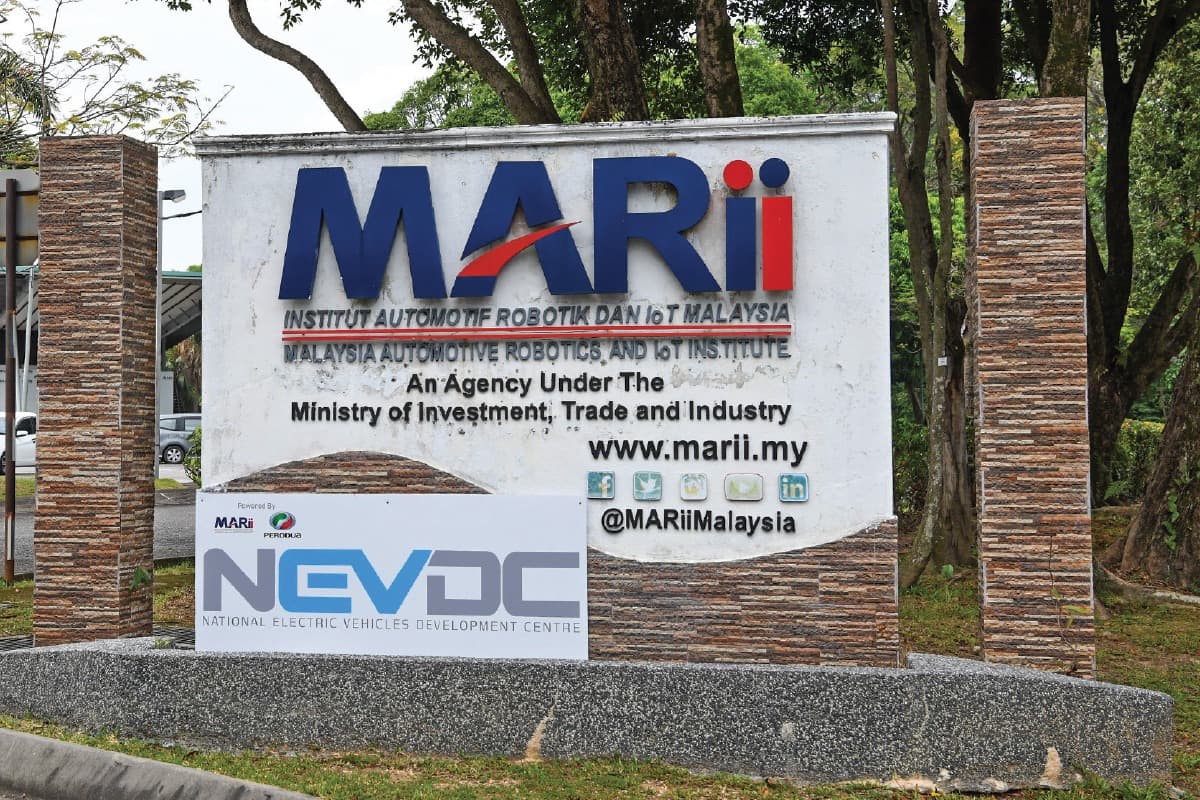
“The Japanese ecosystem is already mature in Malaysia, having been established 30 to 40 years ago,” Malaysia Automotive, Robotics and IoT Institute (MARii) CEO Azrul Reza Aziz tells The Edge in an interview.
“So, when we speak about Chinese original equipment manufacturers (OEMs), the new vendors and technology partners that want to come in are different from the Japanese ones. They need to introduce technology partners in Malaysia, possibly through joint ventures.”
The NCM will feature a specific scoring system that is more transparent than the cost-benefit analysis (CBA) model implemented over the past five years under the National Automotive Policy 2020 (NAP 2020).
“Whatever support an OEM provides to local partners will translate into a certain level of incentive scoring under the NCM,” says Azrul.
Under the NCM, the government is adopting a more comprehensive, criteria-driven framework aimed at driving investment; building local capabilities; opening new market opportunities; improving efficiency; reducing environmental impact; strengthening research and innovation; enhancing supply chains; and creating quality jobs in the industry.

The new framework is intended to ensure that incentives reflect the long-term value of investments, not only in terms of production volume, but also in reducing import dependence, nurturing local capabilities and developing future technologies.
Replacing the CBA model with a menu-based NCM will allow OEMs to determine in advance how many points they can earn by committing to specific investment projects. Achieving a certain score will reduce the excise duty on a particular model.
Under the CBA framework, no specific scoring was required for automotive investments. Instead, OEMs had to apply for excise duty reductions based on proposed investments and negotiate with the Automotive Business Development Committee (ABDC).
The ABDC is chaired by the Ministry of Investment, Trade and Industry (Miti) and includes representatives from the Ministry of Finance, the Royal Malaysian Customs Department, the Malaysian Investment Development Authority and MARii.
With the tax holiday on EV imports ending last year, imported EVs are now subject to a 10% excise duty based on the cost, insurance and freight (CIF) value of the car.
To avoid the 10% excise duty, OEMs must undertake local assembly of completely knocked-down (CKD) units. The tax-free CKD incentive is valid until end-2027.
From 2028, locally assembled EVs will be subject to excise duty, although the rate has yet to be determined. For comparison, the excise duty on internal combustion engine (ICE) vehicles range from 60% to 105% of the CIF value, depending on engine capacity.
“I think menu-based incentives give OEMs better clarity. If they want to focus on business growth, environmental and safety standards or ecosystem development, they can plan accordingly to achieve a targeted score and incentive level. Some OEMs may not prioritise environmental, social and governance impacts, for example, but may focus on vendor localisation to gain higher scoring,” says Azrul.
Menu-based incentives provide OEMs with greater visibility in planning which models to introduce and the level of investment needed to ensure commercial viability. This could encourage manufacturers to develop critical EV components in Malaysia, as doing so would raise the score on CKD models and reduce the excise duty.
This is an area which the government would like to focus on, says Azrul. The localisation of critical EV parts as well as software is one of the things it will focus on at the upcoming review of the NAP 2020, he adds.
Localisation of critical parts such as in-vehicle software as well as light detection and ranging systems for software-defined vehicles will also result in higher scoring in the NCM, says Azrul.
“In ecosystems like China and Japan’s, companies often have internal suppliers for critical components to maintain control of the ecosystem, which makes sense from a business perspective. But here, they cannot simply set up a company under the same OEM. They must work with local partners to come up with the parts,” he says, stressing the need for genuine partnerships between OEMs and Malaysian companies.
Looking back on the policy that allowed duty-free imports of EVs between 2022 and 2025, as well as the tax-free CKD operations until 2027, Azrul says the six-year period was designed to jump-start Malaysia’s EV market and give OEMs time to prepare for localisation.
With only two years remaining for the tax exemption on CKD models, OEMs must already have identified target market segments and developed local vendor networks to support localisation programmes.
While several EV brands have begun local assembly in Malaysia, the industry will only benefit meaningfully if critical components such as battery packs and electric motors are also localised, says Azrul.
Brands like Mercedes-Benz, Volvo, Chery, Zeekr and TQ Wuling have initiated CKD programmes for their respective EV models in Malaysia. Other Chinese marques such as BYD, XPeng, SAIC Motor’s MG brand and Great Wall Motor are also moving towards local assembly. French auto giant Stellantis is set to assemble Leapmotor EVs at its Asia-Pacific hub in Gurun, Kedah.
The localisation rate of locally assembled EVs remains relatively low at 20% to 30%, compared with up to 70% for foreign ICE models and nearly 100% for domestic brands. This is largely because two key EV components — battery packs and electric motors — are not manufactured or assembled locally for domestic consumption. Together, they account for more than 50% of an EV’s total cost.
Azrul says several companies in Malaysia already produce batteries for export, including SK Group and Samsung SDI. MARii aims to collaborate with these firms to enable local production of EV battery packs and electric motors (e-motors).
SK Group, through its subsidiary SK Nexilis, produces copper foil — a key battery component — in Kota Kinabalu, Sabah. Samsung SDI manufactures cylindrical batteries in Negeri Sembilan.
Beyond R&D and localisation, MARii is also looking to tap Malaysia’s integrated circuit (IC) and semiconductor industry to develop stronger automotive verticals. Azrul says Malaysia has not sufficiently linked its semiconductor sector to the domestic automotive industry. While local semiconductor players supply chips and components to global automotive brands, most of the output is exported rather than integrated into Malaysia’s automotive ecosystem.
“We see IC design and fabrication companies supplying overseas automotive clients because of scale. Domestic contracts may be smaller, but the talent and capability are already here,” he says.
One such company is Bosch, which conducts semiconductor component and sensor testing in Penang, including for airbag systems and engine control units.
However, there are local companies that have become the bridge between technology leaders in the semiconductor industry and local automotive players. These include Betamek Bhd (KL:BETA), which designs and manufactures multimedia infotainment systems, digital instrument clusters and customised components, and APM Automotive Holdings Bhd (KL:APM), which produces engine management components such as electronic control units and sensors.
The automotive industry is a major sector in Malaysia, both in terms of contribution to gross domestic product and employment numbers. According to Miti, the industry contributed almost 5% to GDP in 2024, or roughly RM82 billion, as well as employed more than 700,000 people nationwide.
Nevertheless, the sector remains heavily import-dependent. Automotive-related imports totalled RM54.33 billion in 2024, compared with RM15.96 billion in exports of motor vehicles, motorcycles and parts.
It has been the government’s aspiration to reduce the trade imbalance in the automotive sector by deepening localisation of parts and producing a bigger volume of locally assembled components through foreign investments.
Whether the NCM will attract greater automotive investments, spanning chip design and fabrication to assembly of CKD models for both the domestic and export markets, remains to be seen.
Save by subscribing to us for your print and/or digital copy.
P/S: The Edge is also available on Apple's App Store and Android's Google Play.