

This article first appeared in Forum, The Edge Malaysia Weekly on March 2, 2026 - March 8, 2026
International Women’s Day 2026 carries the theme “Give to gain”. In plantation life, that is not a slogan; it is agronomy. Give fertiliser, gain yield. Give training, gain competence. Give responsibility, gain leadership.
And when we give women space to lead in oil palm estates, we gain what the industry has long needed — steadiness without swagger, discipline and results without noise.
Gender equality in plantations will never be achieved through panels or polished environmental, social and governance reports. Estates do not change because of declarations. They change because someone turns up at 6.30am muster, walks the blocks, resolves labour disputes, manages audits, files reports and does it again tomorrow. Progress in estates is incremental. Seasonal. Earned.
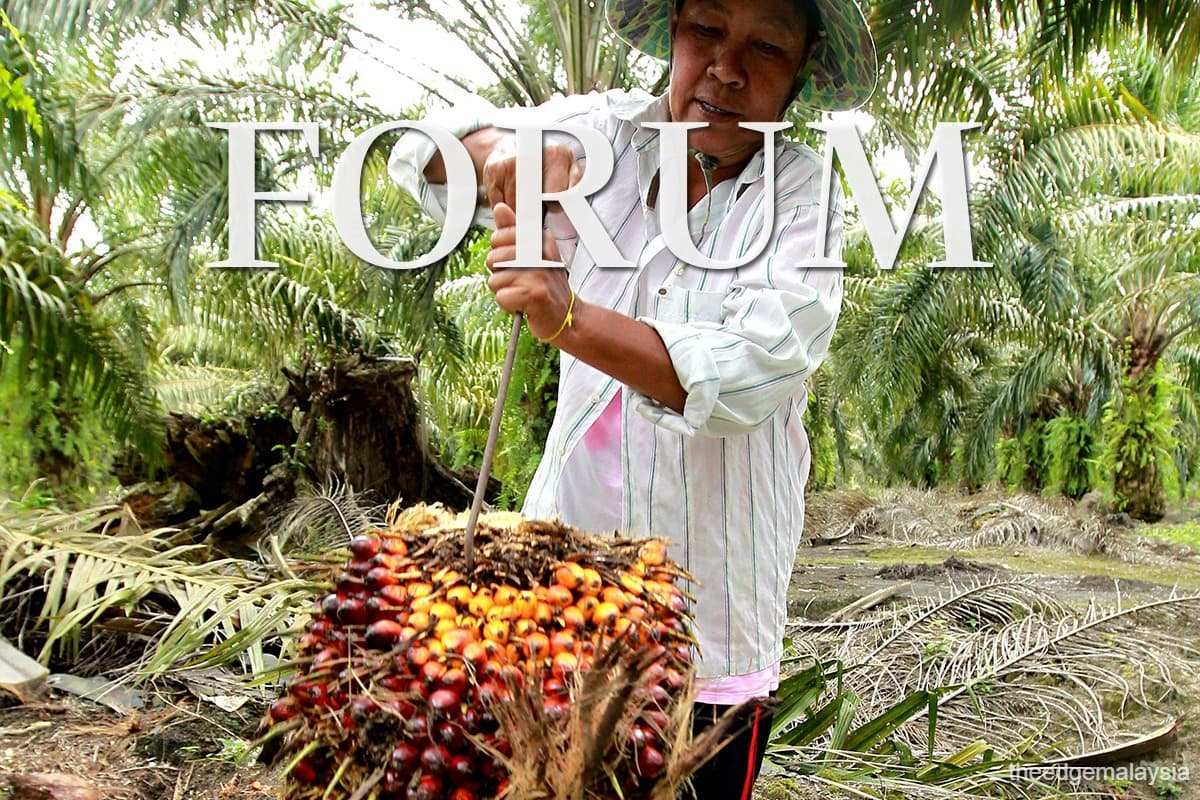
Quietly, across Malaysia and the region, women planters are taking root.
A morning in Sandakan
My recent sharing session at the Incorporated Society of Planters’ training programme in Sandakan brought an evolving picture into sharper focus.
Among the cadets and assistants were Shirley Goh Chin Lon, five years in the field after graduating from the University of Reading, and senior assistant Syahirah, 13 years seasoned.
What struck me was not novelty, but normalcy. Their technical grounding was firm. Their questions precise. Their confidence field-earned — shaped by drainage failures, labour tensions and audit seasons survived. There are now more than 40 female executives across SD Guthrie estates. Credit must be given where it is due. That statistic matters less as optics and more as proof of a system maturing.
This story is not about one company. Other plantation houses in Malaysia are also moving in this direction, quietly broadening gender diversity at executive and senior levels. It is not a claim of completion but a sign of momentum.
This journey did not begin yesterday. In the early 2000s at the Malaysian Palm Oil Association (MPOA), I was introduced by M R Chandran to Sonya Chua, then the only female plantation manager I knew, based in Pahang. She visited MPOA not for ceremony, but to stay abreast of industry developments. She stood out not by seeking attention, but by carrying herself as a professional among professionals.
In estates, progress rarely announces itself. It simply shows up — competent and ready for the next round.
Bias: The quiet gatekeeper
Bias in plantations has seldom been loud. It has been procedural.
For years, recruitment ads read: under 28, single, preferably male. Sometimes explicitly male. Presented as practical filters — not prejudice.
Field work is demanding. Training costly. Retention uncertain. Let men take it. Repeated often enough, bias sounds like prudence.
Cost-control policies became quiet gatekeepers. Talent filtered before maturity. Leadership delayed before emergence.
But plantations are long-cycle businesses. When we optimise narrowly for short-term retention, we underinvest in long-term leadership depth. Bias did not protect the industry; it slowed it.
Listening to women who manage estates
Plantations excel at producing numbers — yields, extraction rates, labour ratios. We are less skilled at listening.
A 2023 qualitative study by Universiti Teknologi Mara (UiTM) and Universiti Malaysia Sarawak (Unimas) did something rare: It listened to women planters — cadets, assistants, a manager. The findings were clear.
Women are not given lighter work. Same role, same workload. Field rounds at dawn. Supervision, audits, emergency problem-solving. The palms do not know gender. The audit does not adjust for pregnancy. Equality, in estates, is literal. Yet, structural blind spots remain.
Safety is real. Estates are remote. The terrain unforgiving. Leadership extends beyond office hours. Women described awareness, not fear — the constant calculation of distance from help.
Pregnancy and fatigue were acknowledged as realities, not exemptions. Plantation systems were historically designed around male norms; recruitment evolved faster than infrastructure.
Managing male workers sometimes required an added layer of proving. Authority earned formally and socially. And stereotypes persist. Think manager, think male. Educational performance may favour women, but perception inertia lingers.
The study did not romanticise toughness; it documented endurance. Women who succeed in estates do so not because the system favours them, but because they adapt to one often indifferent and gradually reshape it.
Trailblazers behind the findings
Research gives patterns. Stories give substance.
Siti Zuwairiah Abdullah manages a 1,800ha estate in Tampin Tinggi under SD Guthrie. Her journey was not symbolic. It was structured through scholarship, field immersion and steady progression.
From agriculture studies at Universiti Putra Malaysia to becoming the group’s first female estate manager in 2019, her rise was built on discipline. Labour management, sustainability compliance, yield performance handled with quiet authority. She did not seek to be a “female manager”. She sought to be competent. She did not break ceilings. She walked through open fields.
In Indonesia, Ibu Lilis Suryani’s path reflects another plantation truth: Staying power compounds. Her progression block by block, season by season, culminated in senior management not as a diversity milestone, but as accumulated credibility.
Plantations remember those who stay long enough to understand them. Siti and Lilis stayed.
When women stay long enough
In my interview with nine women executive planters across Sabah, Peninsular Malaysia, Indonesia and Papua New Guinea, the themes converged.
The steepest early challenge was not agronomy; it was belonging. Estates observe before they embrace. Authority is accumulated, not declared.
Early years involved quiet testing — instructions questioned more often, mistakes noticed faster. The response was consistent: less argument, more results.
Several rejected the assumption that women are better suited to office roles. Confining women to compliance narrows the leadership pipeline. Balanced exposure strengthens estates.
What kept them? Curiosity turned conviction. Mentors who recognised potential. Families who understood estate life. Systems slowly improving — clearer policies, training pathways, safety frameworks. And the dignity of estate work itself.
When asked what leadership should look like, their answers aligned: approachable, yet firm; data-driven, yet humane; technically strong, yet open. Leadership defined by reliability, not volume.
To support more women, they pointed to objective performance systems, structured mentoring, mechanisation to reduce labour dependency and a shift away from “old-timer” mentalities equating stamina with leadership.
Their advice to younger women was pragmatic: Give yourself three years. Long enough to understand the estate and yourself.
The estate is demanding. Often unforgiving. But deeply honest. Those who enter with integrity and resilience do not just survive. They grow.
From whisper to proof
The UiTM-Unimas study asked the industry to listen. Siti, Lilis and the younger generation show what listening produces. They are not slogans. Not statistics. They are outcomes.
When systems invest sincerely, when bias loosens its grip, and when women are allowed to stay long enough to master the field, leadership does not require applause. It earns legitimacy through results. Oil palm rewards consistency, not rhetoric. So does leadership.
If “Give to gain” carries meaning in estates, it is this: When we give opportunity without qualifiers, we gain stronger operations.
For years, the field whispered. Now, the answer is visible. Not in speeches. In performance. And in plantations, that is the only language that matters.
Joseph Tek Choon Yee is a former president of the Malaysian Estate Owners’ Association and past chief executive of the Malaysian Palm Oil Association
Save by subscribing to us for your print and/or digital copy.
P/S: The Edge is also available on Apple's App Store and Android's Google Play.