

This article first appeared in The Edge Malaysia Weekly on February 23, 2026 - March 1, 2026
UNEMPLOYMENT in Malaysia is currently low. At 2.9% in December 2025, or 517,700 unemployed persons, the labour market is considered “fully employed”, giving Malaysians reason to cheer.
At full employment, poverty rates should fall and wage growth rise. Higher employment boosts people’s ability to spend, which in turn strengthens consumption and can help drive economic growth.
While the headline numbers look positive, many university graduates today end up in roles for which they are overqualified. This is known as skill-related underemployment, where tertiary educated individuals work in semi- or low-skilled jobs.
The issue is less common among higher-income families, whose graduates can afford to wait for the right position. For graduates from lower-income families, however, it is a significant problem, as they are often compelled to take jobs below their qualifications to make ends meet.
In an article titled “Underemployment and Overqualification among Fresh Graduates”, Khazanah Research Institute (KRI) says: “This cycle perpetuates reduced productivity, wage suppression and limited career mobility within the labour market. Graduates stuck in overqualified roles face challenges advancing to higher paying positions, hindering their prospects. This can be due to graduates experiencing skill deterioration in lower-skilled positions or the snowball effect of being hired only for low-skilled jobs due to a lack of experience.”

The labour force survey by the Department of Statistics Malaysia found that skill-related underemployment stands at 1.96 million persons, or 35.3% of underemployed persons in the workforce, in the fourth quarter of 2025 (4Q2025). This compares with 1.46 million people in 1Q2019.
On a percentage basis, however, it has been showing a gradual quarterly decline in recent years, which is expected as the workforce continues to expand.
“Despite strong headline employment figures, the persistent incidence of underemployment points to deeper structural issues: an oversupply of graduates in fields with limited high-skill roles, outdated or misaligned curricula, weak soft-skill development, wage stagnation, limited career pathways — particularly within smaller firms — and a shortfall in the creation of high-value, high-income jobs,” says UOB Global Economics and Market Research senior economist Julia Goh.
Lee Heng Guie, executive director of the Socio-Economic Research Centre (SERC) under the Associated Chinese Chambers of Commerce and Industry of Malaysia, says the fast-evolving technological advancements in industries that demand higher skill sets have exacerbated the disconnect between what employers want and what graduates can offer. This creates a challenge for graduates to find jobs that match their qualifications.
Lee says fresh graduates working in jobs below their qualifications hinders individual potential and can affect national development. Widespread skilled underemployment leads to underutilised human capital, reduced productivity and slower economic growth, among other consequences.
“On personal career development, the inability of local graduates to find jobs that match their qualifications forces them to seek opportunities abroad, resulting in brain drain or talent outflow,” says Lee.
Notably, Malaysia’s underemployment statistics do not capture the number of graduates who choose to cross the Causeway to take jobs they would not accept domestically.
A fresh engineering graduate, who is currently working as a janitor in the city state, says: “Working in Singapore gives me more than my salary as a junior engineer in Malaysia after conversion. Plus, the job doesn’t require me to crack my head solving problems like I would as an engineer.”
While this may be an extreme example, it is not uncommon for fresh graduates to move to Singapore and take jobs below their qualifications simply to benefit from the stronger exchange rate.
The KRI article notes that the persistent issue of skilled underutilisation poses a significant national challenge, exacerbating vulnerabilities among youth, including prolonged unemployment, early school leaving, and discouragement from entering the labour market.
“This issue is compounded by recent revelations indicating a declining interest among youth to pursue tertiary education,” says KRI.
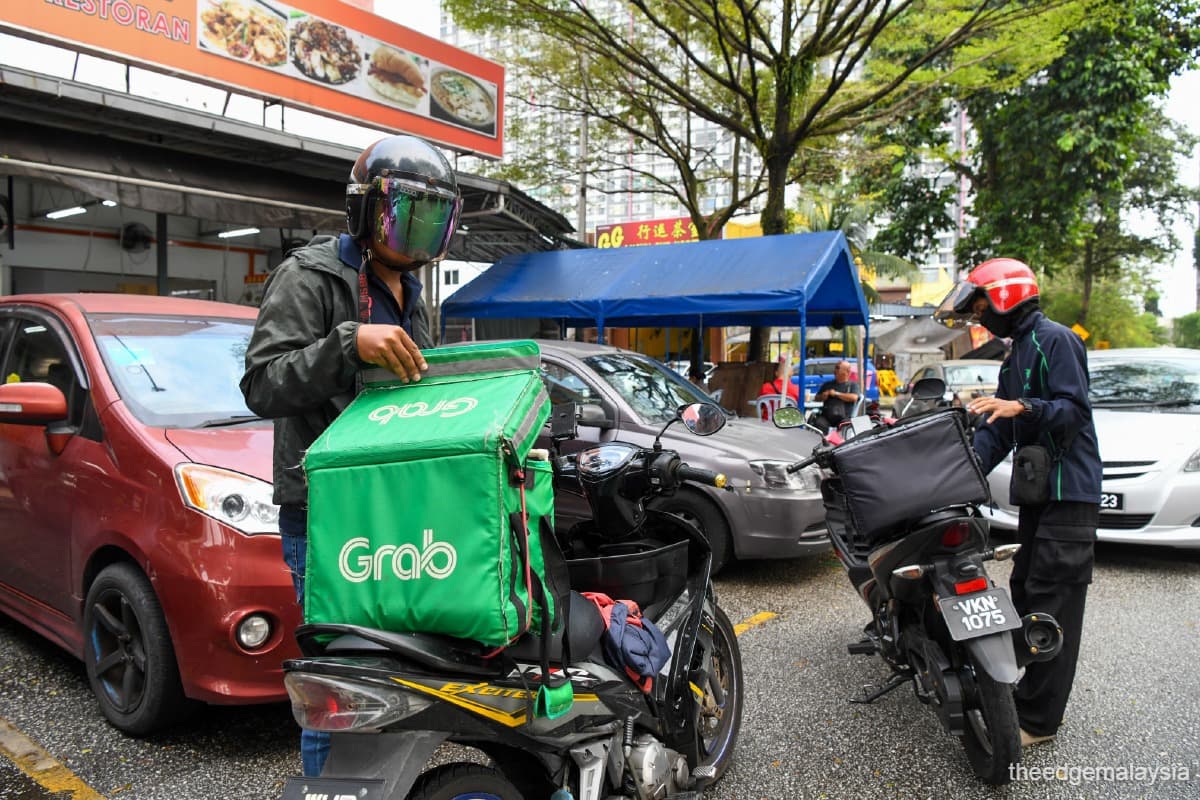
Unappealing labour market outcomes — such as underemployment, skill mismatch and low wages — have also driven more graduates to tap into the gig economy. Skill levels in this sector range widely, from low-skilled roles such as food delivery to high-skilled positions such as freelance software development.
The gig economy is becoming increasingly attractive — not just for its flexibility and autonomy, but also for potential competitive earnings in niche fields such as content strategy, digital marketing, e-commerce management, data-driven advertising and creator-economy roles, notes Goh.
Moreover, it is a trend that is here to stay.
“As businesses accelerate digital adoption — from online retail to cloud-based operations and AI (artificial intelligence)-enabled marketing — the demand for digitally savvy workers has surged. This creates more entry points for youth, especially those drawn to creative, tech-enabled or freelance work arrangements,” she says.
“The rise of platform-based work, influencer ecosystems and digital entrepreneurship also fuels perceptions that digital careers offer faster income generation, lower barriers to entry and greater career ownership compared to traditional corporate pathways.”
This growing appeal of jobs in the gig economy reflects both push factors — such as limited traditional job opportunities and wage stagnation — and pull factors, including flexibility, higher earning potential, and rising demand in the digital sector.
“Ultimately, securing employment is only one part of the equation, but having a job that pays adequately, offers meaningful progression and enables upward social mobility is what truly improves the quality of life of an individual,” says Goh.
Save by subscribing to us for your print and/or digital copy.
P/S: The Edge is also available on Apple's App Store and Android's Google Play.