

This article first appeared in Capital, The Edge Malaysia Weekly on February 23, 2026 - March 1, 2026
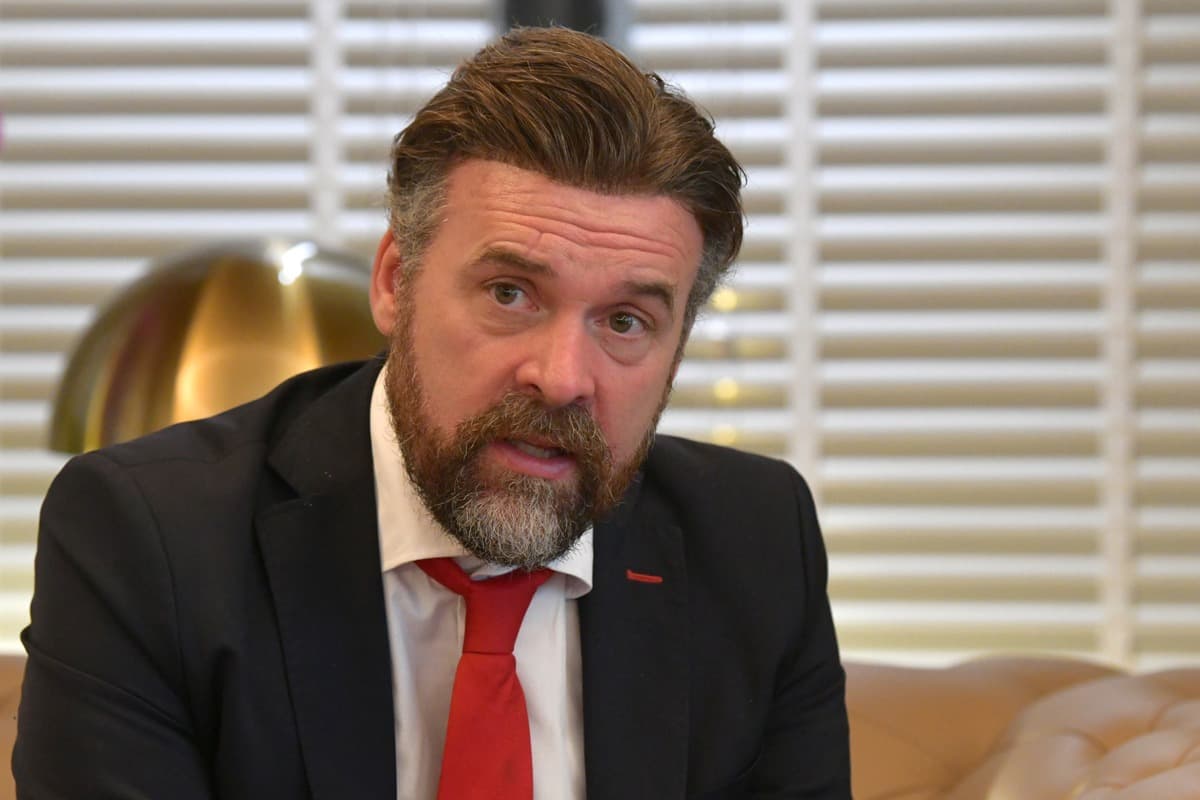
PROFESSOR Henrik von Scheel, the futurist best known as one of the originators of Industry 4.0, is critical of the current hype over artificial intelligence (AI), mainly because of the widening gap between promise and delivery. The fundamentals, he says, simply do not support the scale of investment currently pouring into AI ventures.
“AI is being sold like magic powder,” he observes. “But companies are struggling to implement it because they’re putting new systems on top of old structures. It’s like putting wheels on a camel — the camel just ends up carrying more.”
A Danish citizen, von Scheel is known for his work with an advisory group to the German Federal Ministry of Economics & Technology that came out with the country’s Digital Agenda, which sets out the guiding principles for its digital policy and action plan. The group unveiled the term “Industry 4.0” in 2013.
Back to AI, von Scheel points to the growing reliance on synthetic data, which he argues is subtly degrading the performance of large language models. As these systems increasingly consume their own output, he says, the models begin to become less reliable, reinforcing errors and weakening with each iteration.
His second concern is more alarming, centred on the extraction of corporate data through everyday AI-enabled tools embedded in office software. Many organisations, he notes, remain unaware of how much internal information is exposed each time staff use automated assistants, cloud-based integrations or AI features bundled into productivity suites.
The result is a gradual outflow of commercially sensitive material that can be captured, reused and monetised by external platforms without explicit consent.
“They are stealing your information and selling it back to you,” he says. “Your first task as a CEO should be to implement ‘shadow AI’ — strict, internal rules on what can and cannot be exported to external models.”
Even the promise of AI-driven productivity gains, often cited as the justification for large corporate investments, does not hold up under closer examination, he argues. Von Scheel points to research showing that about 95% of AI projects fail, a figure he says underscores the gap between expectation and actual implementation capacity.
AI boom near breaking point
A professor of economics and strategy management, von Scheel sees the AI boom as nearing its breaking point, warning that a correction is on the horizon, and that it will expose just how far expectations have run ahead of reality.
“This year the AI bubble will burst,” the co-founder of Strategic Intelligence at the World Economic Forum (WEF) says without hesitation. “Thirty-five per cent to 45% of investors and businesses investing in AI will see their money evaporate.”
Von Scheel’s visit to Kuala Lumpur early this month came after closed-door briefings with world leaders in Davos, where he interpreted global risks for G20 leaders and WEF delegates.
Here, he was working with the Asian Banking School (ABS) to formalise a strategic collaboration aimed at embedding global foresight methodologies into Malaysia’s financial leadership development and executive education.
During his session with the country’s banking and financial services industry practitioners, he says the hype surrounding AI is entering its final stretch, and Malaysia must decide what kind of economy it wants to be when the dust settles. While he believes that the AI boom is hitting the limits of inflated expectations, von Scheel argues that Malaysia is well-positioned to navigate the turbulence and emerge stronger, provided the country strengthens its leadership capacity, rethinks industrial policy and fully grasps its role in a world where economic power is shifting decisively towards Asia.
“This is a paradigm shift. Asia will write the next chapter. But the question is: Is Malaysia ready to write it?”
For all the pessimism around AI’s near-term trajectory, von Scheel expresses almost unqualified optimism about Malaysia’s long-term potential. In his view, few countries are as strategically placed to benefit from the shift of global economic power from the West to the East.
“I genuinely believe Malaysia has one of the greatest futures of any Asean country. You have had prime ministers who built strong manufacturing foundations. Now you must take the manufacturing, banking and energy sectors to the next level.”
He argues that global economic gravity is moving towards Asia in a way that has no historical precedent. Europe, he predicts, is set for an extended period of subdued growth for much of the next decade. The US is inward-looking and has made clear in Davos that it no longer sees globalisation as beneficial.
“The true growth engine of the East is Asean,” he says, but warns that the region’s potential will be squandered if Asean remains fragmented.
“Asean needs to learn to collaborate not only among its own members but also with partners such as Kazakhstan, Türkiye and the Gulf states. They need to focus on creating a new trade route, not a physical one, but a digital trade route,” von Scheel stresses.
Getting industrial policy right
Von Scheel says that Malaysia’s long-term competitiveness will hinge on the strength of its industrial policy. What the country needs now, he argues, are coherent, flexible and forward-looking industrial policies that can adapt as quickly as the global environment.
“Industrial policy is the most important thing Malaysia should focus on,” he says. “It determines productivity, how your banking system works, how you educate your people and how you compete.”
Too often, he contends, policies around the world are designed without a life cycle, “they come alive and never die”, even when conditions change. Malaysia, he says, must avoid this trap by treating policy as a living tool that adapts as the competitive landscape evolves.
“Flexibility is your competitiveness,” von Scheel says. “Manufacturing is your backbone, but banking and insurance are the nervous system. One cannot move without the other.”
He urges Malaysia to grow its manufacturing ecosystem beyond assembly towards research, engineering and advanced technology.
“Manufacturing is not just factories. It includes biopharma, smart materials, pharmaceuticals, high-tech robotics and energy.”
Further, von Scheel stresses that Malaysia must develop its own strategic frameworks instead of importing them from foreign consulting firms.
“Consultants are not giving you the solutions you need,” he says. “They are giving you the solutions they can sell.”
True resilience, he argues, comes from knowing one’s own economic strengths and designing solutions that fit local realities. It also requires building leadership that understands economic complexities.
Von Scheel adds that any meaningful shift must begin in the financial system, which he sees as the country’s centre of influence and coordination across the wider economy.
“The financial sector is the centrepiece. If you enable financial leaders, it moves to industry, then to government. This is how you build confidence and capability.”
Save by subscribing to us for your print and/or digital copy.
P/S: The Edge is also available on Apple's App Store and Android's Google Play.