

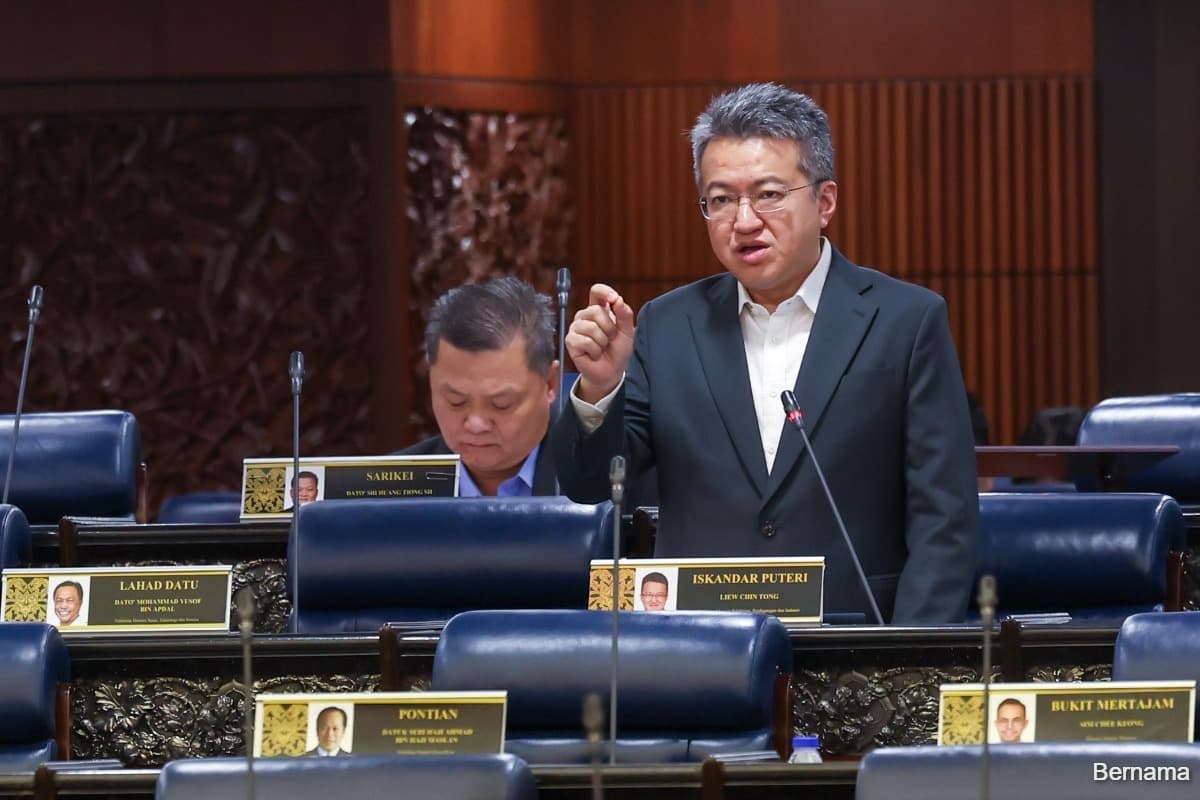
KUALA LUMPUR (Feb 12): The government will only consider reinstating the goods and services tax (GST) when the country’s median wage exceeds RM4,000, Deputy Finance Minister Liew Chin Tong said on Thursday.
While the GST is more efficient and may be favoured by business chambers compared with the current sales and service tax regime, Liew said the government must also consider the burden that would be borne by the public.
As a form of consumption-based tax, GST is regressive in nature as it imposes a proportionately heavier burden on lower-income earners compared with higher-income groups, he noted.
Nevertheless, Liew said the government is not ruling out the possibility of reintroducing the multi-tier tax in the future when income levels are higher than the current median wage of a little above RM2,800.
“Implementing GST now would require many who currently do not pay income tax to pay tax through consumption,” he said during a special chamber session in the Dewan Rakyat.
Malaysia implemented the GST in 2015 at a 6% rate under the administration of former prime minister Datuk Seri Najib Razak. The tax led to soaring inflation and widespread complaints of slow tax refunds that created a cash crunch for small- to medium-sized businesses.
The tax was suspended on June 1, 2018 after Pakatan Harapan took over the federal government, and was subsequently abolished and replaced with the current sales and services tax on Sept 1, 2018.
Currently, the service tax rate stands at 8% for most taxable services, except for food and beverage, logistics, telecommunications and parking services, which are taxed at 6%. Sales tax ranges between 5% and 10%, with a zero rate applied to basic necessities.
To prevent increases in tax cascading following the tax expansion in July last year, Liew said the government has introduced exemptions for business-to-business transactions and group relief facilities under the service tax framework.
The government will continue to monitor the impact of the expansion on micro, small and medium enterprises, price structures and the cost of living, while remaining committed to strengthening the country’s fiscal position prudently, he added.
For more Parliament stories, click here.