

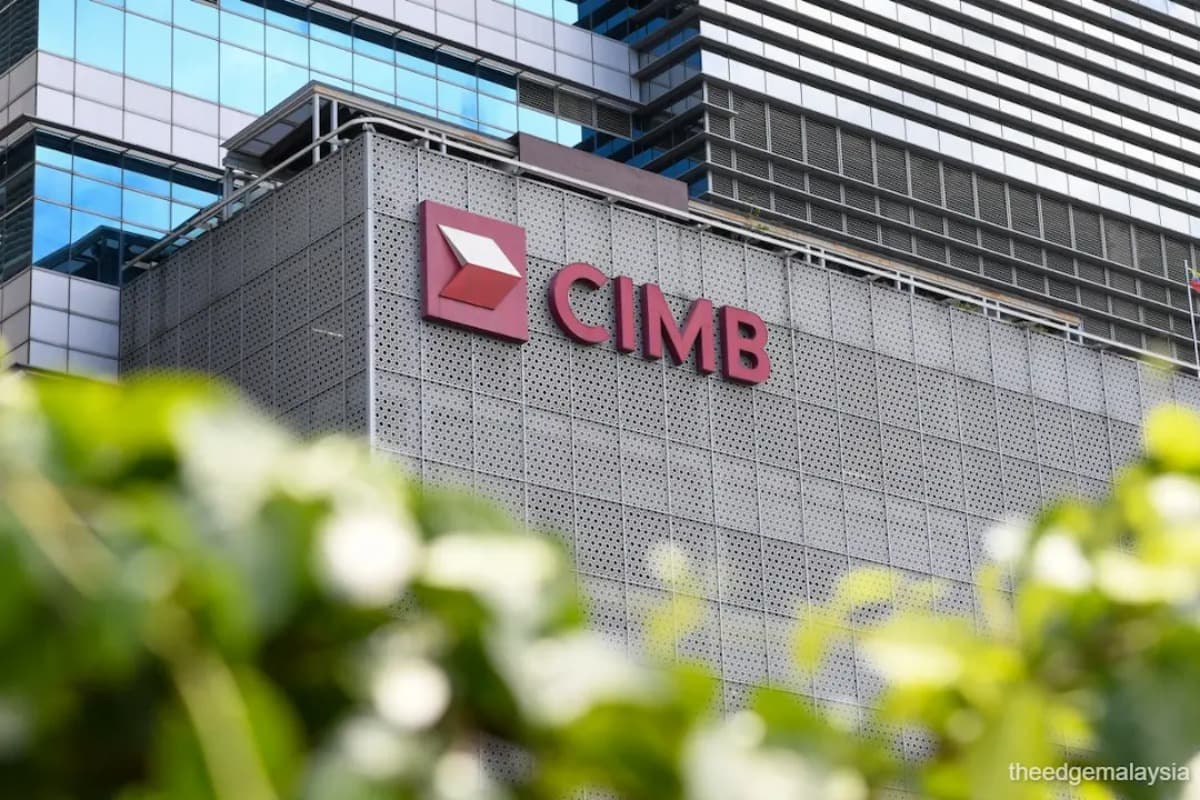
KUALA LUMPUR (Feb 11): CIMB Group Holdings Bhd (KL:CIMB) has received approval from Bank Negara Malaysia (BNM) to participate in the central bank’s Digital Asset Innovation Hub (DAIH). This will enable the banking group, Malaysia's second-largest by asset, to test regulated digital asset payment and settlement use cases within a supervised, secure ecosystem.
The DAIH, launched in June last year, provides a structured environment for financial institutions to evaluate digital asset applications under strict safeguards. These safeguards ensure that innovation in governance, risk management, and regulatory compliance remains firmly rooted within the regulated financial system.
CIMB, in a statement, said its participation reflects its continued engagement with BNM in supporting the development of resilient, future-ready financial market infrastructure, including the evolution of next-generation payment and settlement rails in Malaysia.
Its comments came after BNM issued a statement earlier on the same day, saying that DAIH had onboarded three initiatives this year to test ringgit stablecoins and tokenised deposits, focusing on domestic and cross-border wholesale payments and tokenised asset settlements.
The initiatives onboarded were tokenised deposits for payments by CIMB and Malayan Banking Bhd (KL:MAYBANK), and ringgit stablecoins for business-to-business settlements by Standard Chartered Bank Malaysia and Capital A Bhd (KL:CAPITALA).
The testing, according to BNM, would allow it to assess the implications for monetary and financial stability and inform their policy direction, with a view of providing greater clarity on the use of ringgit stablecoins and tokenised deposits by the end of 2026.
Meanwhile, CIMB said a primary focus of their participation includes exploring the tokenisation of CIMB’s own sukuk issuance and the use of tokenised deposit representations.
These tokenised deposits are envisioned as a foundational settlement layer. By representing value digitally, they enable the issuance, transfer, and settlement of financial instruments to be more integrated and automated than traditional methods.
CIMB group chief executive officer Novan Amirudin said the hub is a critical testing ground for the next phase of Malaysia's payment infrastructure. “Our focus is on building robust capabilities and operating readiness so that new forms of digital value can be integrated into the financial system responsibly,” Amirudin said. “This is a foundational step in providing clients with trusted access to digital capital markets, consistent with our Forward30 strategy.”
CIMB said it will conduct a holistic evaluation of bank-grade tokenisation through the DAIH. The programme is expected to generate "practical insights into operating models and risk management standards", and ultimately prepare the broader Malaysian ecosystem for the mainstream adoption of regulated digital assets, it added.