

This article first appeared in The Edge Malaysia Weekly on February 9, 2026 - February 15, 2026
THE plan was to revitalise and propel Kuala Lumpur International Airport (KLIA) back into the world’s top 10 airport rankings away from the glare of public trading. Nearly a year after the privatisation of Malaysia Airports Holdings Bhd (MAHB) in February 2025, however, that ambition has proved more elusive than anticipated.
There have been visible wins. Most notably, the long-awaited aerotrain linking the main terminal and the satellite building at KLIA’s Terminal 1 (T1) resumed service on July 1, 2025. Yet, the milestone was quickly overshadowed by high-profile breakdowns, with viral videos ensuring they travelled far beyond the terminal. Following the implementation of nightly maintenance works last August, aerotrain operations stabilised, achieving 100% service availability in December 2025.
Despite this improvement, challenges remain. A cascade of infrastructure failures, from roof leaks to power outages and baggage conveyor belt breakdowns, has kept MAHB in the headlines for all the wrong reasons, exposing the strain on ageing assets pushed far beyond their intended lifespan.
Many of these challenges were inherited. Former MAHB boards were criticised for delaying asset replacements and for overreaching into operations. Frequent changes in top management and board composition added to the instability. The airport operator has had five CEOs or managing directors in the past decade.
Critics contend that the Gateway Development Alliance Sdn Bhd (GDA) consortium entered the privatisation fully aware of these risks. Led by MAHB’s major shareholder Khazanah Nasional Bhd, which holds a 40% stake, alongside the Employees Provident Fund (30%) and international investors — the Abu Dhabi Investment Authority and BlackRock’s Global Infrastructure Partners (GIP) — which together hold the remaining 30% stake, the consortium spent RM12.3 billion to buy out minority investors at a hefty 125% premium over MAHB’s book value of RM4.89 per share, valuing the company at around RM18.4 billion.
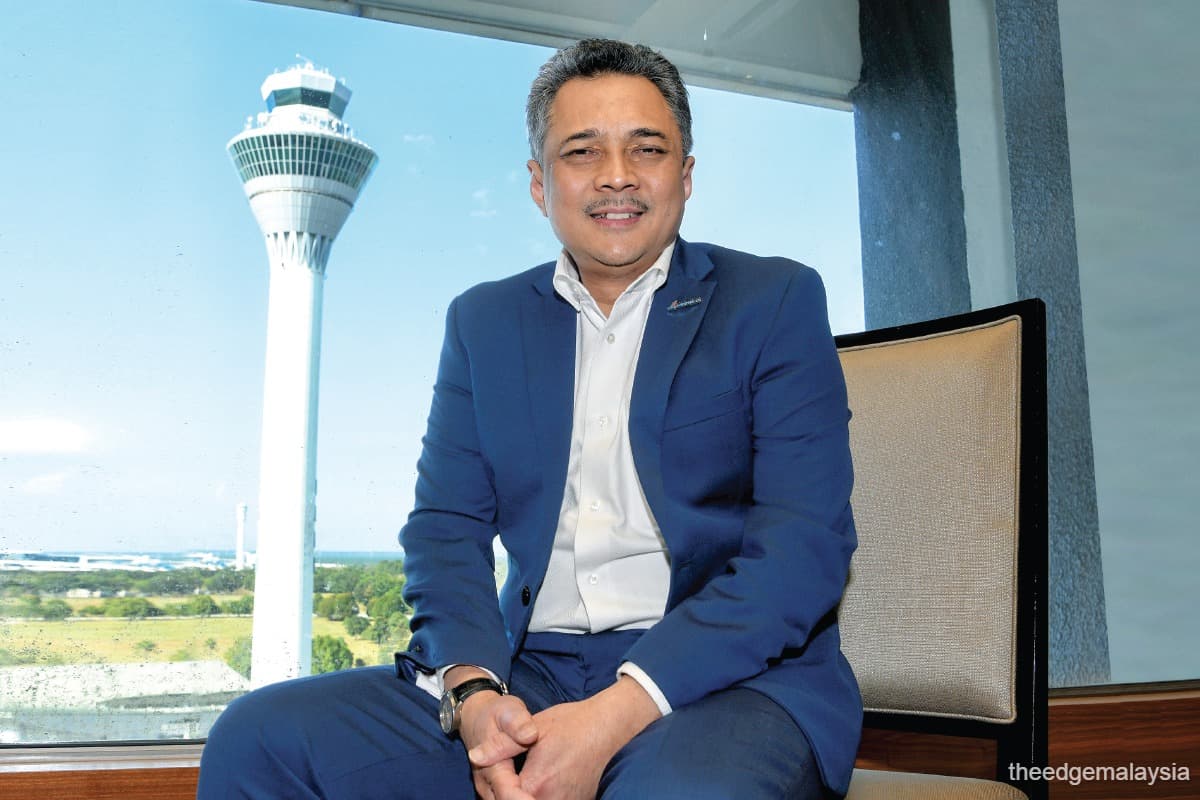
In his first exclusive interview with The Edge since taking the helm in August 2024, MAHB managing director Datuk Mohd Izani Ghani, 58, says his initial focus was organisational alignment.
“When I came on board, the first thing I did was bring the 10,000 workers together. Everyone was already working hard, but effectiveness improves when divisions understand what others are doing,” he says.
He focused on breaking down silos across operations, finance, engineering and human resources to ensure smoother coordination.
“Once everyone understands each other’s role, execution improves. There is still room for improvement, but bringing the team together was critical,” he says.
Following privatisation, MAHB underwent a major organisational restructuring in May 2025, with senior executives from GIP brought in to strengthen the board and management team. Bryan John Thompson was appointed chief airports officer, supported by Adam Wilson, Ben Nolan and Richard Townsend in advisory roles focused on special projects.
“We welcomed these executives for their experience and the value they bring. They are not here forever; the intention is that once our team is ready, it will take over,” Mohd Izani says.
The first integration meeting was held on Thaipusam Day in 2025. “I wanted shareholders and management in the same room, putting names to faces, understanding one another. Since then, collaboration has been very close,” Mohd Izani says.
Under GDA’s stewardship, MAHB’s strategy now rests on three pillars: elevating service, driving growth and expanding capacity.
“Our aspiration is to make KLIA the most connected airport in the region by 2030. We will continue to sharpen our operational approach to deliver stronger outcomes in 2026,” Mohd Izani says.
Early indicators suggest momentum is building. In 2025, MAHB recorded 104.4 million passengers across the 39 airports it manages in the country, an 11% increase from the previous year. The group also added 15 new airlines to its Malaysian network, surpassing its internal target of 12 and bringing the total to 78 — above pre-Covid-19 levels.
Meanwhile, KLIA was ranked the most connected airport in Asia-Pacific and fourth globally — behind London Heathrow, Istanbul and Amsterdam — in travel data company OAG’s Megahubs 2025 report. Still, in Skytrax’s annual global airport rankings for 2025, it placed 65th worldwide, a modest improvement from 71st the previous year.

‘Whatever has passed is past’
Industry observers have raised questions over the role Malaysia Airlines Bhd (MAB) will play in GDA’s broader privatisation strategy, even as the national carrier returns to sustained profitability after years of financial strain.
Malaysia Airlines’ parent Malaysia Aviation Group Bhd (MAG) completed a major debt restructuring in 2021 that reduced liabilities by more than RM15 billion, eliminated RM10 billion in debt and included a RM3.6 billion capital injection from its controlling shareholder Khazanah. The airline group posted an operating profit of RM540 million in 2022, and the following year recorded its first net profit since its 2015 reset. It is now on track to deliver a third consecutive year of net profit.
For Mohd Izani, closer cooperation with airline partners, particularly Malaysia Airlines, is critical to improving connectivity and overall airport performance.
“We have a common shareholder in Khazanah. Naturally, a national airport should work closely with a national airline,” he says, adding that both sides must move beyond legacy issues and focus on collaboration.
“I told the team, whatever has passed is past. The spirit of working together — to push our airports to perform better alongside the national airline — should be the agenda.”
Malaysia Airlines has proposed positioning KLIA as a regional hub for oneworld Alliance carriers, including American Airlines, British Airways, Cathay Pacific, Finnair, Iberia and Japan Airlines. “For oneworld to establish a meaningful presence at KLIA, however, the infrastructure must be strong, world-class and operationally efficient,” former MAG group managing director Datuk Captain Izham Ismail told The Edge in an earlier interview.
As air travel rebounded after the pandemic, baggage handling became a growing problem for airlines, particularly at KLIA. This led to delays, higher compensation costs and frustration for passengers making onward connections.
Malaysia Airlines, the largest tenant at KLIA T1, has reported around 800 mishandled bags a week. MAG president and group CEO Captain Nasaruddin A Bakar has said the issue has damaged the airline’s brand, underscoring the urgency of infrastructure upgrades.
MAHB recently announced a delay in the completion of KLIA T1’s baggage handling system (BHS) upgrade, with the project now slated for completion in the fourth quarter of 2028 (4Q2028), three years later than the original December 2025 target. The RM500 million project is being undertaken by VL T7 Global Consortium, comprising T7 Global Bhd and Vanderlande Logistics Pte Ltd.
Mohd Izani says the delay is due to the complexity of executing the works in a “live” airport environment.
“The consortium requested that the work be re-sequenced because we cannot simply shut down a live airport for construction. The project has to be carried out section by section,” he says.
MAHB has since signed a supplemental agreement with VL T7 Global Consortium to accommodate the revised timeline. Mohd Izani insists the extension will not result in additional costs.
Industry observers have questioned whether the challenges of working in an operating airport should have been factored in during the bidding stage. Mohd Izani acknowledges the point but says implementation has proved more complex than anticipated.
To manage ongoing baggage disruptions, MAHB has formed a dedicated team to work more closely with airlines and strengthen contingency planning, particularly during peak travel periods such as Chinese New Year. Measures include deploying additional manpower, improving coordination between project and operations teams, and engaging external baggage handling specialists. A specialist adviser was brought in from Feb 2 to help develop contingency plans.
Mohd Izani notes that not all baggage issues fall under airport control, pointing to airline decisions such as offloading bags because of aircraft weight limits. “That’s why I am calling for all parties to work together rather than pointing fingers. Continuous engagement and contingency planning are key,” he says.
Airport expansions
MAHB has begun executing the third pillar of its strategy — expanding airport capacity nationwide — with multiple projects either completed or under way over the past year.
Expansion works at Sultan Azlan Shah Airport in Ipoh, Perak, were completed last April at a cost of RM60 million, raising the airport’s annual passenger capacity to 700,000, from 500,000.
At Sultan Ismail Petra Airport in Kota Bharu, Kelantan, Phase 1 of a RM440 million expansion and upgrade was completed last year, with Phase 2 scheduled for completion by March. The project will increase the airport’s annual capacity to four million passengers, from 1½ million. Progress is on track, with operations expected to begin in time for the Hari Raya travel period, according to Mohd Izani.
The government has also approved an estimated RM130 million for the expansion of Tawau Airport in Sabah, a project jointly managed by the Ministry of Transport (MoT) and MAHB.
“Tawau is expected to be a key growth airport, given rising tourist traffic, particularly for island and marine tourism. Construction has begun, following the appointment of a contractor several months ago,” Mohd Izani says.
At Penang International Airport, long-delayed expansion works began last year and are expected to increase capacity to 12 million passengers per year, from 6½ million. The project is divided into three phases. Phases 1 and 2 involve airside works, including the apron and ancillary buildings, resulting in minimal disruption at the terminal so far.
The first work package was awarded to Gagasan Maya Sdn Bhd for RM107.9 million, while the second was awarded to Acre Works Sdn Bhd for RM254.6 million. Mohd Izani says the third work package, covering terminal expansion, is currently out to tender and is expected to be awarded in 2Q or 3Q2026, with physical works commencing thereafter. The target completion date is 3Q2028, with the cost of Package 3 expected to be RM1.4 billion.
A similar expansion model is being applied at Kota Kinabalu International Airport, Sabah, where capacity will be increased to 12 million passengers annually, from nine million. Packages 1 and 2 focus on airside and apron works, while Package 3 involves terminal expansion, with completion targeted for 3Q2028.
Both the Penang and Kota Kinabalu airport expansion projects will be funded by MAHB under a new operating agreement signed in March 2024 with the government, which provides a structured mechanism for recovering capital expenditure (capex). The upgrades are intended to position both airports as regional hubs under MAHB’s long-term growth strategy.
At Sultan Abdul Aziz Shah Airport in Subang, Selangor, Batik Air Malaysia has taken over jet operation slots previously held by AirAsia and Firefly. Following recent upgrades, Subang Airport’s capacity has doubled to three million passengers annually.
Mohd Izani says discussions with MoT indicate that once the target is achieved, further expansion could be considered, potentially increasing capacity to five million and eventually eight million passengers a year, in line with the government’s phased development plan. The airport is currently handling about 1.8 million passengers a year.
Tightening the bolts
MAHB is overhauling its procurement processes as capex rises.
“Procurement reforms have been accelerated, following the appointment of a new chief procurement officer last year, and further strengthened after the entry of the new shareholders. The changes are intended to streamline processes, reduce delays and tailor approval thresholds according to airport size, including delegating greater authority to airport-level teams for smaller projects,” Mohd Izani says.
He adds that feedback from the industry suggested some contractors had been reluctant to bid for airport projects, prompting MAHB to conduct nationwide roadshows last year with the Construction Industry Development Board. The aim was to raise awareness of upcoming tenders and to address perceptions that airport projects are excessively complex or burdensome.
The outreach appears to have paid off. The pool of registered contractors has since expanded, allowing MAHB to better match specialised firms to specific projects, Mohd Izani says.
At the same time, the airport operator is tightening oversight of contractor performance, which includes annual performance assessments, with underperforming contractors potentially excluded from future tenders and subject to penalties, Mohd Izani says.
The renewed focus follows a series of embarrassing incidents, including water gushing from the ceiling of KLIA T1’s departure hall last November. MAHB attributed the flooding to contractor negligence during maintenance works, when plywood covering drainage points was not removed.
Transport Minister Anthony Loke described the incident as “very regrettable”, saying it had damaged Malaysia’s image and urging firm action against those responsible.
Mohd Izani concurs, conceding that MAHB had been “too easy with contractors” in the past.
“Contractors need to be more vigilant in their work. To avoid similar incidents in the future, we want to introduce tighter controls on contractor performance, including annual performance reviews.
“Those who are underperforming will not be invited for future projects, and greater accountability will be enforced. Contractors [that are negligent] cannot go unpunished,” he says.
Alongside procurement reforms, MAHB has rolled out its Engineering Asset Replacement Master Plan 2.0 to tackle ageing infrastructure such as lifts, escalators and walkways — many of which date back to the late 1990s. The plan prioritises replacement based on lifecycle assessments and will be implemented systematically across MAHB’s airport network.
One recent development that Mohd Izani singles out as unequivocally positive is the formation of the National Airport Facilitation Committee (NAFC), a Cabinet-mandated body established in January and chaired by the transport minister.
The committee held its inaugural meeting on Jan 28, bringing together senior representatives from across the aviation ecosystem, including MAHB, airlines, ground handlers, immigration, customs, police, representatives from key ministries such as home affairs, tourism and finance and other government agencies, to resolve operational bottlenecks at Malaysia’s airports. For now, its mandate covers KLIA, with scope to expand to other airports nationwide, Mohd Izani says.
MoT has prepared the committee’s terms of reference and will co-serve as secretariat alongside MAHB. Meetings will be held quarterly and chaired by the transport minister.
“I welcome this very much. Now that it is Cabinet-mandated, it has teeth,” Mohd Izani says.
He notes that the transport minister was clear from the outset that attendees had to be senior decision-makers. “The agenda is simple: to iron out operational issues at the airport and resolve outstanding problems.”
One of the first items on the agenda was airside connectivity between KLIA T1 and T2, which would allow passengers and baggage to transfer without repeat security screening. Loke announced last August that an airside transfer system would be implemented by mid-2026.
At the January meeting, senior airline executives, including MAG’s Nasaruddin, Batik Air Malaysia CEO Datuk Chandran Rama Muthy and a representative from AirAsia, were present.
“I told them very clearly: Airlines have to agree for us to implement this. The minister looked at each of them and they said, ‘We agree’. I said: Make sure it is [recorded in meeting minutes] so we can push the plan through,” Mohd Izani recalls.
Under Phase 1, expected by 3Q2026, passengers travelling without checked baggage will be able to transfer between T1 and T2 via dedicated coach services, bypassing repeat security screening. MAHB is now preparing the necessary infrastructure, including transfer lounges, transport routes and operational procedures.
“Airlines may have reservations, but this has to move beyond individual interests. This is a national agenda. We need cooperation,” Mohd Izani says.
‘Running an airport is not a single-player job’
Mohd Izani is no stranger to MAHB. He served on its board for nine years, between 2011 and 2019, before returning to the group last year after stints as managing director of engineering-based infrastructure company UEM Group Bhd and earlier roles at Khazanah.
“This job here is more intense. An airport runs 24/7, and every Malaysian feels a sense of ownership. That makes it challenging, but also meaningful,” he says.
Unlike his previous roles, which were more policy- and strategy-oriented, his current position is operational. “Here, I’m in the engine room. It requires a different kind of energy. But if you want to make an impact, this is the place to be.”
Leadership, he argues, is fundamentally about alignment. “Whether at UEM or MAHB, it’s about bringing the team together and getting the best out of them. But, here, the scale is larger — more people, more teams, more interfaces.”
In his first year, he has held frequent and large meetings, including weekly sessions with about 40 senior leaders. “People need to understand what their colleagues are dealing with. Engineering can’t just decide to fix a lift on its own timeline; you have to think about passengers and operations. That level of understanding changes behaviour.”
Critics say MAHB is held back by a culture of complacency, a charge Mohd Izani partially accepts. “Maybe in some parts; but things are changing.”
He points in particular to tighter oversight of contractors. “Just because a contractor is doing the work doesn’t mean responsibility ends there. Ultimately, it comes back to us. Our teams need to be hands-on, knowledgeable and firm.”
Frequent leadership changes over the past decade have also taken a toll, he adds. “When direction keeps changing, teams don’t know where the steer is. Consistency matters.”
Mohd Izani’s current contract runs until the end of July 2026, a timeline he plays down. “That’s standard across government-linked companies. It’s not a big issue. I’ve been on contract with Khazanah for 15 years, typically on three-year terms. If the government values the work being done, continuity will follow. Ultimately, the team is here to serve.”
Over the past year, he says, feedback from staff and external stakeholders has improved. Cooperation with agencies such as customs, immigration, police and MoT has become more structured, aided by his regular attendance at the ministry’s post-Cabinet meetings.
“Running an airport is not a single-player job; there are many parties involved. That’s why collaboration is key,” he says.
Internally, he has repeatedly reinforced the message that MAHB must be a high-performing organisation. “If one person doesn’t perform, it’s unfair to the rest of the team. High performance has to be recognised and rewarded.” That emphasis, he notes, is aligned with the expectations of MAHB’s new shareholders.
Financials and discipline
For the financial year ended Dec 31, 2024 (FY2024), MAHB reported a net profit of RM741.3 million, up 36.5% from RM543.2 million a year earlier. Revenue rose 18.6% year on year to RM5.83 billion.
“With passenger numbers growing in 2025, that should naturally flow through to the bottom line,” Mohd Izani says, adding that 2026 is also expected to be another solid year. Higher capex will need to be factored in, however, as airport upgrades accelerate.
He notes that earnings should not be unduly dragged down, citing long depreciation periods and the use of the Airport Development Fund (ADF), which is funded through passenger fees and overseen by a committee chaired by MoT’s secretary-general, for necessary airport development purposes.
ADF funds are typically used for smaller or non-commercially viable airports. This year, RM24 million has been allocated for Sandakan Airport and RM20 million for Lahad Datu Airport in Sabah.
Dividend payouts, for now, are not a priority. “Most of the cash is being ploughed back into operations and improvements,” he says.
On future capacity, Mohd Izani says KLIA’s three runways are sufficient for now, while Terminal 3 remains unnecessary in the near term. T2, with capacity for 45 million passengers, handled only 28 million last year, while efficiency gains and technology upgrades are expected to relieve congestion at T1. Measures such as airside transfers, terminal rebalancing and streamlined immigration processes are also expected to further ease pressure on the airport.
Last year, MAHB invested RM35 million and RM28 million in Terminals 1 and 2 respectively to improve passenger experience and operational efficiency. The group expects its 39 airports in Malaysia to handle 130 million passengers by 2030.
Asked whether he wants KLIA to be a practical, efficient airport or visually impressive, Mohd Izani is clear that it should be both. “Efficiency is non-negotiable. But at the same time, we have to offer a good experience for travellers,” he says.
That thinking underpins initiatives such as RIMBA Rejuvenation, launched last month, which introduces green and leisure spaces into the terminal. Industry observers have questioned whether such areas are an inefficient use of space, but Mohd Izani disagrees. “An airport can’t just be about cramming in shops. We need places for people to breathe — even things like the orangutan-themed playground at KLIA T1.”
Ultimately, he says, the airport’s guiding ambition is connectivity. “The mission is to make Malaysia the most connected country in Asia-Pacific.”
Could that ambition lift KLIA back into the world’s top 10 airports?
“If all parties work together, it’s not impossible,” he says, but only if efficiency gains extend beyond the airport operator itself. “You can have the best technology and fast check-in, but if passengers get stuck at immigration, it defeats the purpose.”
Save by subscribing to us for your print and/or digital copy.
P/S: The Edge is also available on Apple's App Store and Android's Google Play.