

This article first appeared in The Edge Malaysia Weekly on February 9, 2026 - February 15, 2026
A briefing by Sarawak Energy Bhd (SEB) on a request for proposal (RFP) for the construction of five dams in the state on Jan 30 is understood to have attracted a huge number of interested parties and big names from Japan, China and South Korea, as well as local players such as Gamuda Bhd (KL:GAMUDA), Press Metal Aluminium Holdings Bhd (KL:PMETAL) and a number of other prominent companies.
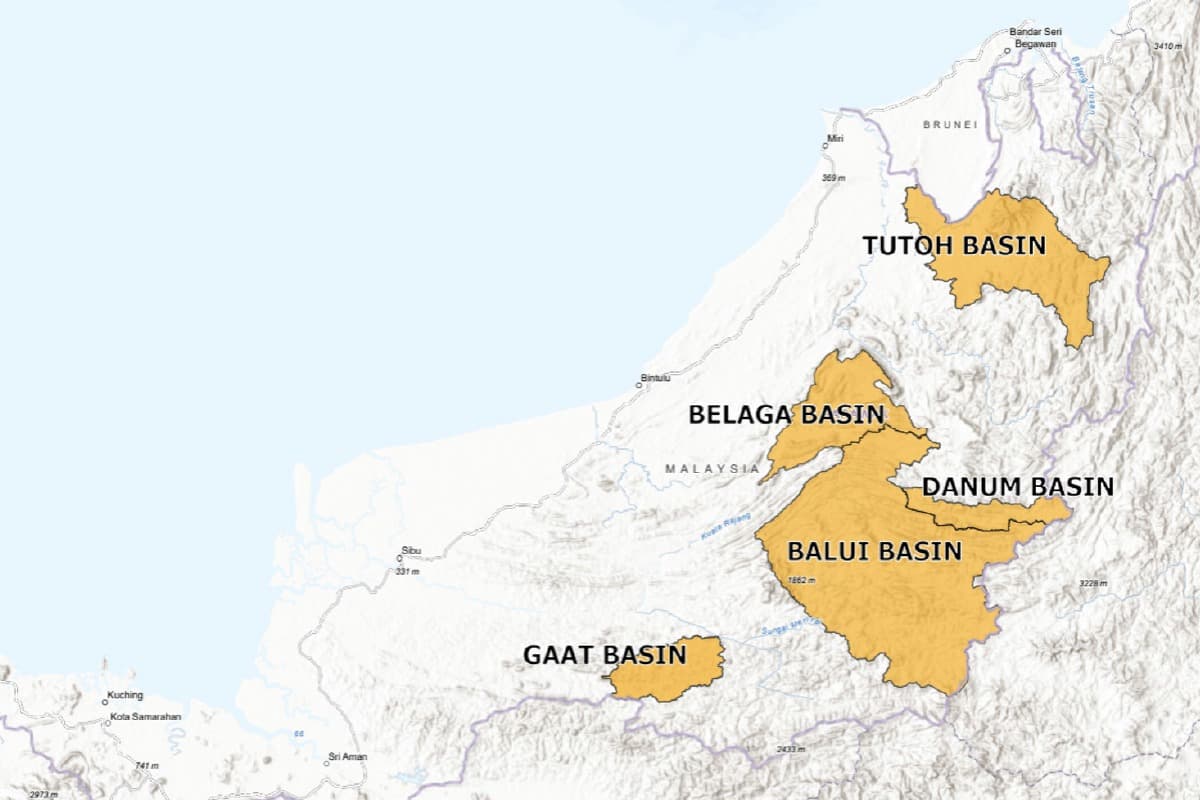
This briefing on the construction and building of the five dams dubbed Cascading Power Sources (CPS) — in the Tutoh, Belaga, Danum, Balui and Gaat basins — came about after the RFP by SEB on Jan 17. The five dams are located in the central and northern parts of the state and border Kalimantan in some cases. (See map)
At press time SEB had yet to respond to questions sent by The Edge on the construction of the five dams and the RFP.
One source who attended the briefing says, “There were about 100 people at the briefing and many more dialled in, so all in all the dam construction project in Sarawak has generated a lot of interest … it is not what I expected at all; it was crowded.
“While the project is interesting, the timeline, however, is tight as the closing date for the registration was end-February and the closing date for the submission of the RFPs is in end-August … or just six months.”
As a guideline for planning purposes, the target for the initial commercial operation date is slated to be around 2034/35.

Details such as how SEB plans to award the contracts, whether all five will go to one party or whether it will award the five contracts individually to different parties, remain to be seen.
Nevertheless, documents on the five dams on SEB’s website indicate that the “CPS development aims to optimise untapped hydropower potential through the coordinated development of multiple hydropower plants within a single river basin. This cascading approach is aimed at maximising energy extraction from the rivers, improving overall system efficiency, and increasing renewable energy generation.”
The total value for the construction of the five dams was also not available at press time, but the five CPS are slated to have a potential total power generation capacity of between 50mw and 70mw (Gaat CPS) and 700mw and 800mw (Balui CPS). (See table)
In a nutshell, the winning company or consortium would be required to develop a detailed financial model based on the discounted cash flow methodology to assess the financial viability of the CPS. The model should incorporate key parameters, including projected energy generation, electricity sales, capital and operating expenditure, hydrological variability, financing structure, tariff assumptions, taxation and applicable incentives, among others.
The evaluation of the winning proposal will also take into account participants that “demonstrated [a] track record in developing hydropower or cascading power projects, including successful delivery of feasibility studies, design development, construction or operational works for projects of comparable scale and complexity” which could narrow down the number of bidders.
There were also no details available from sources who attended the briefing on the method that the construction of the dams will be undertaken by, be it a “build, operate and transfer”, “build, lease and transfer” or other such model.
According to documents on SEB’s website, the shortlisted candidate will be required to execute a joint development agreement with SEB’s wholly-owned unit SEB Power Sdn Bhd (after signing a joint study agreement and power purchase agreement [PPA]) and structure a pre-investment framework, among others.
The PPA will be undertaken by Syarikat SESCO Bhd, a state-controlled entity given the mandate for the generation, transmission and distribution of electricity in the state.
“While the joint development agreement does not constitute a formal joint venture between SEB Power and the shortlisted participant, it generally provides a binding framework which sets out, among others, the scope of collaboration of the respective parties in respect of the project, cost-sharing mechanism, risk allocation and dispute resolution mechanism that will guide both parties in advancing the project towards the Final Investment Decision,” SEB’s terms of reference says.
The terms reference adds, “The state’s target of achieving 15gw of installed generation capacity by 2035 reflects its dual commitment to meeting domestic demand growth and positioning the state as a reliable exporter of clean energy to regional markets. This is aligned with the ongoing regional integration efforts such as the Asean Power Grid initiative. Within this framework, renewable technologies such as solar, small hydro and CPS will play a pivotal role in supporting both local consumption and regional demand for green electricity.”
SEB Power, which has a paid-up capital of RM1 billion, is likely to play a prominent role in power generation in Sarawak.
SEB currently has three main hydropower plants which are currently in operation — Bakun (2,520mw), Murum (944mw) and Batang Ai (94mw) — while the Baleh Hydroelectric Project (1,285mw) is slated for completion by the end of the decade.
Its other assets include the 842mw Tanjung Kidurong Combined Cycle Power Plant.
SEB has been exporting power to Indonesia’s Perusahaan Listrik Negara since 2016, albeit in small amounts of about 200mw, and was looking at similar deals with Sabah and Brunei even.
In October last year, SEB said the Sarawak–Singapore Power Grid Interconnection Project had received conditional approval (CA) from Singapore’s Energy Market Authority (EMA). With the issuance of the CA, the Sarawak–Singapore Power Grid Interconnection Project is recognised to have undergone initial assessments and been deemed technically and commercially viable.
Sarawak aims to begin exporting 1gw of renewable energy to Singapore by 2032, once the construction of the undersea cable is completed.
Sarawak Premier Tan Sri Abang Johari Tun Openg was reported saying that the construction of the undersea cable will be carried out by a financial consortium in which both Malaysia and Singapore have interests.
As at end-December 2024, SEB had total assets amounting to RM43.47 billion, while on the other side of the balance sheet it had total liabilities of RM49.05 billion.
For its financial year ended Dec 31, 2024 (FY2024), SEB chalked up an after tax profit of RM1.34 billion on the back of RM7.3 billion in revenue. SEB’s earnings and revenue in FY2024 were largely similar in FY2023, when it managed to rake in RM1.34 billion in after tax profit from RM7.15 billion in revenue.
At end-2024, SEB had retained earnings of RM14.74 billion.
SEB’s largest consumer is the Sarawak Corridor of Renewal Energy or SCORE, which was established in 2008, aimed at attracting energy-intensive investments. In 2013, SCORE’s requirement for electricity was a mere 880mw but the first phase of the development was a requirement for 2,550mw by 2020 growing 45% to 3,700mw by 2025.
Save by subscribing to us for your print and/or digital copy.
P/S: The Edge is also available on Apple's App Store and Android's Google Play.