

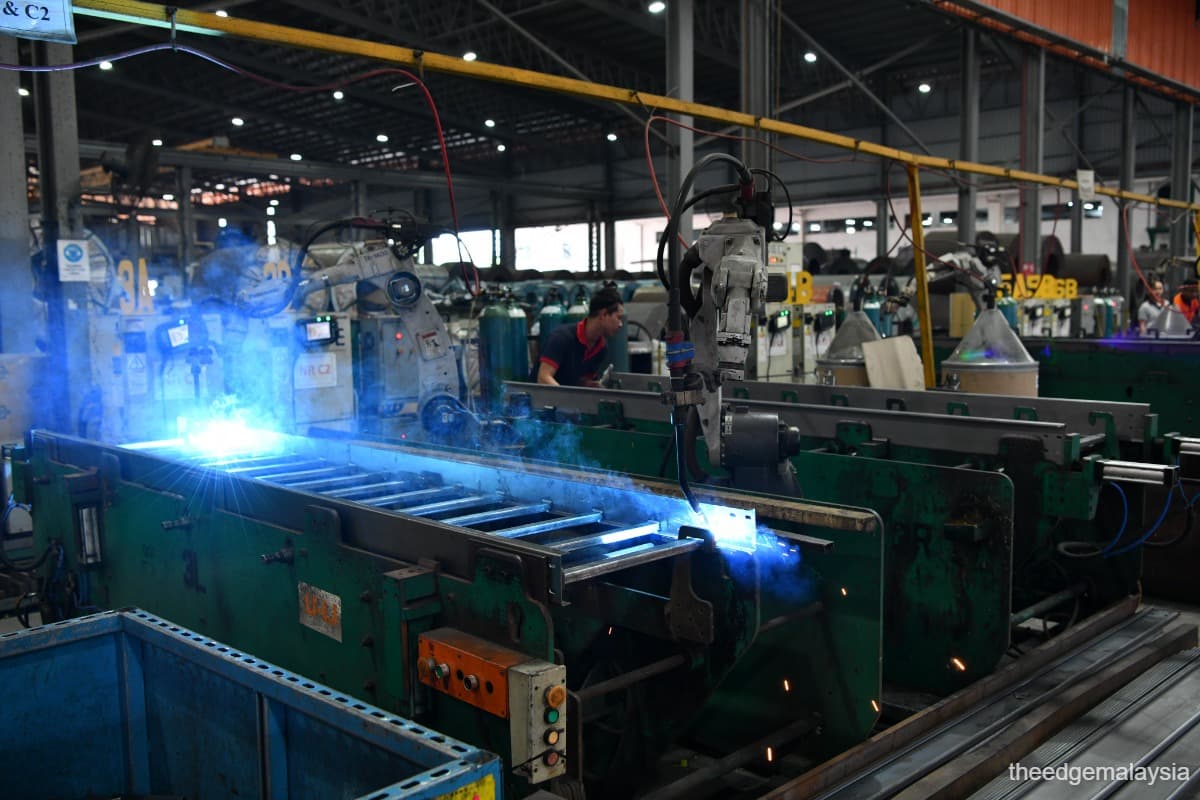
KUALA LUMPUR (Feb 9): Malaysia’s manufacturing momentum is expected to extend well into 2026, bolstered by resilient external demand, firm domestic consumption, and supportive government policies, according to economists.
This optimistic outlook follows a surge in the country's industrial production index (IPI), which measures output from the manufacturing, electricity and mining sectors, at the end of 2025. Despite a contraction in mining activity, official data from the Department of Statistics Malaysia (DOSM) showed IPI rising 4.8% year-on-year in December 2025, beating Bloomberg's consensus forecast of a 4.5% increase.
RHB Investment Bank maintained a "sanguine view" on the sector, forecasting IPI growth of 4.1% for 2026. "...the robustness of recent IPI data, together with robust exports performance and manufacturing PMI readings, reinforces our optimistic outlook,” RHB Investment Bank said in a note on Monday.
For the full 2025, Malaysia's IPI expanded 3.6%, largely mirroring the 3.7% growth recorded in 2024, supported by higher production in export-oriented industries that defied fears of global slowdown, higher tariffs, and geopolitical volatility.
The resilient performance was largely driven by sustained demand for electrical and electronic products. This was fuelled by the global adoption of artificial intelligence, data centre expansion, and the rollouts of 5G technology, electric vehicles and their supply chains.

While the US' 25% Section 232 tariff took effect on Jan 15, 2026, economists believe the impact on Malaysia's semiconductor industry will be manageable. RHB Investment Bank noted that local firms have minimal exposure to high-performance graphics processing units (GPUs) and advanced chips, which are the primary targets of such trade barriers.
Local firms also have limited involvement in semiconductor equipment manufacturing, while broad end-use exemptions reduce risks for chips sent to Malaysia for assembly, testing and approved uses, the research house added.
MBSB Research, however, expects a more moderate pace of expansion, projecting IPI growth of 3% for 2026, citing a high base effect from 2025 and softer commodity production.
“Manufacturing output should remain encouraging, heading into early part of 2026 as firms increase production to fulfil growing new orders as companies restock their inventories. Commodity production, on the other hand, may be limited by no significant improvement in demand, with price growth expected to remain moderate this year,” MBSB said.
Full-year GDP likely grew faster than expected
The stronger year-end IPI print has heightened expectations for Malaysia's overall economic growth last year. Economists suggest the local economy likely grew 4.9% in 2025, surpassing the official projection range of 4.0% to 4.8%, though slightly slower than the 5.1% expansion recorded in 2024.
Official gross domestic product (GDP) figures are due to be released this Friday.
A Bloomberg poll indicates a median forecast of 5.4% growth for the fourth quarter of 2025, slightly more conservative than the DOSM's flash estimate of 5.7% for the October-December period.
For 2026, economists expect Malaysia’s manufacturing sector to remain a key growth anchor in 2026, although the outlook remains subject to external uncertainties, including tighter trade rules, higher tariffs and potential softening in global final demand.
Kenanga Investment Bank maintained its GDP forecast at 4.5% for 2026, citing cautious optimism amid global uncertainties and geopolitical risks. It noted, however, there could be potential upside should the global technology cycle strengthen further.
Downside risks, meanwhile, include weaker demand from major trading partners such as the European Union and China, shifts in US trade policy and evolving regional trade dynamics, RHB Investment Bank noted.
RHB Investment Bank also cautioned against broader tariffs or sector-specific levies, particularly on semiconductors, that could be introduced later, which would weigh on Malaysia’s export-focused supply chain.