

This article first appeared in City & Country, The Edge Malaysia Weekly on February 9, 2026 - February 15, 2026
Tan & Tan Developments Bhd, the property development arm of IGB Bhd (KL:IGBB), has positioned itself as a mid- to high-end developer since its establishment in 1971, with a focus on delivering projects that balance innovation, quality and long-term value.
During the five decades, these core principles have remained intact, shaping a portfolio of landmark developments and communities across the Klang Valley. Its notable projects include Kuala Lumpur’s first luxury condominium Desa Kudalari, the Mid Valley City integrated master plan and the Sierramas township development in Sungai Buloh, Selangor.
The group later expanded its portfolio to include commercial, construction, hospitality and retail, which account for about 75% of group revenue. In recent years, it has adopted a more measured pace, focusing on boutique-scale developments to meet market demand.
“It may seem like we haven’t done much in the last few years, but actually, we were revisiting and redefining what Tan & Tan is going to be in the future. We continue to uphold our core values by providing innovative, good-quality developments that bring long-term value to our buyers, while looking at how to grow with them at every stage of their lives, hence the establishment of co-living and senior living brands, Coliv and ReU Living, as well as Southpoint Residences, our most recent residential launch,” Tan & Tan CEO Tan Yee Seng tells City & Country in a recent interview.
Although Tan & Tan started with large-scale master-planned townships, Tan says it now focuses on high-value integrated projects in urban areas. This is in line with IGB’s mid-term target of achieving a 50:50 retail-to-other revenue contribution ratio for a more balanced revenue portfolio. As at FY2024 ended Dec 31, 2024, revenue contribution from the property development division to IGB was RM43.4 million, representing 2.5% of the group’s total revenue of RM1.67 billion.
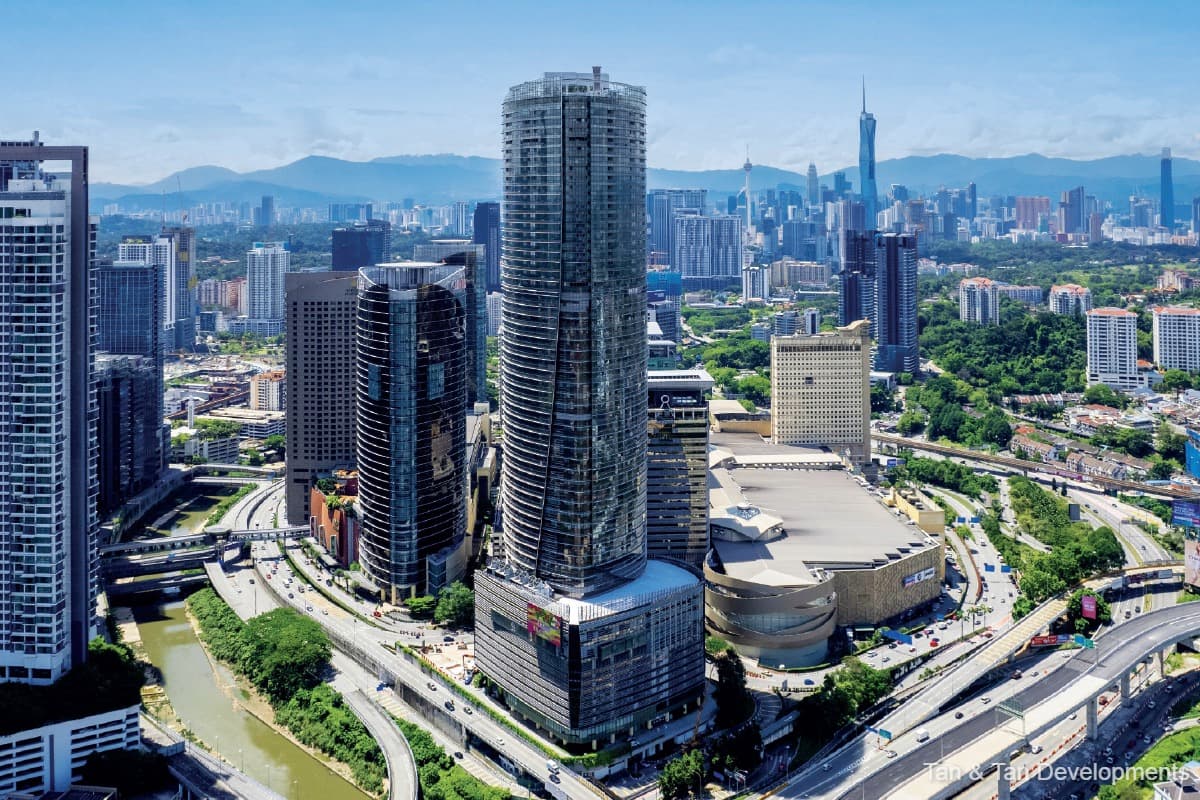
Completed and opened for sale in 2023, Southpoint Residences is Tan & Tan’s first build-then-sell residential development and the final component in the group’s flagship Mid Valley City.
It consists of the top 19 floors of a 59-storey single-block building and offers 172 premium serviced apartments with built-ups ranging from 1,116 to 5,837 sq ft. Prices start at RM1.7 million for each unit and the project is 50% sold, mostly to the local homebuyers who appreciate Southpoint Residences’ strategic location. Tan & Tan’s deputy CEO Yeow Jie Xiang is confident it will sell out this year.

“Unlike Northpoint Residences, Southpoint Residences is a single-tower development encompassing residential and offices, hence the build-then-sell strategy to ensure the smooth transition of titles and legal processes. We are also confident of the product because there is a growing number of people who want to live in an integrated development in this location that offers the full conveniences and is close enough to the city centre,” he says.
The upscale Southpoint Residences marks a new phase of growth for Tan & Tan, which is launching projects with a gross development value (GDV) of more than RM1.5 billion this year. The projects, which are aimed at unlocking the value of the group’s long-held land bank in prime areas, include The Batai, a luxury low-density villa development in Bukit Damansara, Kuala Lumpur.
Three launches in the pipeline
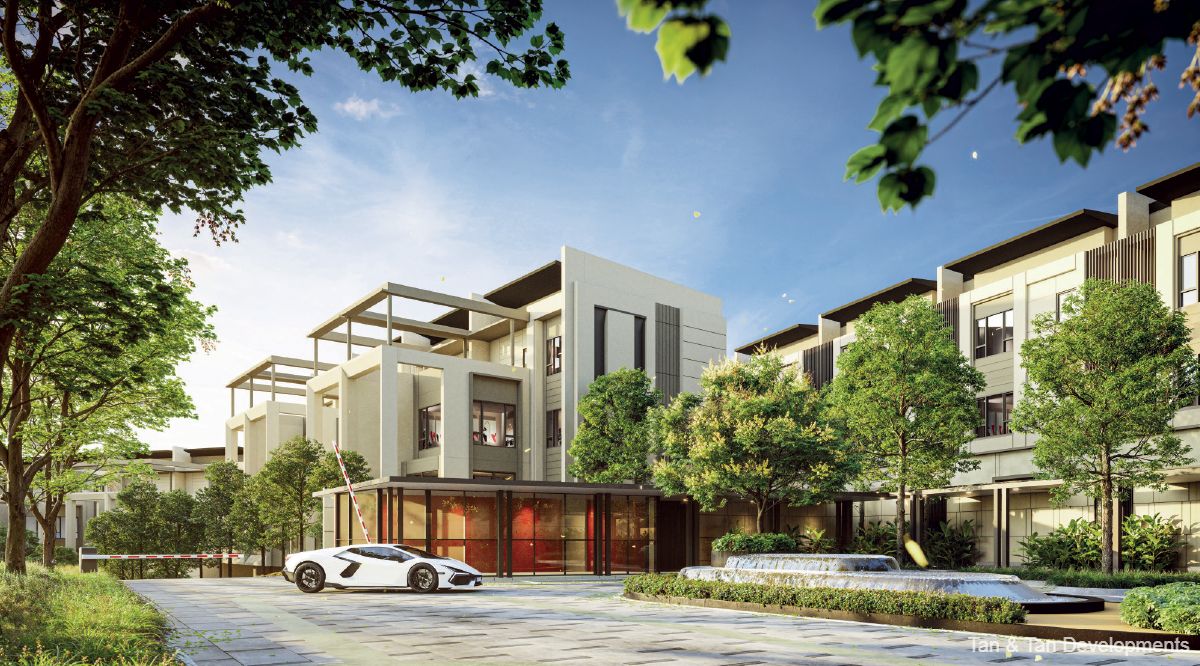
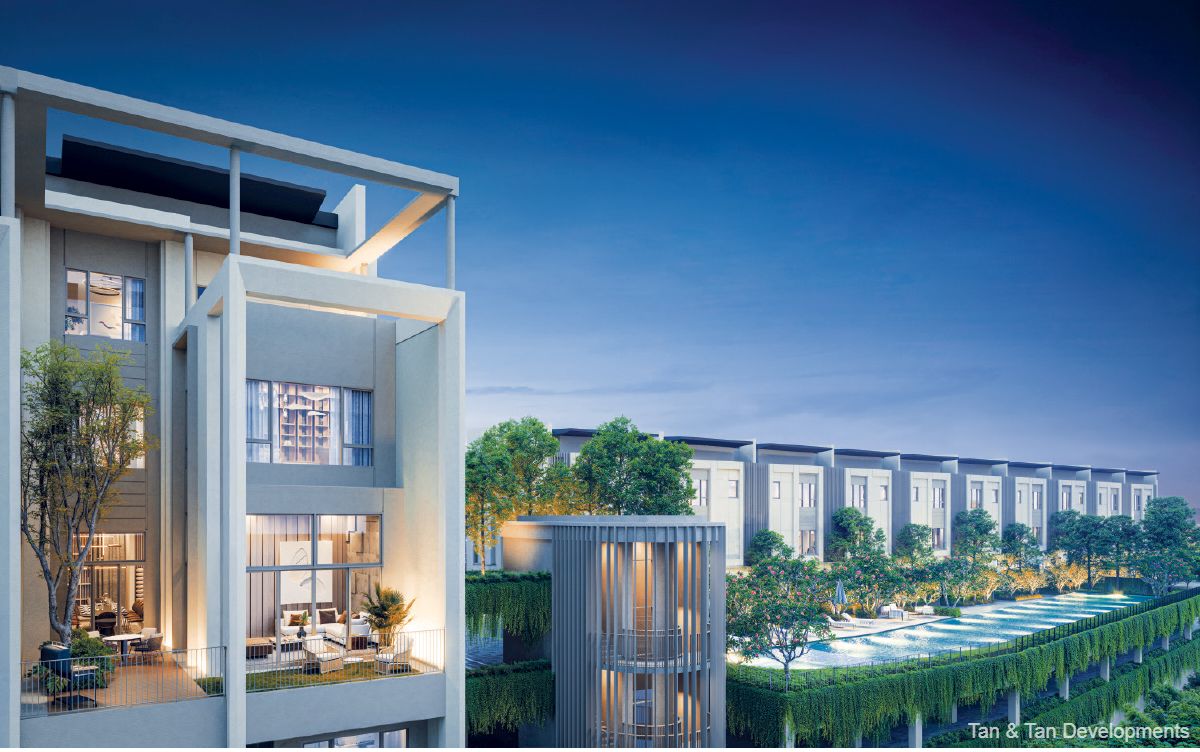
Located in the affluent enclave of Bukit Damansara, The Batai comprises 48 stratified 4-storey villas on 4.8 acres along Jalan Batai. Each villa has a built-up of 5,844 to 6,190 sq ft and comes with a 5+1 bedroom layout and private lift to meet the needs of multi-generational households. The selling price starts at RM7 million.
“The Batai is a gated and guarded landed development, which is hard to come by nowadays in Bukit Damansara. While it is designed to meet the demand for multigenerational homes, we are also targeting retirees and seniors who are looking to rightsize from a big bungalow nearby for easy day-to-day housekeeping and landscape upkeep, as well as for better security,” Yeow says.
The Batai will offer views of greenery and the city. It will have clubhouse facilities, such as a 50m swimming pool and playground. The maintenance fee, inclusive of sinking fund, is 55 sen psf.
“The target group of buyers doesn’t require many communal facilities [as they value] privacy, hence we are putting more focus on landscape and security. It also explains the very reasonable maintenance fee,” he adds.
The Batai has a GDV of RM358 million and is set to be launched in the first quarter of this year. It opened for private viewing recently and market response has been encouraging, says Tan.

“We reached out to our loyal customers and business associates for exclusive previews as we have limited units for sale. But due to the visible construction activity at the site, people have approached us and now, we have a long list of interested buyers for just 48 units,” Tan adds.
The developer is also preparing for the launch of its first large-scale industrial park — EKA Industrial Park in Labu, Negeri Sembilan.
The 800-acre industrial park, which will have a GDV of RM2 billion, will be developed in four phases over the next six years. The first phase of 200 acres is set to be launched in the second quarter of 2026.
“We have had this land in Labu for about 30 years. The site is now surrounded by mature communities and industrial properties as connectivity has improved and infrastructure is in place now,” Tan says.
“There has been strong demand [for industrial properties] in recent years and we see the timing [to launch the project] is right now.”
Buyers can purchase customisable lots of one to four acres in the first phase, which has a GDV of RM500 million. The developer will provide infrastructure such as roads, electricity, gas and water, as well as assistance to buyers in obtaining building approval from the local authorities.
“We all see the rapid development of the industrial segment in Negeri Sembilan. The demand has been strong and we are often approached by factory owners about our land there, mainly because we are along the main road and have ready infrastructure. As we all know, infrastructure is crucial to industrial property buyers,” Tan says.
While the master plan has not been finalised, he says the industrial park is designed to support a diverse range of uses including logistics, manufacturing, food and non-food industries, as well as value-added services, all within a future-ready industrial environment.
“We will have sell-then-build and built-to-suit factories, as well as commercial lots, in the future phases, all designed to accommodate light, medium and heavy industries with the buyer’s flexibility and long-term performance in mind. We prefer not to sell to land speculators to ensure the park becomes active, to bring long-term value to the buyers and the local community,” Tan explains.
In addition, the developer has a transit-oriented development in South Bangsar, Kuala Lumpur, called Merbau, in the pipeline. It is set to be launched in the third quarter of this year.
Set on 3.5 acres of freehold land, the two-tower mixed-use development will have offices, SoHo suites, duplex serviced residences and retail space. It is located across the road from Kerinchi LRT station, to which it is connected via an existing covered pedestrian bridge. The station is one stop from Mid Valley City and two stops from KL Sentral.
The first tower, which has a GDV of RM655 million, comprises close to 600 office suites and SoHo units with built-ups ranging from 260 to 807 sq ft. The units are targeted at businesses and professionals seeking flexibility, convenience and accessibility, as well as young, single professionals and young couples. The estimated selling price is from RM260,000.
The second tower will have 439 duplex serviced residences with built-ups of 954 to 1,625 sq ft. The homes will feature a double-height living space, offering plenty of natural light. The estimated selling price is from RM900,000.
“The duplex is not something new, but it is not yet a common product. We are targeting buyers who grew up in landed houses in the surrounding areas, who enjoy double-storey houses with a full range of lifestyle facilities in a convenient location,” Yeow says.
There will also be about 8,000 sq ft of food and beverage (F&B) and retail space for lease.
“It reflects our core value of creating long-term value for our buyers. The 8,000 sq ft, which are equal to about 10 typical retail lots, will be part of the common property of the development and eventually, we will hand it down to the management corporation to manage, and to generate income to add value to the buyers in the future,” he says.
Busy years ahead
According to IGB’s 3QFY2025 financial report, the property development division recorded revenue of RM20.7 million, compared with RM5.9 million in 3QFY2024, and a profit before tax (PBT) of RM5 million compared with RM3.1 million a year ago, representing an increase of more than 100% in revenue and 61% in PBT, mainly derived from the sale of completed condominium units at Southpoint Residences.
While the full-year property sales figure for FY2025 had yet to be finalised at press time, Tan is confident there will be a significant increase.
“We have a target sales number for this year [FY2026] and the team is confident of achieving it on the back of three new, strong launches. We believe the jump [in the growth in sales] will be even more significant this year. And we are already looking at the new launches for 2027.”
While declining to give more information on the planned projects for 2027, Tan says the group has prime land waiting to be developed. The tracts are located at Bukit Ledang, Damansara Heights, Wangsa Maju and Kuala Lumpur City Centre in Kuala Lumpur, as well as Sierramas and Petaling Jaya in Selangor, which includes the 12.73-acre land in Section 13 that it acquired from Fraser & Neave Holdings Bhd (KL:F&N) last year.
Apart from that, Tan & Tan plans to develop an 18-acre tract in Medini, Iskandar Malaysia, Johor, into a mixed-use development.

“Next year, [new project launches] will be even more [than RM1.5 billion in GDV] but we are still finalising the launches … We will let the market tell us what we should launch. Meanwhile, we will continue to look for more land, either through acquisitions or partnerships,” Tan says.
Property development aside, Tan & Tan also diversified into co-living and senior living with Coliv in 2019 and ReU Living in 2022.
According to IGB’s FY2024 annual report, Coliv which is located at Damai Residence, Kampung Datuk Keramat in Kuala Lumpur, saw a 12% increase in revenue in 2024 from 2023 despite an increase in the supply of small built-up apartments in the KLCC area, which offer competitive rentals, as well as new players in the co-living space. Both of these factors mean that tenants now have more choice, hence impacting the demand for co-living spaces.
“We are taking a slow and steady approach in the co-living segment, focusing on building up the management team and reputation in the market at the moment. Having said that, we are also on the lookout for the next location, which has to be connected but not too central. According to our data, only 30% of our residents own a car and most of them value convenience,” Tan notes.
Meanwhile, the ReU Living centres at Micasa All Suite Hotel in Taman U Thant and Mid Valley City offer assisted living, post-operative and post-hospitalisation care, as well as retirement living.
“Unlike co-living, location is not the top priority [for senior living]. We think that every mature, highly populated old community has the potential for a successful centre, as seniors prefer to stay in a familiar neighbourhood. So, the next location should be in an established community, and not necessarily centrally located, but it has to be near a hospital. In fact, we think that every neighbourhood needs a senior living centre.”
As the retirement living and post-operative care industries continue to show strong growth potential, Tan says he is confident that demand will remain on an upward trajectory this year. To capitalise on this growth, the group is focusing on strengthening its positioning as the preferred premium provider of such services in the country. This includes having strategic collaborations and leveraging smart care technology to improve operational efficiency and resident engagement.
On the outlook for the property market, Tan notes that domestic housing demand remains resilient despite rapid market shifts.
“We realise that pricing is critical for any new product, as 70% to 80% of buyers are owner-occupiers. The market is competitive, but demand is real, people can buy and want to buy. They are simply taking more time to compare options. That is why it is essential to capture attention through innovation, quality and offerings that deliver long-term value.”
Save by subscribing to us for your print and/or digital copy.
P/S: The Edge is also available on Apple's App Store and Android's Google Play.