

This article first appeared in Digital Edge, The Edge Malaysia Weekly on February 9, 2026 - February 15, 2026
In the global race for artificial intelligence (AI) supremacy, the default strategy for many nations has been to emulate the giants by building massive data centres, hoarding chips and attempting to train foundational large language models (LLMs) from scratch.
This trend is being aggressively played out in Malaysia, which has set its sights on becoming the “AI nation” of Southeast Asia. Between 2024 and 2025 alone, global tech giants have anchored their regional hubs here. They include Oracle Corp’s US$6.5 billion plan for a public cloud region, Nvidia Corp and YTL Power International Bhd’s US$4.3 billion partnership to build AI supercomputers in Johor, alongside multibillion-dollar infrastructure pledges from Microsoft Corp as well as Google.
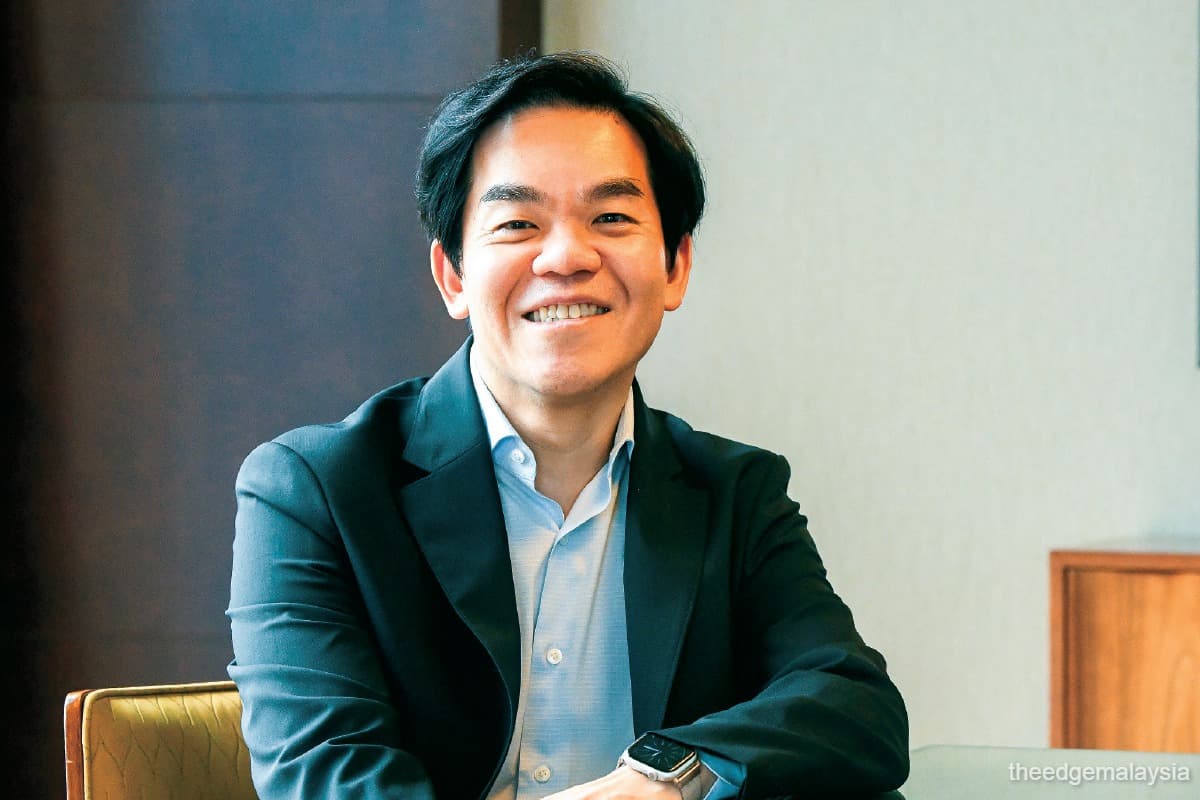
Ren Ito, co-founder and chief operations officer of Tokyo-based Sakana AI, believes, however, that for nations such as Malaysia, focusing solely on building foundational LLM models or raw infrastructure from scratch could be a strategic misstep.
Ito argues that the capital requirements are astronomical, given that players in the US and China are pouring billions annually into developing the AI segment. He questions the logic of such heavy investment, pointing out that the slight utility of a marginally better model rarely justifies the cost.
Malaysia’s plans to invest in AI also shows this trend, with a projected RM20 billion investment road map until the end of the decade, as laid out by the National AI Action Plan 2026-2030.
In Budget 2026 tabled last October, Putrajaya also allocated RM5.9 billion for research and development and innovation, with a significant portion earmarked to keep Malaysia at the AI forefront.
Crucially, the budget also directs RM2 billion to the Malaysian Communications and Multimedia Commission (MCMC) specifically to build a sovereign AI cloud, alongside RM20 million to fully operationalise the National AI Office (NAIO).
Ito believes that a more practical road map for Southeast Asia would be to pivot from building raw intelligence to mastering “post-training” AI models. This is the art of refining open-source models to solve specific economic and societal problems, such as optimising government services or improving local loan approvals.
This also aligns with the government’s smaller but strategic RM53 million Digital Acceleration Grant, which aims to boost AI adoption among local companies rather than just infrastructure building.
“I honestly can’t tell the difference between GPT-4o and GPT-5 in terms of capability. I mean, I don’t really care. What I do care about is whether my bank is able to approve a mortgage that is cheaper, faster and more accurate,’’ Ito says.
The distinction he draws is critical for policymakers and investors.
“Pre-training”, the phase dominated by OpenAI and Google, involves feeding models the entire internet to create raw intelligence. It is an infrastructure play requiring billions in capital expenditure.
“Post-training”, however, is a value-add play, explains Ito. It involves taking that raw, open-source intelligence and customising it with local data moats to align the model with local values, legal frameworks and specific industry needs.
Use cases in Malaysia could include teaching the model Bahasa Malaysia nuances, local banking regulations, Islamic finance principles or local credit scoring patterns.
The most compelling argument for this strategy lies in banking, a sector Ito views as a prime candidate for AI disruption in Southeast Asia.
This could have significant implications for Malaysia’s financial system, where traditional methods often reject thin-file applicants or the underbanked, such as gig workers, small and medium enterprises, or rural borrowers who lack a conventional credit history.
Specialised, post-trained AI can analyse alternative data points to perform electronic know your customer (e-KYC) checks and credit scoring more accurately.
Sakana AI, which recently hit a US$2.6 billion (RM10.2 billion) valuation with backing from Nvidia and Japanese lenders, is already executing this playbook through strategic alliances with institutions such as Mitsubishi UFJ Financial Group (MUFG) and Spanish giant Santander.
Instead of selling a generic chatbot, Sakana AI is integrating AI directly into the banks’ risk assessment workflows. The goal is not to replace bankers but to digitalise their intuition, says Ito.
“AI isn’t studying the rules; it’s studying hundreds of thousands of results. It looks at the full history of mortgage applications and how each one ended up.
“Even without telling the AI why one case was rejected and another was approved, it will learn to give the same answer that an experienced human banker would.
“If the answer from a seasoned banker and the answer from the AI are basically at the same level, then that’s a win for me.”
Beyond economics, Ito sees this technological pivot as a geopolitical necessity. In a landscape often polarised by differing regulatory philosophies between Western and Eastern tech giants, “middle powers” such as Japan and Malaysia risk losing their digital sovereignty if they rely entirely on imported models.
Ito adds that computing power is the new “soft power”. For Japan, this means stepping up as a technical partner to Southeast Asia, a provider that can offer the mechanisms for Malaysia to train its own sovereign models.
“A country like Japan, which believes in soft power, wants to be an honest AI provider. We’re not big enough to behave like China or the US.
“One of the few ways we survive is by offering democratised AI to countries like Malaysia. And that doesn’t mean exporting ‘Japanese values’; it means giving them the tech to train a fully Malaysian model.”
Save by subscribing to us for your print and/or digital copy.
P/S: The Edge is also available on Apple's App Store and Android's Google Play.