

This article first appeared in Digital Edge, The Edge Malaysia Weekly on February 9, 2026 - February 15, 2026
As artificial intelligence (AI), data centres and advanced technology infrastructure drive unprecedented growth in electricity demand globally, the race to develop clean energy alternatives has intensified. Among the technologies emerging as viable solutions, hydrogen stands as a pathway to meet these surging power needs.
Canada is one of the countries aiming to become a world-leading producer, user and exporter of hydrogen. The country’s abundant feedstocks, along with its existing natural gas infrastructure that can be adapted for hydrogen transport, give it an edge.

Clean hydrogen could account for up to 30% of Canada’s end-use energy demand by 2050, generating US$50 billion in annual revenue and creating 350,000 jobs, according to the Canadian Hydrogen Association. The country — which launched its Hydrogen Strategy in 2020 to scale production, distribution and exports toward its 2050 net zero target — is already seeing progress, with more than 70 projects in development and announced production capacity of 5.4 million tonnes per year. It is among the world’s leading hydrogen producers, ranked No 11 globally.
Research and development are key drivers in making Canada’s hydrogen ambitions a reality. Institutions like the National Research Council of Canada are advancing testing, validation and standards for hydrogen and fuel-cell technologies. Meanwhile, universities such as the University of British Columbia are running applied projects integrating hydrogen into transport systems, buildings and local energy networks.
Canada’s nuclear industry, which produces about 15% of the country’s electricity and is the world’s second-largest uranium producer, plays a critical role by providing reliable, zero-emission electricity for hydrogen production via electrolysis.
The Canadian Nuclear Laboratories — the largest science and technology laboratory in Canada — is advancing hydrogen safety research, materials testing and technology development to address production, handling and deployment challenges.
Digital Edge spoke to industry players and research institutions to understand how Canada is testing, scaling and deploying hydrogen across the value chain.

A living laboratory for hydrogen
The University of British Columbia (UBC) — separated from Vancouver by a regional forest and located at the end of the city’s natural gas and electricity grids — operates like a small municipality. This enables the university to test energy, infrastructure and climate solutions at real-world scale rather than confining them to laboratories, allowing research to be applied, observed and refined under everyday conditions.
The university reduced its greenhouse gas emissions by 67% compared with 2007 levels, even as its student population grew by 26% and building floor area expanded by 16% — an achievement Walter Merida, associate dean of the UBC faculty of applied science, attributes to the living laboratory approach.
“We as a small municipality have demonstrated that cities can grow and, at the same time, lower their carbon footprint. And one of the ways we have been able to do that is to use portions of our campus as living laboratories to make this happen. So rather than just having an experiment in the lab or a test-tube-sized idea, we bring these ideas from the lab into the real world as real applications,” says Merida.
UBC is applying this approach to hydrogen with the Smart Hydrogen Energy District (SHED), a C$23 million research facility on its Vancouver campus. SHED uses electricity from solar panels and hydropower to split water into hydrogen and oxygen through electrolysis. The hydrogen is then stored and can be used to fuel vehicles at the station, generate electricity when needed through fuel cells, or be stored for later use.
It is one of the first initiatives in Canada to combine hydro, solar and hydrogen energy at a single site. SHED is the province’s first hydrogen station serving both light- and heavy-duty vehicles and has produced more than one tonne of green hydrogen since operations began.
The project was designed to address hydrogen’s economic challenge of competing with inexpensive fossil fuels. SHED explores new business models by combining multiple value streams — including grid balancing, electric vehicle (EV) charging, parking infrastructure and hydrogen production — to improve commercial viability.
“If you think of hydrogen as just to refuel cars, that will be economically challenging at the moment. But if you think of hydrogen as enabling different business cases, then all of a sudden, the business cases are actually quite attractive. And that will hopefully accelerate the adoption of some of these technologies,” says Merida.
A key feature is SHED’s vehicle-to-grid capability. EVs parked in campus garages can send stored electricity back to the grid during peak demand, helping balance energy loads. In return, drivers receive reduced parking fees, creating a financial incentive while avoiding costly grid infrastructure upgrades.
A 5G network connects SHED’s various systems, allowing researchers to build digital twins of energy, transport and urban-planning systems. With this, researchers can simulate energy flows, stress-test grid behaviour, assess cybersecurity risks and model how similar systems would perform in other cities before physical investments are made, says Merida.
SHED may serve as a real-world deployment platform, but significant hydrogen research is being conducted concurrently at UBC’s laboratories. For example, researchers are working on high-temperature, high-pressure water electrolysis to reduce costs, says Merida.
Currently, hydrogen must be compressed to 5,000 to 10,000 psi after production, which is expensive and complex. The team is exploring compression at the liquid stage instead, which would be far more energy efficient.
By heating water to a supercritical state, where its properties like viscosity change, researchers aim to solve a key problem in electrolysers: water does not spread evenly across electrode surfaces, so only a small portion is used. Since electrodes contain expensive platinum and other precious metals, this drives up costs. “Our theory is that if supercritical water is less viscous than normal water, it will wet these surfaces better and significantly improve electrode performance,” Merida explains.
Researchers at UBC are also working to lower costs through a pyrolytic hydrogen prototype capable of producing hydrogen below US$2 per kg without carbon dioxide emissions and magnetic liquefaction technology that could make hydrogen production and storage more accessible on a smaller scale.
Keeping hydrogen use close to where it is produced
Hydrogen’s biggest challenge is not production; it is getting from point A to point B. At 14 times lighter than air, the gas is prone to leakage and requires expensive, specialised infrastructure for transport and storage, say industry experts. This means hydrogen is most viable when produced close to where it is used, rather than moved over long distances.
Hydrogen hub development is one way to address this. By co-locating hydrogen production with end-use demand, hubs can reduce transport costs and minimise the need for extensive new infrastructure, helping to balance supply and demand more efficiently, says Alyssa Kelly, director of research at Foresight Canada.
Hydrogen deployment must be region-specific, she adds. What works economically or technologically in one area may not work in another — electrification may be the more sensible option in some locations, while hydrogen may better address hard-to-abate sectors such as transport or industrial uses in others.
Canada has six major hydrogen hubs — Vancouver and Prince George in BC; Edmonton, Alberta; Toronto, Ontario; the province of Quebec and Atlantic Canada, New Brunswick, Newfoundland and Labrador, Nova Scotia and Prince Edward Island — shaped by local energy resources, infrastructure and end-use demand.
Edmonton, for instance, is primarily focused on reforming with carbon capture and storage supported by its experience in hydrogen production and access to the world’s largest carbon dioxide pipeline. Prince George, located in central BC, has developed transport infrastructure, including air, rail network and road access to the main highways in the region. On the other hand, Quebec develops large-scale hydrogen projects primarily for domestic use.

Kelly explains that securing an “anchor tenant” is the core way to build hubs — one core user that guarantees demand, such as a company already using hydrogen to produce ammonia. “That user needs X amount of hydrogen per year, so you develop a hub around it because that’s a secured amount of hydrogen that’s already being produced. That’s the core way of building hubs, where you catalyse further investment,” she says.
Steward World Port in northern British Columbia is one such location now exploring this approach. The remote port sits close to an active mining network, with trucks travelling in and out of Stewart daily.
Brad Pettit, its director and president, says this regular and predictable movement makes centralised hydrogen fuelling efficient, especially for mine haulage trucks and mobile equipment operating on fixed routes.
This is why the port sees near-term potential in small-scale hydrogen production for nearby mining fleets, where fuel demand is concentrated.
Larger-scale hydrogen exports is a longer-term ambition, but Pettit says local use is the most realistic starting point before export markets develop.
Filling the gaps with hydrogen
Canada’s long-standing technological leadership in fuel cells and electrolysis shows where hydrogen can fill gaps electrification cannot.
Companies such as Ballard Power Systems are deploying hydrogen fuel cells for buses, trucks and heavy-duty transport. Meanwhile, HTEC is developing hydrogen refueling infrastructure to support the growing fuel cell vehicle market in Canada.
Clean electricity can decarbonise much of the economy, but sectors that require chemical fuels, long-duration storage or very high energy density cannot be electrified, say industry experts.
Alan Kneisz, a hydrogen consultant with nearly 20 years of experience in the sector, says the first step is to electrify everything possible using clean power like solar and wind. Next, use batteries where direct electrification does not work. Finally, deploy hydrogen where batteries cannot deliver.
“Batteries are well suited for short-duration storage and many light-duty applications, but even the battery industry acknowledges limits when it comes to long-duration storage and heavy transport,” says Kneisz, who now works as global leader in energy transition at Green Fuel System.
Fuel cells can then be used as range extenders in buses, where batteries alone are too heavy to complete required routes, and in heavy trucks and trains where long range is essential. Battery-electric trains are typically limited to around 120km, while fuel-cell trains can travel up to 1,200km.
Fuel cells generate electricity by converting hydrogen into power, with water as the only by-product. Kneisz estimates that roughly 70% to 80% of the world’s fuel cell buses are based on Canadian technology.
On the production side, electrolysis — using electricity to split water into hydrogen and oxygen — is the dominant pathway. Electrolyser projects are growing rapidly. “When I was starting, if you heard about a 5mw project, everybody got excited. Now, they’re doing hundreds of megawatts of electrolysis, so it is scaling up reasonably. A few years ago, we didn’t have the capacity to build these,” says Kneisz.
For an electrolyser, megawatts measure how much electrical power the system can use at one time, which directly determines how much hydrogen it can produce. An electrolyser with a larger megawatt means more electricity is used to split more water, resulting in higher hydrogen output.
Why does the nuclear industry care deeply about hydrogen?
For the nuclear industry, hydrogen is not only about decarbonisation, but also a fundamental safety issue. Hydrogen poses serious risks in nuclear facilities because it is highly flammable and can easily combust or explode.
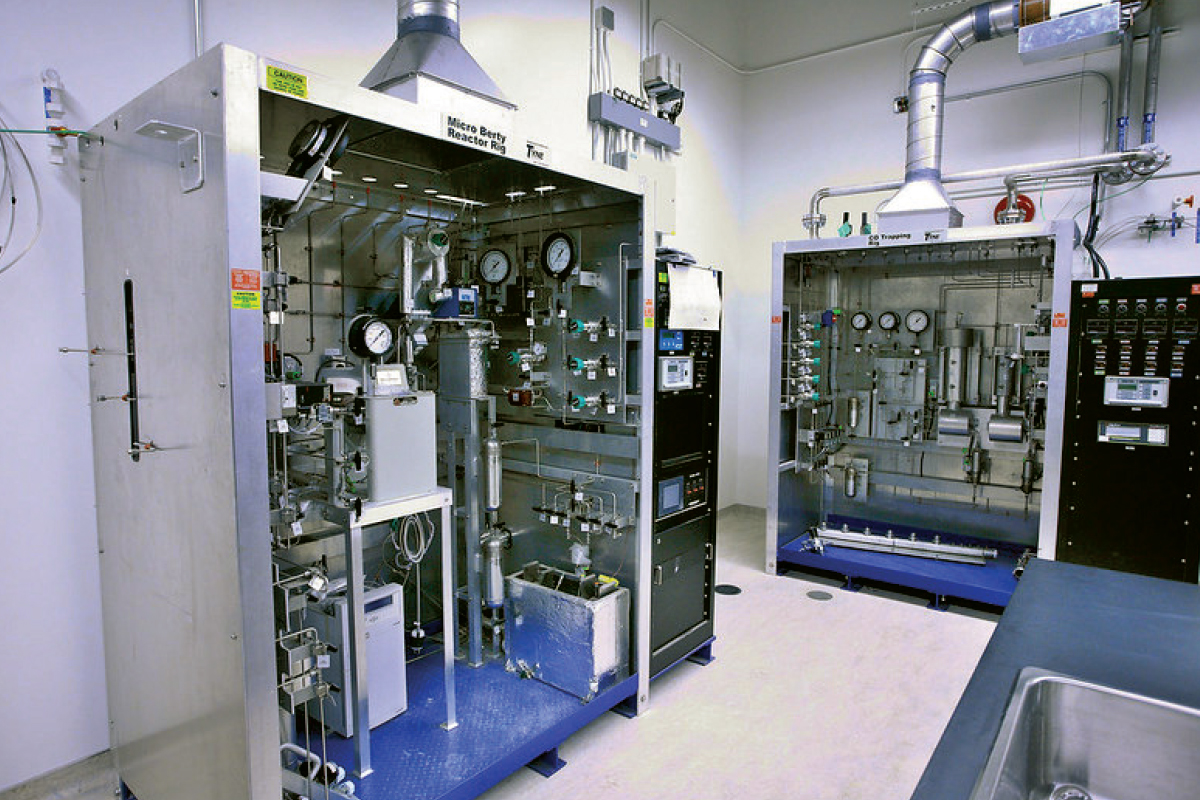
During a loss-of-cooling event — when systems that remove heat from the nuclear reactor fail — extreme heat can cause water to break down into hydrogen and oxygen, say research scientists at the Canadian Nuclear Laboratories (CNL). Because hydrogen is very light, it rises and accumulates near the ceiling of the containment structure, where concentrations can quickly reach explosive levels.
CNL has maintained hydrogen safety programmes since the Three Mile Island accident in 1979 in Pennsylvania, the US. A major component of its hydrogen research is dedicated to preventing such events.
The laboratory developed passive autocatalytic recombiners (PARs) to reduce hydrogen concentrations before ignition can occur. PARs are safety devices that convert hydrogen and oxygen into water, reducing hydrogen buildup inside reactor containment buildings without requiring external power.
“In the air, hydrogen can start combusting at around 4% concentration. PARs begin operating when hydrogen concentrations are as low as 0.5%. Since the PAR system can reduce hydrogen levels well before ignition becomes possible, it could theoretically have mitigated hydrogen accumulation and reduced the severity of the explosions at Fukushima (Japan),” says Julien Lang, a research scientist at CNL who has studied the interaction of hydrogen, deuterium and tritium with materials for more than 15 years.
PAR units are installed in every Canada Deuterium Uranium (Candu) reactor — a Canadian-designed nuclear system that uses natural uranium fuel and heavy water as both moderator and coolant. Candu reactors operate in nuclear power plants in several countries around the world.
Safety work at CNL extends to deuterium and tritium, isotopes of hydrogen. Ordinary hydrogen has one proton, deuterium adds one neutron and tritium adds two. CNL uses hydrogen to develop and test safety technologies before adapting them for deuterium and tritium nuclear applications, says Lang.
Deuterium is essential for Candu reactor operations. It produces heavy water, which slows neutrons and helps control nuclear reactions.
Tritium, produced during reactor operations, is used in specialised research and is expected to play a critical role as fuel in future fusion energy systems. CNL obtains tritium from nuclear reactors, removes it from its original host material and transfers it onto materials suitable for transport before shipping it worldwide to research laboratories.
CNL holds the world’s largest regulatory authorisation for tritium inventory, enabling it to supply laboratories and research institutions globally, says Lang.
Tritium requires careful management due to its radioactivity. Materials testing is central to tritium safety.
CNL conducts permeation experiments to understand how tritium migrates through metals and piping systems. The laboratory also develops techniques to capture, remove and safely store tritium, preventing environmental release and minimising radiation exposure to workers.
“If you have any technology that uses nuclear energy that might have tritiated water or might produce some tritium somewhere, you want to make sure that you know exactly where that tritium is all the time. We want to know where it is because we don’t want to release radioactive materials either to the environment or to the workers,” says Lang.
What else does CNL do?
Beyond safety fundamentals, the laboratory’s hydrogen work spans systems and infrastructure assessments, hydrogen-based clean fuel production technologies, and materials interaction and storage research.
On the production side, CNL’s research focuses on two advanced electrolysis technologies. The first is a hybrid copper-chlorine thermochemical cycle that uses heat and electricity to split water and produce hydrogen, capable of producing 100g of hydrogen per day.
“Electrolysis on its own requires a lot of electricity. If you start messing around with the chemistry, you can actually reduce the amount of electricity and increase the amount of heat that it needs to consume, where heat is generally a lot easier to get,” says David Ouellete, a research scientist at CNL that focuses on accelerating research, development and deployment of technologies vital to Canada’s decarbonised future.
The second technology, high temperature steam electrolysis, operates at temperatures of around 700°C to 800°C, where water exists as steam rather than liquid.
“Your energy requirements to produce hydrogen actually go down by roughly a third, give or take. This is another application where we can use nuclear electricity, nuclear heat and power to produce hydrogen more efficiently than how it is produced today,” says Ouellete.
CNL is also studying large-scale hydrogen storage, including underground storage in salt caverns. The laboratory works with Canadian geologic research groups to test whether salt formations can safely contain hydrogen, using specialised equipment to measure hydrogen leakage through salt and soil to support decisions on future underground storage sites.
This article was developed with support of the Asia-Pacific Foundation of Canada and the Government of Canada
Save by subscribing to us for your print and/or digital copy.
P/S: The Edge is also available on Apple's App Store and Android's Google Play.